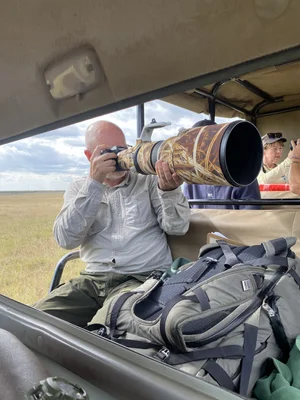
Photographing Brown Hares
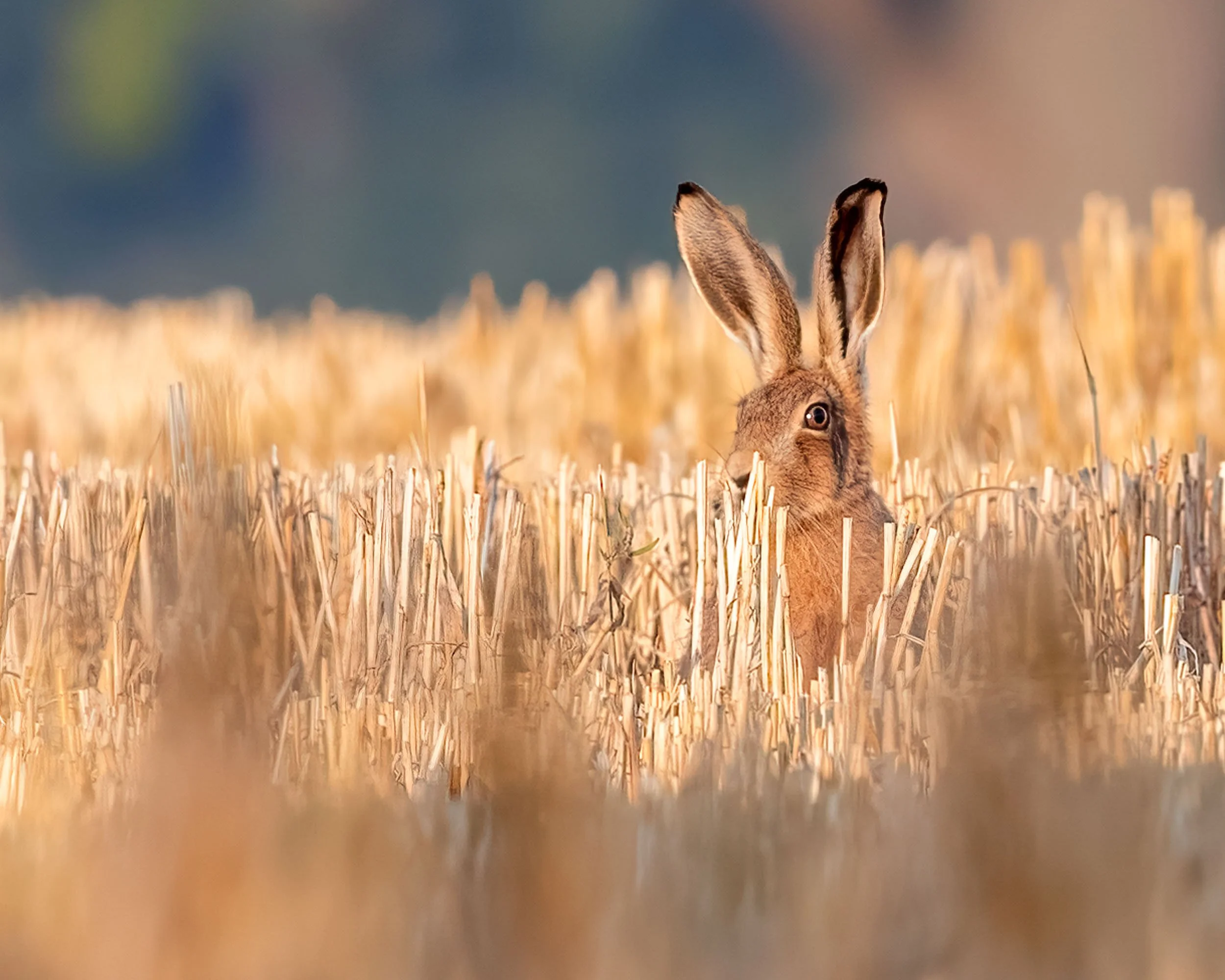
Photographing brown hares in the UK can be hugely rewarding, but it is rarely easy. They are alert, fast, and often surprisingly wary, which means success usually comes down to patience, fieldcraft, and a willingness to work low to the ground.
My own experience of photographing brown hares comes from Scotland, Norfolk, and my home county of Shropshire. I have photographed them from my car, using it as a hide on quiet country lanes, and on foot with the permission of local landowners. Both approaches can work well, but they offer very different experiences.
For me, hare photography is at its best when it combines patience, careful observation, and those rare close encounters where the hare accepts your presence and carries on as if you are no threat at all.
Why brown hares are such a rewarding subject
Brown hares are full of character. They can look elegant and alert one moment, then suddenly flatten themselves into the grass until only the tips of their ears are visible. At other times they can explode into action, chasing across a field at speed or rearing up on their hind legs to sniff the air and scan their surroundings.
That unpredictability is part of the appeal. Every encounter feels slightly different, and even when you do not come away with a strong photograph, simply watching hares go about their business can be a pleasure in itself.
They are also one of those species that reward repeat visits. The more time you spend watching them, the more you begin to recognise where they like to sit, how they react to disturbance, and when they are likely to move.
When to photograph brown hares
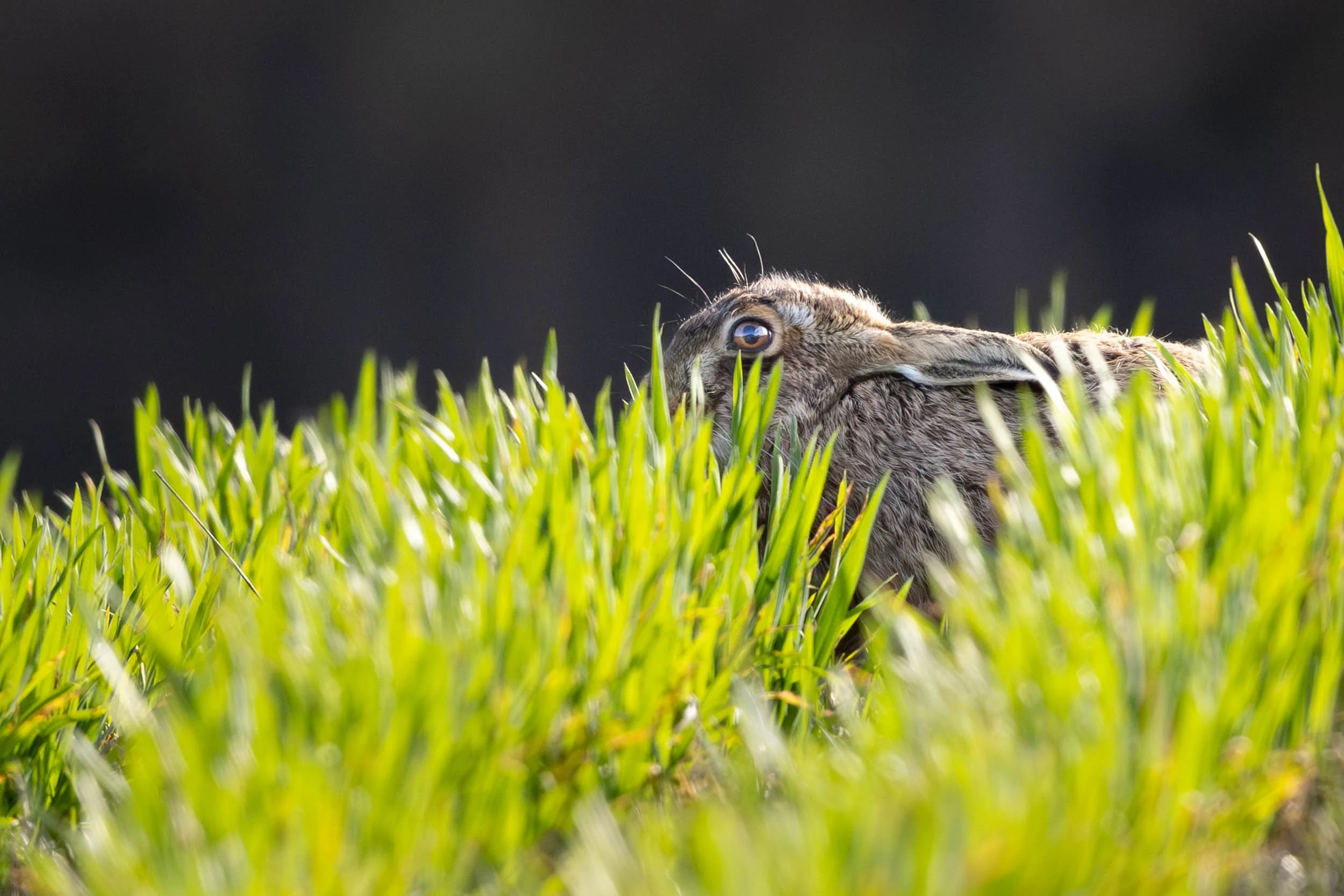
Hare chilling in the spring crops
You can see brown hares throughout the year, but there are a couple of especially good periods for photography.
Late winter into spring, particularly February to April, is one of the best times. The grass is often still short, which makes hares easier to spot, and this is also the period when people hope to see the famous “mad March hare” behaviour. Boxing hares are one of the classic wildlife spectacles of spring, although it is worth knowing that this behaviour is often a female fending off the attention of a persistent male rather than two males fighting.
March can be particularly rewarding when the light is right and there is dew on the grass at sunrise. I have seen distant boxing hares through binoculars, although I have yet to photograph that action up close. I have, however, photographed hares chasing one another, which still makes for exciting images.
Late summer and autumn after the harvest can also be very good. Once the crops are cut, visibility improves, and hares can be easier to find as they move across stubble fields in search of fresh shoots. The colour palette can be lovely too, with the brown tones of the stubble and the hare working beautifully together, especially in warm evening light
My experience in the field
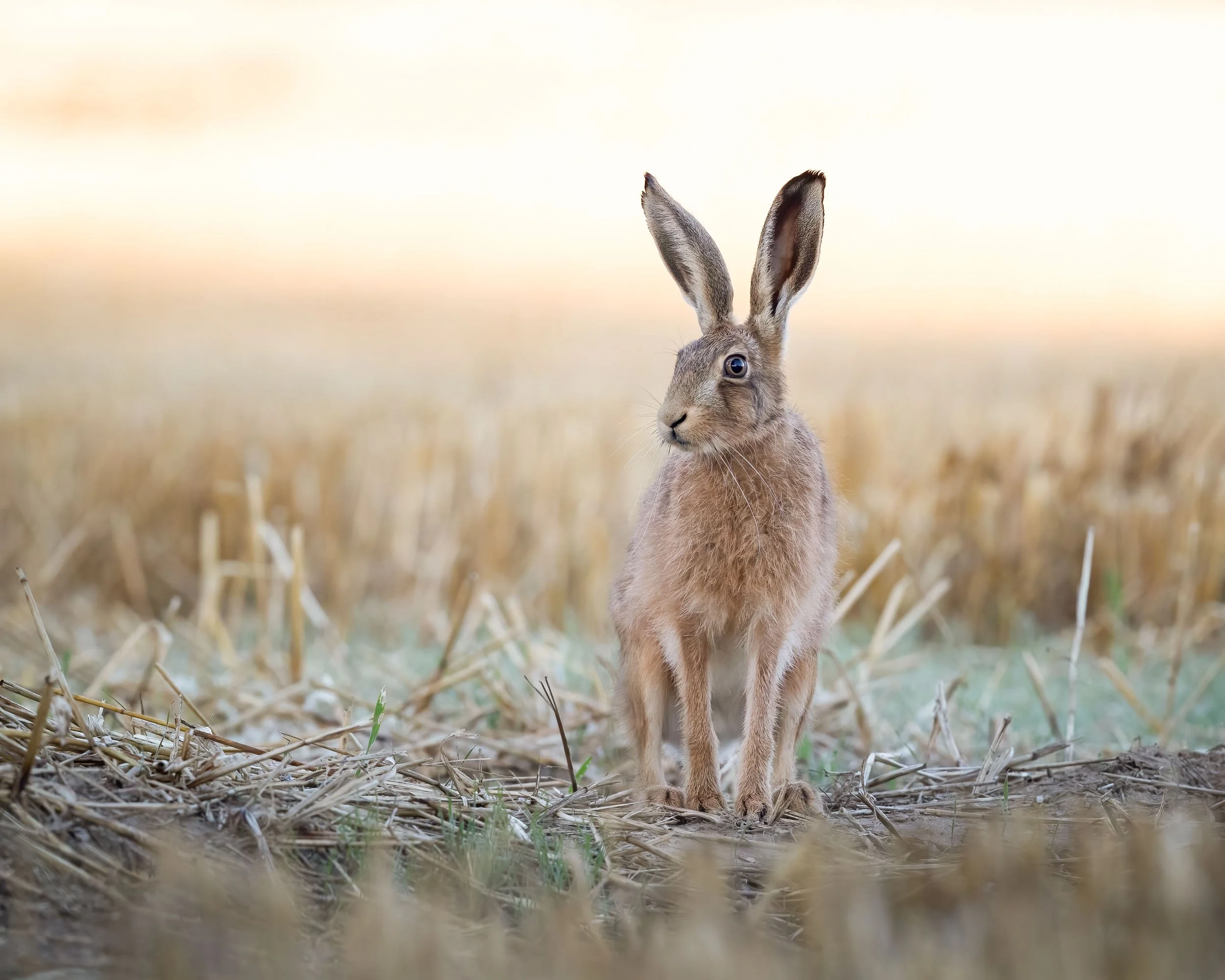
This hare came so close to me that I couldn’t focus my lens… what a privilege
I am fortunate to have access to local private land where landowners have given me permission to photograph. That access is something I take seriously. It means respecting the land, avoiding damage to crops, and sticking to tractor tramlines or tyre furrows where possible when moving through fields.
Once I have scanned a field with binoculars and found a hare, the next challenge is working out whether to move or stay put. Sometimes a slow, low, careful approach can work, especially if you keep your profile small, move in stages, and only advance when the hare’s head is down. On other occasions it is far better to sit tight and wait.
That second approach has worked especially well for me in Shropshire and Norfolk. I have had several memorable encounters where a hare has gradually come closer of its own accord, eventually reaching the point where it was almost too close to photograph. At that stage the camera barely matters. You simply enjoy the privilege of the moment as the hare looks at you, decides you are no threat, and quietly moves on.
In Scotland, my experience has often been a little different, with hares seen more out in the open and the wider landscape becoming more part of the image. Different locations bring different opportunities, but the same basic principles still apply: patience, observation, and trying not to rush the encounter.
Photographing hares from the car
Using a car as a hide can work very well for brown hares, especially along quiet country lanes where the animals are used to occasional vehicles passing by. It is often a good way to reduce disturbance, and some of my Shropshire hare photographs have been taken from the comfort of my car less than two miles from home.
I have photographed hares running, chasing, and standing upright on lookout duty from the car. It can be particularly useful for skittish animals because they often tolerate a vehicle more readily than a person on foot.
The main downside is angle. From the car you cannot usually get down to eye level with the subject, and that can make the images feel less intimate than those taken from ground level. Even so, it can still be a very effective and responsible way to photograph hares.
Photographing hares on foot
Photographing hares on foot can be more difficult, but it can also produce the most satisfying results.
The great advantage is that you can work low to the ground and create a much stronger connection with the subject. That eye-level perspective often makes all the difference, especially when the background falls away into soft blur and the hare feels fully part of the landscape.
The risk, of course, is that hares can be easily spooked. That is why patience and fieldcraft matter so much. Staying low, moving slowly, zig-zagging rather than walking directly at the hare, and knowing when to stop are all part of the process. Sometimes crawling is the only realistic option if you want to close the distance without pushing your luck.
Even then, there will be plenty of failed approaches. That is just part of photographing hares.
Camera gear and technique
A long lens is the obvious starting point. I have mainly used my 500mm f/4 prime and a 100–400mm zoom. The prime remains my preferred lens because of its reach and the way it isolates the hare against the background, but the zoom is useful when subjects move suddenly or come closer than expected.
For support, I have used both a beanbag and a tripod. More recently I have tended to favour the tripod, partly because I am increasingly interested in capturing video as well as stills.
In terms of technique, I prefer to keep things simple. Fast shutter speeds are important when hares are running, chasing, or boxing. Wider apertures can help isolate the subject, while a little more depth of field can be useful when you want the full body sharp rather than just the face. As ever, the eye is the place to focus.
Behaviour to watch for
One of the real joys of hare photography is learning to recognise little signs of behaviour before they turn into photographic opportunities.
A hare that is relaxed may sit quietly in its form, preen, stretch, or simply watch the world go by. Others may hunker low in the grass, with only the ears showing. At times I have photographed hares crouched low in stubble with their ears laid flat across the back, doing their best to keep a low profile.
At the other end of the scale are the more energetic moments: chasing, sudden bursts of speed, rearing up on hind legs, and the occasional close encounter as a hare passes by within a few metres. Those moments can happen very quickly, so it helps to stay alert even when things seem quiet.
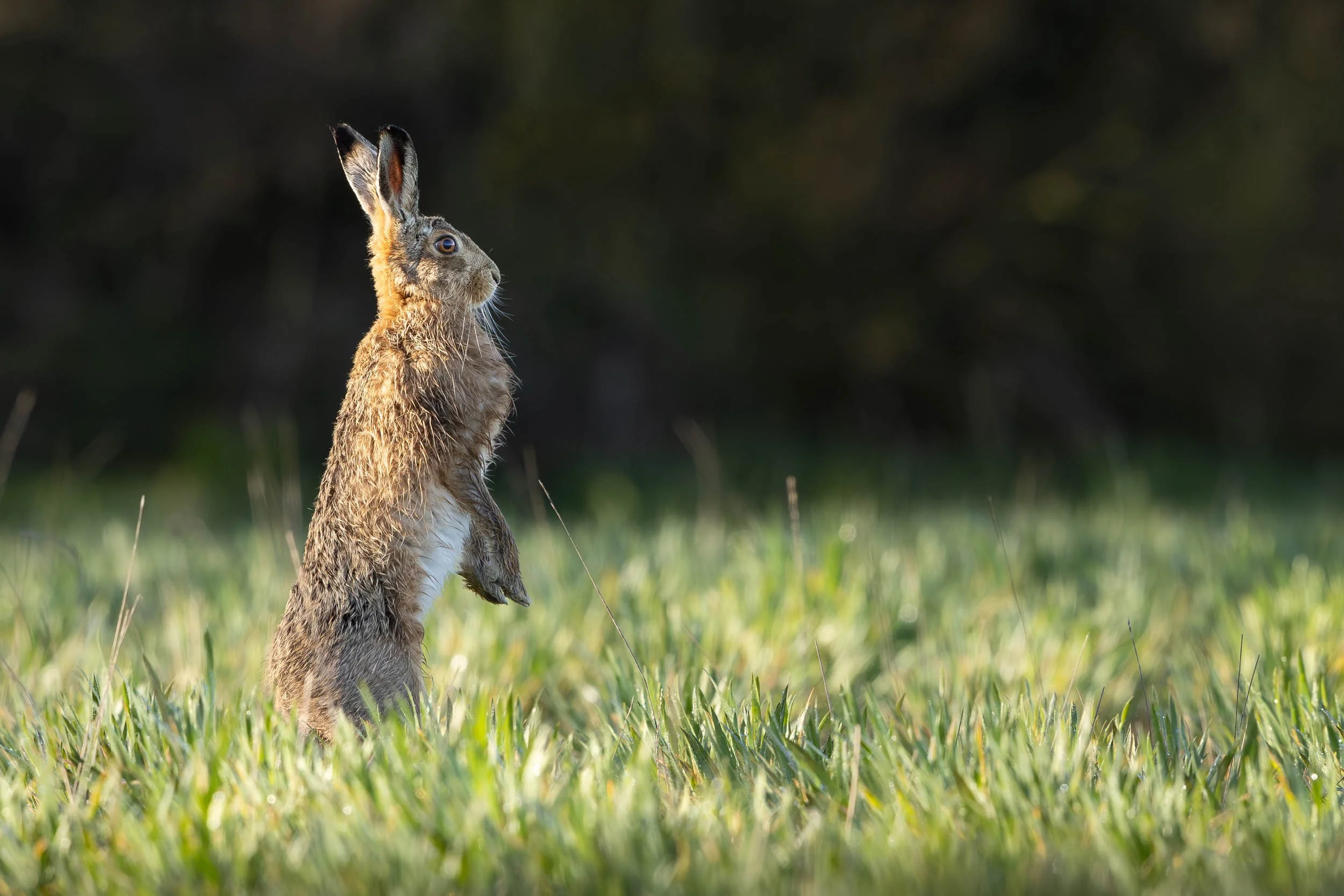
Hare stands on its rear legs to get a better view…
Ethics, access and keeping locations private
This part matters.
If you are photographing hares on farmland, always make sure you have permission before entering private land, and take care not to damage crops or interfere with farming activity. Using tramlines and established access routes is usually the best approach.
It is also wise to be cautious about sharing precise locations. Illegal hare coursing remains a serious rural crime in the UK, involving dogs used to chase hares across farmland, and it can cause major disturbance and damage. Because of that, I would avoid posting detailed location information that might draw the wrong kind of attention to productive hare fields.
For me, that discretion is simply part of being a responsible wildlife photographer.
Final thoughts
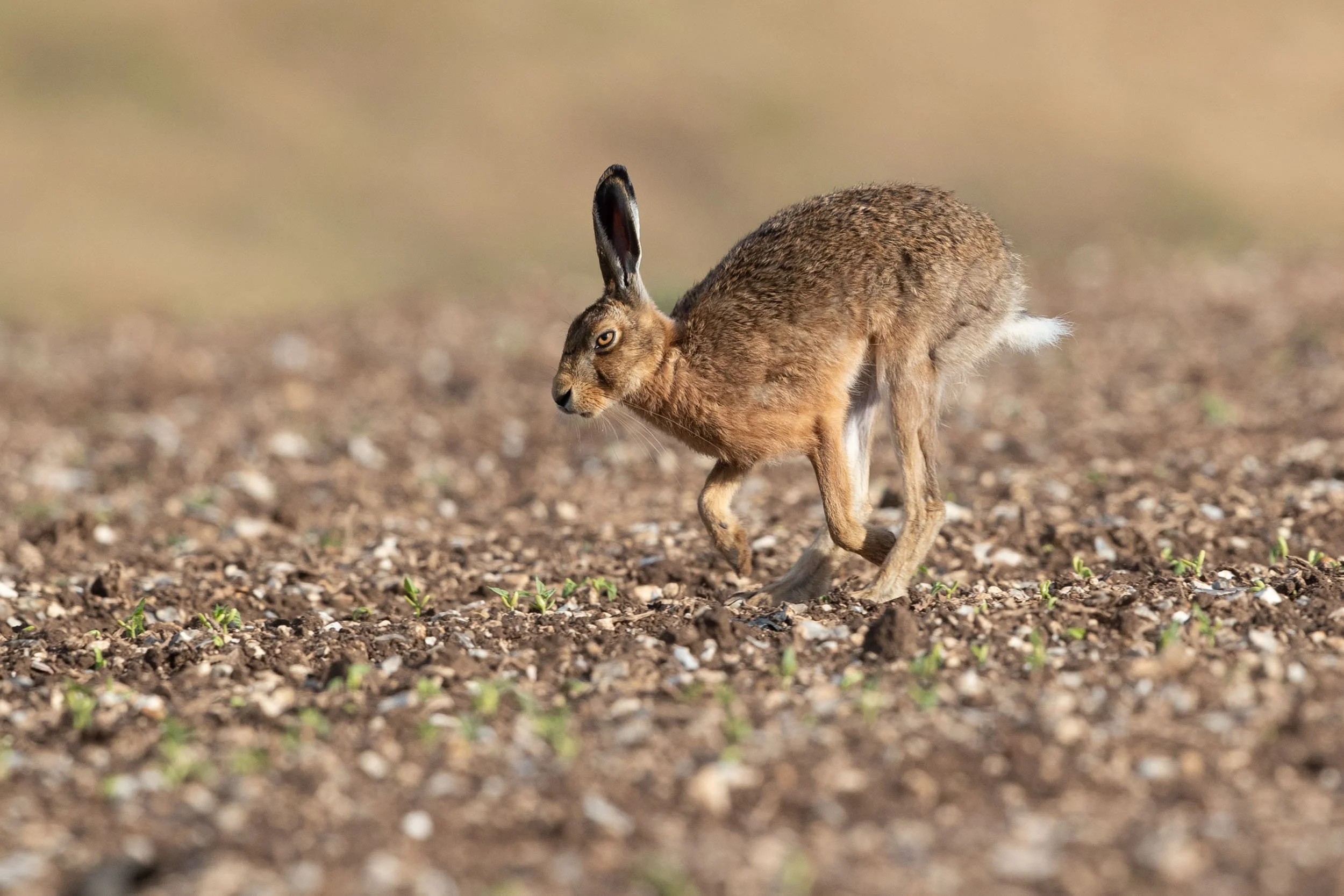
The brown hare is the fastest land mammal in the UK, capable of reaching a top speed of 45mph
I enjoy photographing hares, especially because it is something I can do close to home.
They can test your patience one moment and reward it the next. Sometimes the result is an action shot of hares chasing each other across a field. At other times it is a much quieter image of a hare hunkered down in the grass, ears just visible above the dew.
And sometimes the best moments are not really photographs at all, but those close encounters where a hare comes within a few metres, looks you in the eye, and then slips away into the hedgerow.
Whatever you photograph, have fun.
Planning your visit
If you want to photograph brown hares, start by thinking about access, visibility, and light. Short grass in late winter and spring can make them easier to spot, while harvested fields in late summer and autumn can also be productive.
Take binoculars, scan carefully before you move, and decide whether the better option is a careful approach or simply sitting still and waiting. In many cases, patience will get you further than movement.
And if you are lucky enough to find a hare that accepts your presence, enjoy the moment. Those are often the encounters you remember most.
Useful links
This guide is part of my On Location wildlife photography series, where I share practical advice and real life experiences from photographing wildlife in the UK, Europe and Africa.