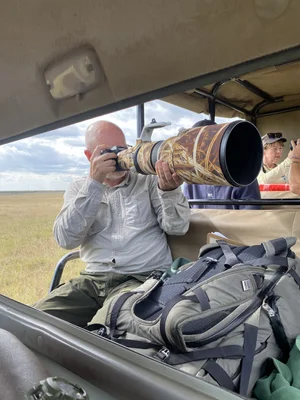
Amboseli National Park, Kenya

Not every wildlife photography trip unfolds as expected. Despite careful research, good intentions, and strong recommendations, things can still go wrong. This guide is different from my others because my time in Amboseli National Park was shaped as much by unexpected challenges as it was by the destination itself.
That does not mean the trip was a failure. Amboseli remains one of Africa’s most iconic national parks, especially for wildlife photographers. Instead, this experience reinforced some important lessons about preparation, adaptability, and the critical role of people, particularly guides, in shaping any safari experience.
If anything, this guide exists to reassure others that a disappointing trip does not negate the value of the place, nor does it diminish the long-term impact of travel and learning.
Why Amboseli Still Matters
Amboseli National Park is famous for its vast, dusty plains and iconic views of wildlife framed against the shadow of Mount Kilimanjaro, Africa’s tallest mountain, creating some of the most recognisable safari imagery on the continent.
Amboseli is also renowned for its “big tuskers”, exceptionally rare male elephants whose massive tusks can exceed 45 kilograms each and often scrape the ground. Their numbers have declined due to poaching and habitat pressures, but the park remains one of the best places in Africa to encounter these iconic animals, including famous individuals such as the recently deceased Craig, Michael, Pascal and Adonis.
The landscape itself feels expansive and raw and dust hangs in the air. These conditions can be challenging photographically, but they are also what give Amboseli its character.
Even now, with hindsight, I would still recommend Amboseli to wildlife photographers.

A pair of well-fed cheetahs stroll across the grasslands of Amboseli National Park
Why I Chose This Trip
After completing my volunteering placement in Kenya, I wanted to extend my stay with a short private safari. I had long admired images of elephants framed against Kilimanjaro, especially Amboseli’s legendary big tuskers. So Amboseli felt like a natural choice.
During my research, I came across YouTuber Ella McKenrick, whose content focuses on independent travel and working with trusted local operators. Her approach resonated with me, and after contacting her, she put me in touch with several Kenyan tour companies. I chose to book with Beyond the Plains, impressed by their communication, responsiveness, and enthusiasm for tailoring an itinerary to my interests.
During my research, I also became increasingly interested in how different parts of Kenya approach conservation and tourism. That broader curiosity would later become central to my volunteering experience and how I reflect on this trip as a whole.
At the planning stage, everything felt positive and well considered.
When Things Went Wrong

An iconic grey crowned crane feeding in the wetlands of Amboslei National Park
After returning to Nairobi for one night at the end of my volunteering programme, I was collected the following morning by my guide for the onward journey to Amboseli. Within half an hour of leaving the hotel, we were involved in a serious road traffic accident, colliding with a vehicle at the back of a multi-car pile-up on a busy highway.
I hit my head and sustained cuts and bruising to my legs. The owner of the company came to the scene and personally took me to hospital. Thankfully, I was discharged later that day and advised to rest, and I made the decision to continue with the trip.
While accidents do happen and are not something anyone can plan for, the circumstances surrounding this one, and what followed, had a significant impact on the remainder of the safari. I was dealing with headaches, fatigue, and the early signs of concussion while also trying to make the most of limited time in an iconic location. The guide assured me he was uninjured after the accident, although it is impossible to know how the incident may have affected him personally.
In hindsight, this combination affected my ability to clearly address issues as they arose and push for changes at the time. The accident also had longer-term effects, and at the time of writing this several months later I am still receiving treatment for post-concussion symptoms.
Why Guides Matter More Than Location
This trip reinforced something I had always believed about safaris but perhaps had never had tested so clearly.

Large male elephant with a single large tusk grazing at the edge of the roadside in Amboslei National Park
Despite many years of experience, the guide allocated to me was disengaged, uncollaborative, and, at times, unsafe. He fell asleep on one game drive, overruled my requests regarding locations, showed little interest in my photography goals, and was reluctant to communicate with other local guides to help locate Craig or one of the other known big tuskers in the area.
At one point, he had the audacity to tell me that an elephant with just one large tusk standing at the edge of the road was Craig. I showed him a photo on my Instagram feed in disbelief. Repeated requests to explore alternative approaches, including speaking to local Maasai trackers, were dismissed.
For photographers, this lack of cooperation is particularly limiting. Positioning, patience, communication, and shared intent are essential. Without them, even the best locations can feel inaccessible.
This was the single biggest factor in why the trip became my most disappointing experience in Africa, not because of the park itself, but because of how the experience was guided.
What I Learned (and What I’d Do Differently)
Looking back, there are clear lessons I would pass on to anyone planning a private or photography-focused safari:
Ask questions about guides where possible. A short bio or understanding of their approach can be invaluable.
Be clear about your goals and raise concerns early if something is not working. Waiting until the end of a trip is often too late.
Do not assume experience equals enthusiasm or suitability.
If something feels wrong, say something at the time, even if it feels uncomfortable.
In my case, the accident and resulting discomfort made me more reluctant to challenge issues as they arose. In hindsight, addressing concerns sooner may have had a lasting impact on how the rest of the trip unfolded.

Portrait of a cheetah
Practical Tips for Photographers Visiting Amboseli
Amboseli is an extremely dusty environment, and it affects both comfort and equipment:
Use camera and lens covers whenever possible.
Wear glasses to protect your eyes. Wraparound styles would offer even better protection.
A bandana worn around the neck works well for covering your nose and mouth when driving.
Lip balm is useful, as lips dry quickly in dusty conditions.
Clean cameras and lenses each evening using a blower and lens wipes. Even with this routine, I still felt the need to have both camera bodies professionally cleaned and serviced once I returned home, which is worth factoring into expectations and budget.
Minimising lens changes is critical in dusty environments. If possible, keep one body set-up for the day and rely on zoom lenses to reduce the need to expose sensors to airborne dust.
What Still Worked

Duelling elephants in the shadow of Mount Kilimanjaro
Despite everything, there were moments that reminded me why I travel and photograph wildlife.
I did capture images of elephants with Mount Kilimanjaro in the background, something I had long hoped to experience once I found myself travelling in Kenya. I also spent time with a pair of cheetahs, observing them in open country and managing to come away with images I still value.
These moments matter. They are the memories that will last long after the frustration fades.
Craig, Timing, and Perspective
While I did not get the opportunity to photograph Craig or other well-known big tuskers during this trip, I was later reminded of the fleeting nature of wildlife encounters when Craig passed away in early 2026.
It was a sobering reminder that timing, luck, and people all play a role, and that missed opportunities are part of wildlife photography as much as successes. You may not always get a second chance.
Final Thoughts
Amboseli remains an extraordinary destination for wildlife photographers. Its landscapes, elephants, and character are unlike anywhere else in Africa.
This trip was disappointing, but not because of the park. It taught me valuable lessons about preparation, adaptability, and the importance of addressing problems when they arise. It also reinforced that a challenging experience does not negate the value of travel or learning.
If anything, it has made me a more thoughtful traveller and photographer.
Whilst I may never return to Amboseli, simply because there are so many other places and experiences I still want to explore, this trip has given me a renewed appreciation for just how much the right guide truly matters.
Whatever you photograph, have fun.
If You Are Planning Your Own Trip
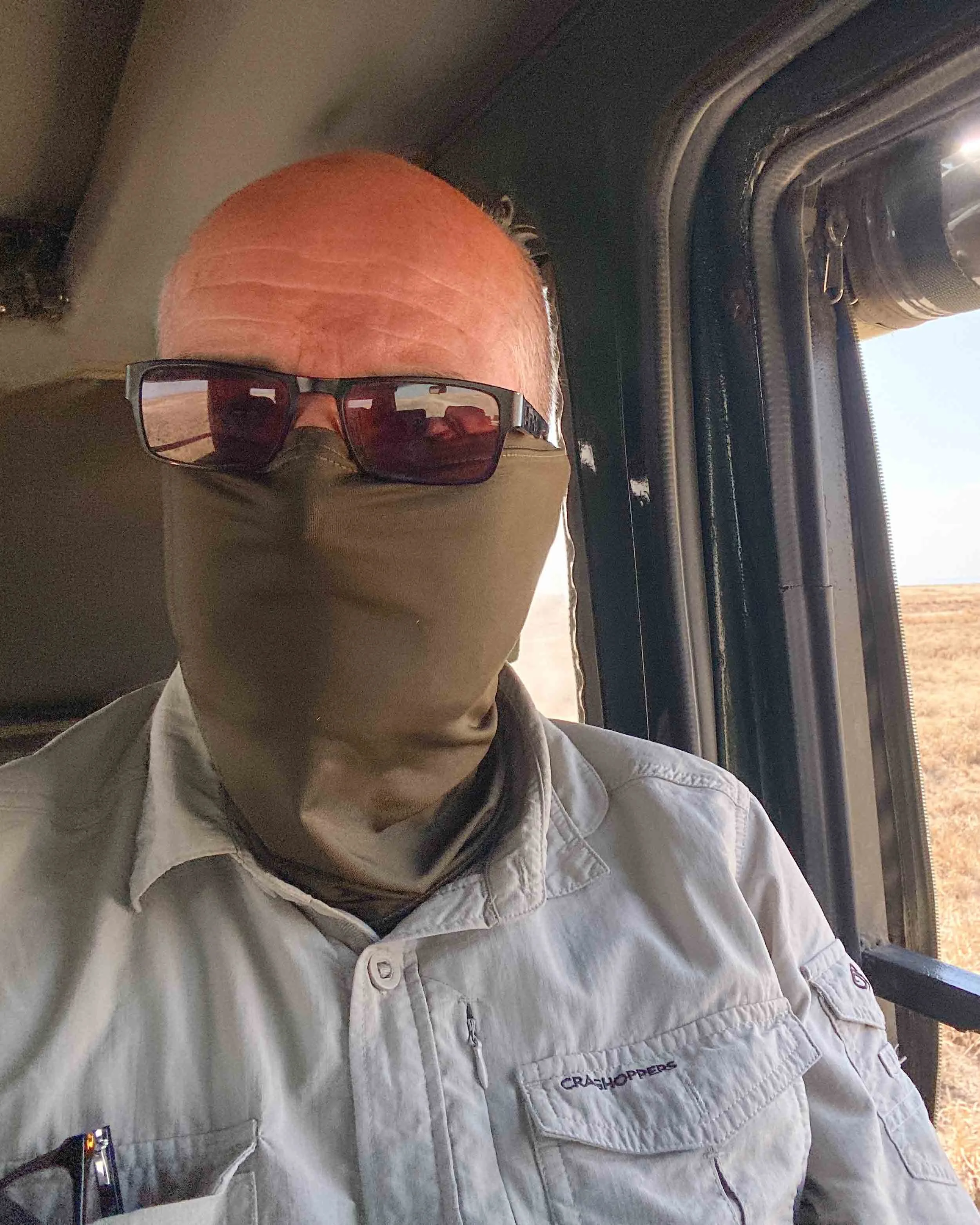
The dusty tracks at Amboseli are unforgiving on your camera equipment and face
If you are considering Amboseli, preparation and expectations matter.
Travel to the park can be done either by road from Nairobi, which takes approximately four to five hours, or by a short flight on a small aircraft. Flying is faster and more comfortable, but it is significantly more expensive and comes with strict baggage limits, particularly for photographers. I chose the road transfer to manage costs, accepting the longer travel time.
Choosing the right guide is critical. A knowledgeable, engaged, and safety-conscious guide can transform the experience, while the wrong one can limit even the best location. If possible, ask questions in advance and communicate your photography goals clearly.
Dust is part of Amboseli. Prepare your gear and expectations accordingly, and prioritise your wellbeing during long, demanding days in the field.
Above all, remain adaptable. Wildlife photography rarely goes exactly to plan, and sometimes the most valuable lessons come from the most challenging experiences.
Useful Links
This guide is part of my On Location wildlife photography series, where I share practical advice and real life experiences from photographing wildlife in the UK, Europe and Africa.