Kenya Big Cat Conservation & Volunteering Guide
For me, this experience was less about ticking species off a list and more about seeing the realities behind conservation in Africa, the people, the culture, the human wildlife relationship, and the practical challenges of allowing wildlife and communities to coexist.
I had visited several countries in southern Africa over the previous two years and had fallen in love with the continent, its people, and of course its wildlife. This trip felt like an opportunity to go deeper, to understand how conservation works on the ground, and to contribute in a meaningful way rather than simply observe.
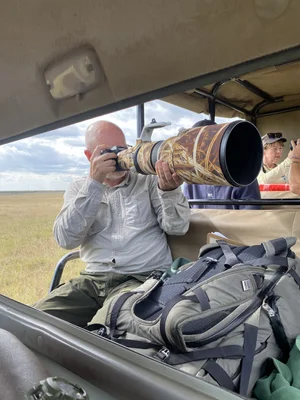
Photography remained important to me throughout, but it supported the experience rather than driving it. The focus was learning, contributing, and gaining a broader understanding of wildlife behaviour, conservation pressures, and how different models of land use affect both people and animals.
Why I Chose This Project
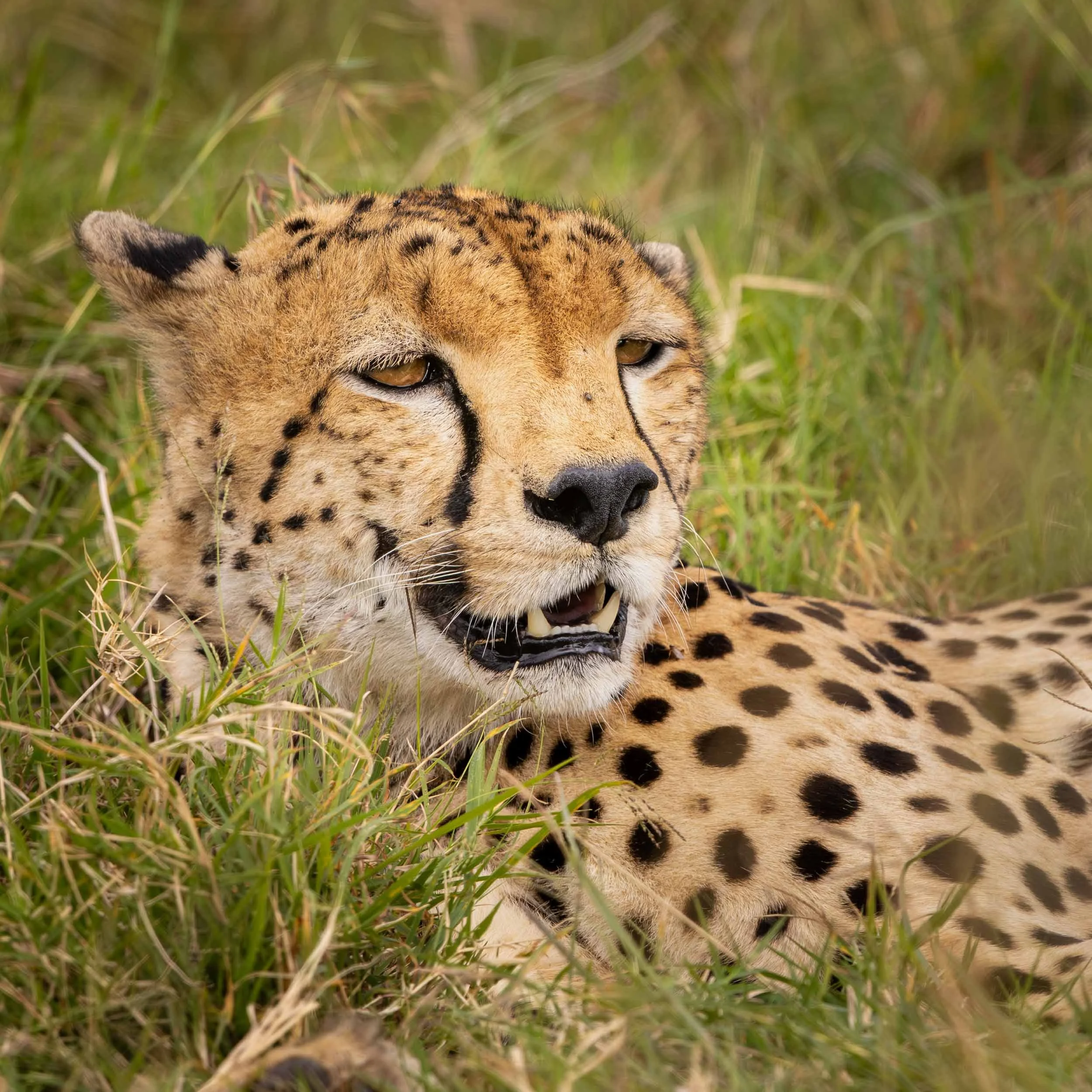
Cheetah resting after a kill, Naboisho Conservency
Big cats have always been one of my favourite wildlife subjects, and I was keen to learn more about their behaviour and how individuals are identified. Kenya had been on my list for some time, and the opportunity to combine conservation work with time in the Greater Maasai Mara ecosystem was very appealing.
During my research, I became increasingly interested in the Pardamat Conservation Area. I had read about its dual use conservation model and wanted to see it first hand, a system where people, livestock, and wildlife coexist rather than being separated.
African Impact stood out during the research phase. Their communication was open and detailed, and there was a sense of urgency to get me involved while the programme was still running. My photography was also seen as useful for recording wildlife sightings, helping identify individual big cats, and supporting conservation awareness through my social media channels.
I also liked the idea that this was not a polished lodge experience. It felt more grounded, educational, and hands on, with a clear conservation purpose rather than simply being tourism driven.
Where We Were Based
We were based at The Wildlife and Tourism College of Maasai Mara that supports local young people into guiding and hospitality roles. Accommodation for volunteers was provided in canvas tents within the college grounds.
Each unit consisted of two canvas bedrooms with two single beds in each, separated by a self contained brick bathroom with a shower, toilet, and sinks. As there were only two men in the group, Ruben and I had a bedroom each.
The camp was not fenced, so wildlife moved freely through the grounds. During the day we regularly saw zebra, giraffe, impala, warthogs, and baboons wandering through the college area. At night, hyenas were frequently heard within the camp, and elephants were also regular visitors. It was common to see fresh elephant dung on the paths in the morning, and on one occasion I was woken by an elephant trumpeting right outside the tent.
Strong winds were also common at night, causing the sides of the tents to move and making sleep more challenging. All of this was part of living in the middle of the African bush and and reflected what it truly means to live in the wild.
The Group Experience
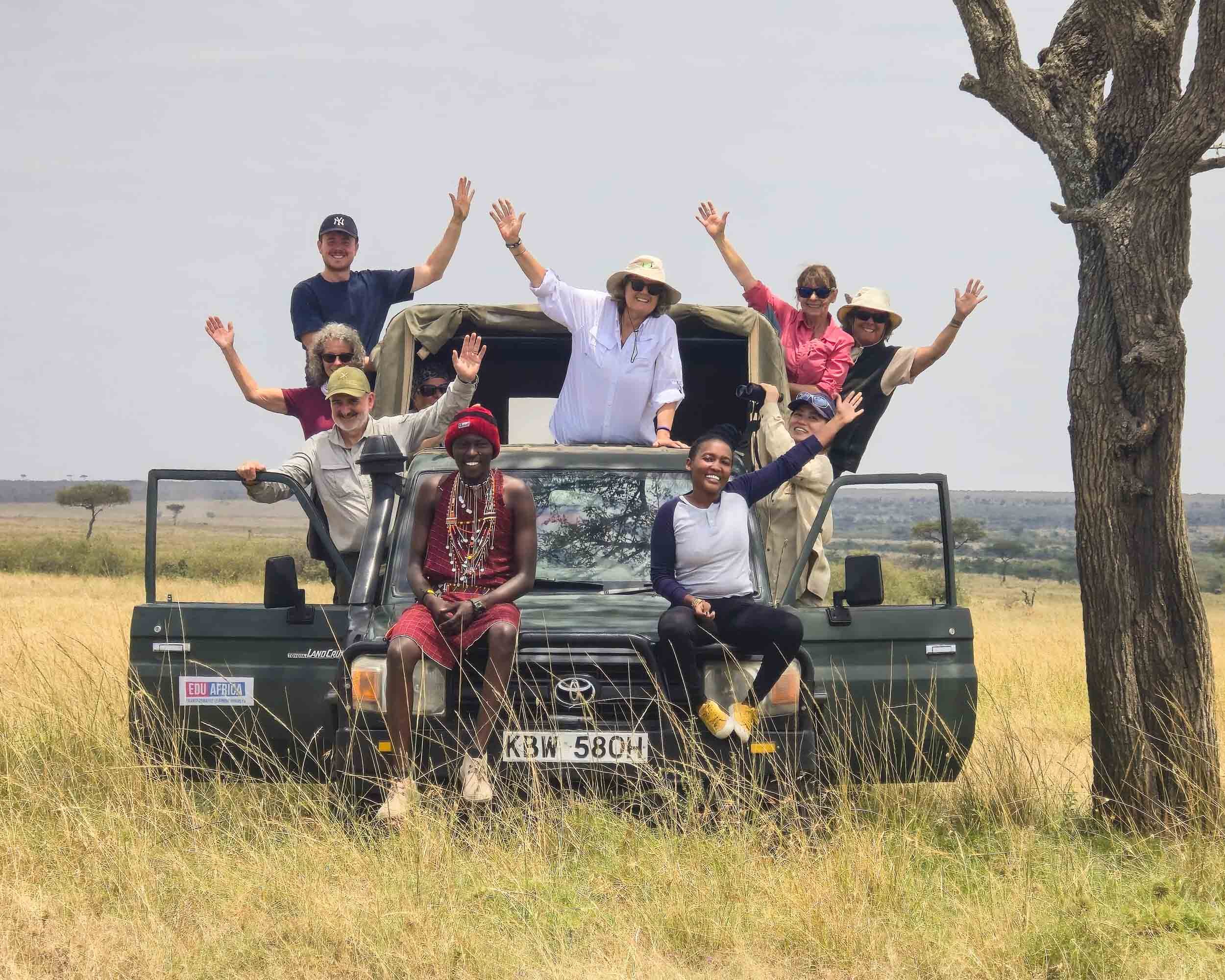
Volunteers posing for a group photo in Naboisho Conservancy
The volunteer group bonded quickly and naturally, and the staff repeatedly commented that we were one of the best groups they had hosted in a long time. Our group included volunteers from the Netherlands, USA, Canada, China, and myself from the UK, which created a diverse and engaging atmosphere.
Evenings were usually spent together in the dining room or seated areas outside, talking about the day’s sightings, sharing photos, and exchanging experiences. Toward the end of the stay, we gathered for a farewell dinner outdoors under the stars, where a goat was cooked and shared as part of a celebratory evening.
The atmosphere throughout was relaxed, collaborative, and supportive.
Our Guide and Daily Life
Our main guide was Eric, supported by intern guide Soleman and Lemara, a hospitality student who assisted the team and occasionally stepped in when Soleman was away on training. Eric was an exceptional guide, knowledgeable, patient, calm, and deeply committed to both wildlife and the local communities.
Days typically started early. In Pardamat we would head out first and return to the college for breakfast afterwards. In Naboisho Conservancy, breakfast and lunch were always taken out in the field under the shade of an acacia tree, with packed individual lunches, drinks, and snacks laid out on the bonnet of the vehicle.
Breakfasts in Naboisho became something of a ritual, with plenty of tea and coffee and favourites such as mandazi, a triangular sweet, doughnut like bread.
Conversations flowed naturally throughout the day about wildlife behaviour, conservation challenges, Maasai culture, and how ecosystems function as a whole. Eric encouraged questions and regularly shared deeper context rather than just surface level facts.
Understanding the Conservation Landscape
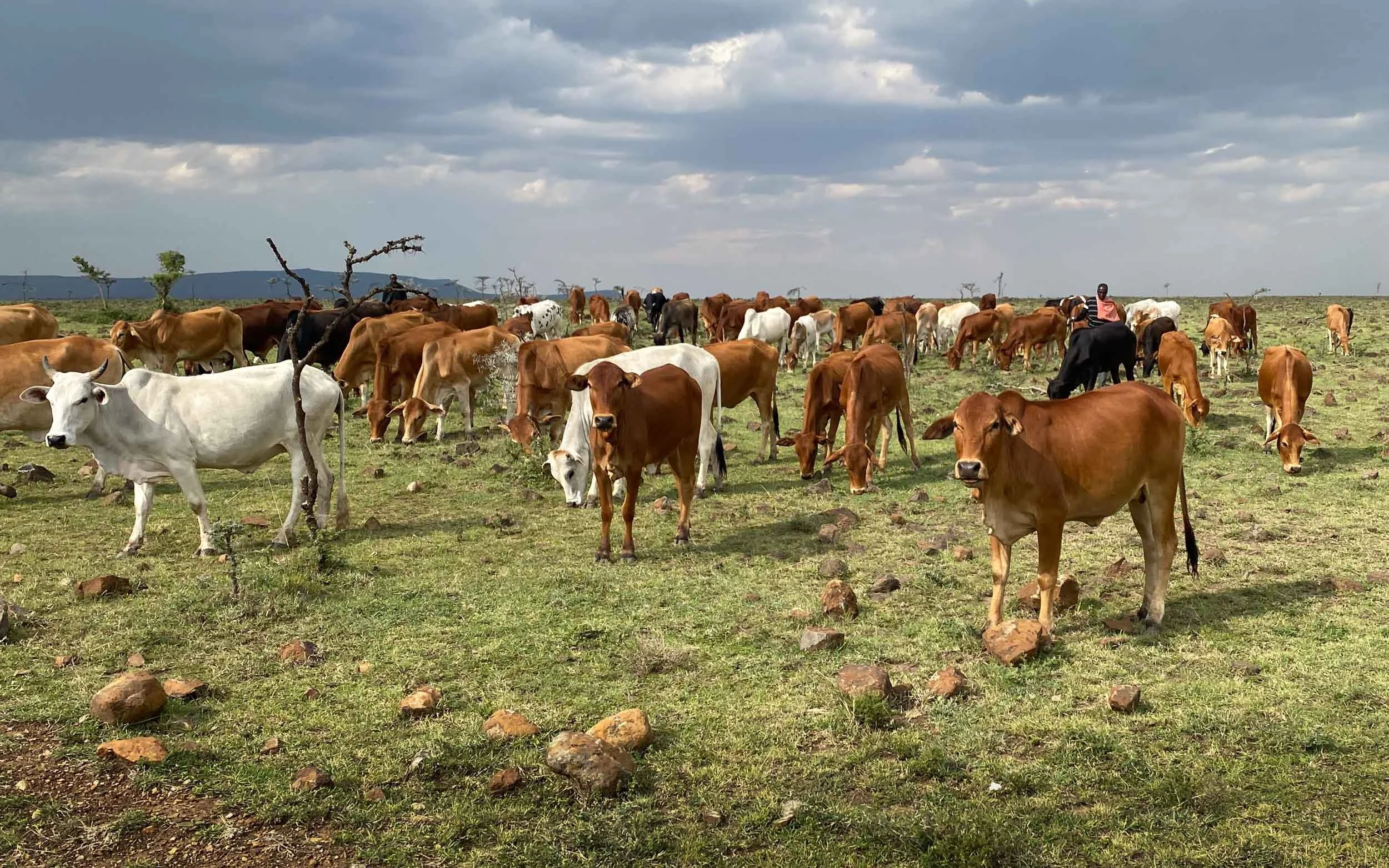
Maasai herding the cattle across the Pardamat conservancy
Our primary focus was Pardamat Conservation Area. Pardamat is a mixed model conservancy founded in 2015 to secure migratory corridors and dispersal areas while generating income for landowners. It covers approximately 64,000 acres and involves around 850 landowners.
What makes Pardamat unique is its dual use model. People continue to live on the land and graze livestock while fences are progressively removed to allow wildlife movement. It is one of the first projects of its kind in Kenya and is now being replicated regionally, nationally, and internationally.
Pardamat has already achieved significant success, including the removal of hundreds of kilometres of fencing and the recovery of wildlife in an area that was previously a hotspot for poaching.
We also spent four full days working in Naboisho Conservancy, which is a more traditional conservancy model where land is leased for tourism and wildlife protection, whilst grazing rights are maintained. Naboisho was established in 2010 when 425 Maasai landowners set aside approximately 50,000 acres. It supports a number of low density lodges and has well established lion prides.
Seeing both models side by side offered valuable perspective on different approaches to conservation and land use.
Human Wildlife Conflict and Coexistence
Livestock predation remains a significant challenge in both Naboisho and Pardamat. Attacks vary seasonally and by location, and both conservancies invest heavily in mitigation strategies and compensation systems to reduce retaliatory killings of predators.
We frequently saw predator proof bomas in use, designed to protect livestock overnight. Conversations with Eric and local community members highlighted how complex these challenges are, balancing livelihoods, safety, and wildlife protection. Even with mitigation measures in place, conflict still occurs, and coexistence requires constant effort, funding, and community involvement.
The reality is that coexistence is not simple or cheap, but it remains essential if wildlife and communities are to thrive together long term.
Wildlife Monitoring and Data Collection
Wildlife monitoring was a core part of the programme. We rotated through roles during each sighting, including:
Recording handwritten data sheets
Taking grid references
Compass bearings
Range-finder distance measurements
Counting individuals by species, sex, maturity, and behaviour
Counting and identification were always shared responsibilities, often with good natured debate when numbers differed until we reached a consensus, usually guided by Eric.
Photography was encouraged alongside data collection, and when something particularly interesting unfolded, everyone would observe first and complete the records afterwards.
Data was uploaded to the ZSL Instant Wild app and shared with conservation organisations and researchers to inform long term monitoring and management decisions.
Wildlife Encounters
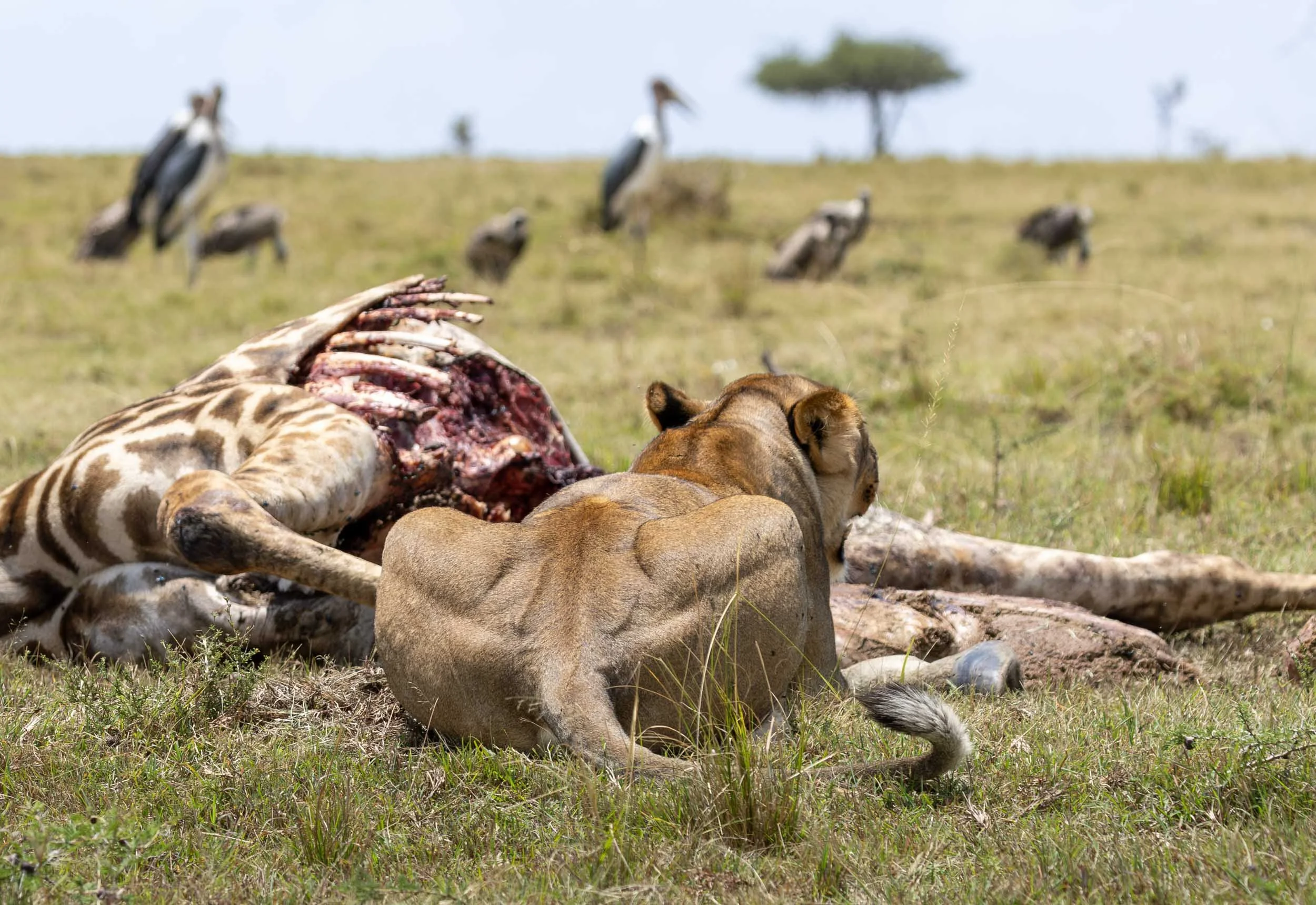
Lioness guarding a giraffe kill as the scavengers assemble, Naboisho Conservancy
Many of the most memorable wildlife encounters took place in Naboisho Conservancy.
One of the most striking involved a lone lioness guarding a giraffe kill, while ever increasing numbers of vultures, marabou storks, and jackals assembled nearby, patiently waiting. Two days later we returned to the site and were surprised by how little remained, almost as if the kill had never happened.
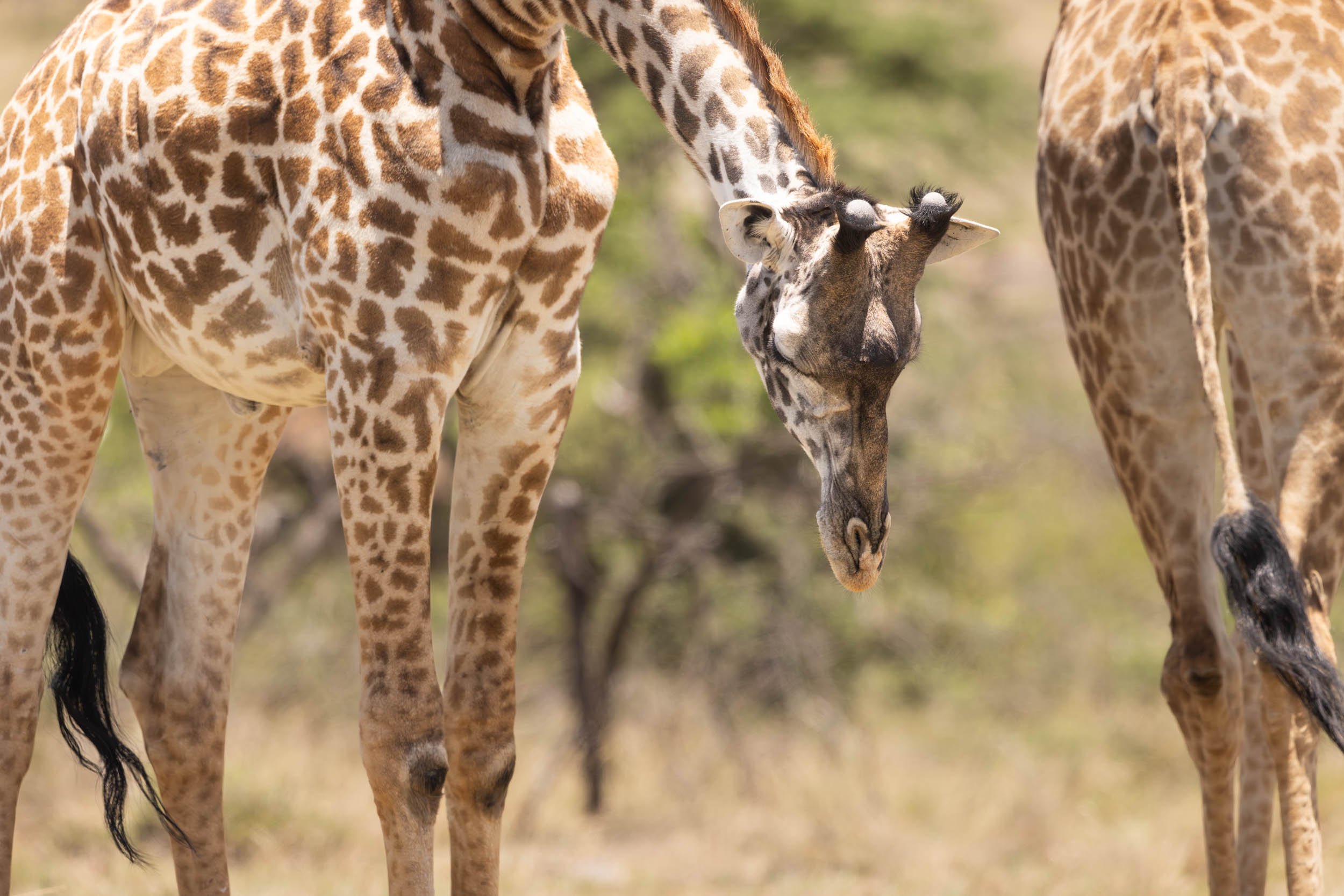
Group of giraffes appeared to be mourning at the giraffe kill-site two days later, Naboisho Conservancy
At the original kill site, a group of giraffe had gathered with heads bowed where the carcass had been. Nearby, they moved to the remains of a leg, spreading their front legs to lower their heads, sniffing and even licking the remains. Witnessing giraffe exhibiting behaviour that resembles mourning is considered extremely rare and has only been documented a handful of times by scientists. It was humbling, emotional, and a powerful reminder of the depth of animal behaviour and the reality of the natural cycle.
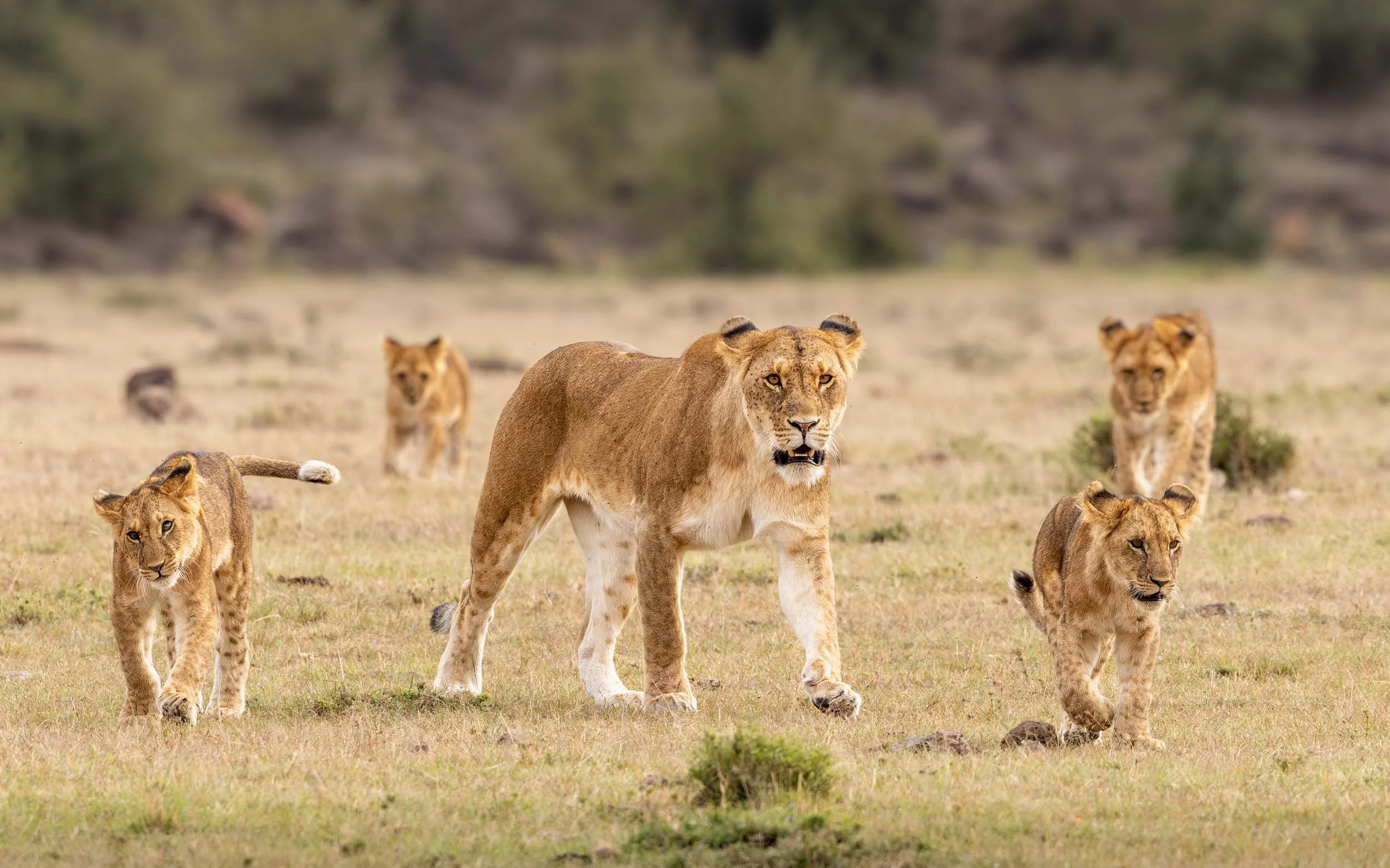
We also had regular encounters with the Ilkisiausiau lion pride, observing multiple cubs and a wide range of social interactions over several days.
Beyond lions, we encountered hyenas, jackals, a female leopard, a wide variety of herbivores, and an excellent range of birdlife including birds of prey.
Activities Beyond Wildlife Monitoring
In Pardamat, we also conducted tree surveys alongside wildlife monitoring. We surveyed trees that had been damaged or killed by elephants, recording species and measuring tree height, canopy width, and trunk size. This helped build understanding of which trees elephants preferred and how their movement patterns influenced habitat impact. At Naboisho we also spent time removing evasive weeds along the road tracks. On one occasion, while we were weeding, a lone hyena walked nearby in the same direction. Naturally this caused some concern among the group, and it was hard not to find it slightly amusing when Eric reassured us there was nothing to worry about while he remained safely in the Landcruiser driving slowly behind us.
We visited a local school, delivering donated stationery and spending time with pupils and teachers. We also attended a local market where livestock, fruit, vegetables, and household goods were traded. These visits offered valuable insight into daily life and the economic realities that underpin conservation decisions.
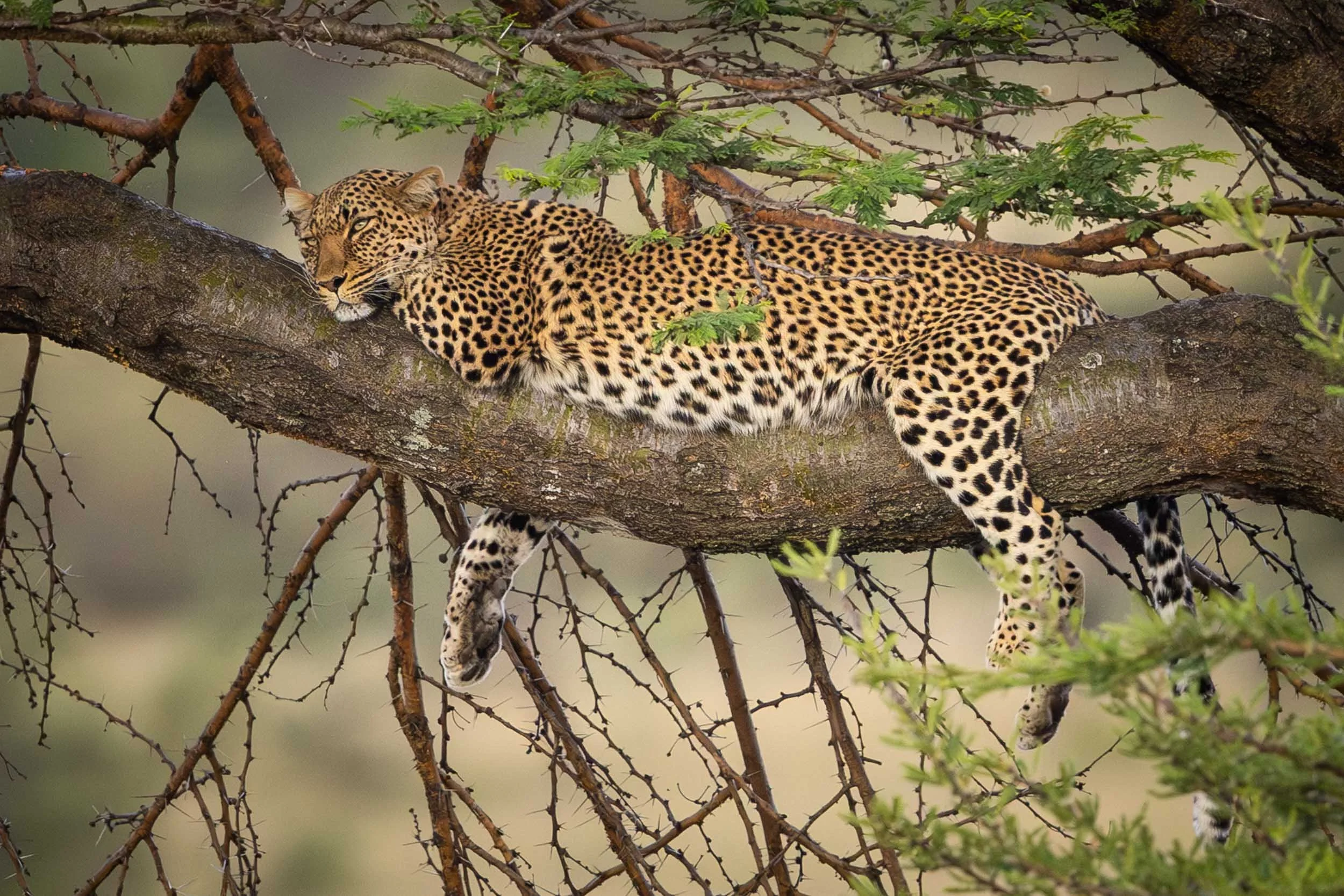
Female leopard resting in a tree after consuming a kill, Naboisho Conservancy
Weekend Excursions
Optional weekend excursions were available at additional cost.
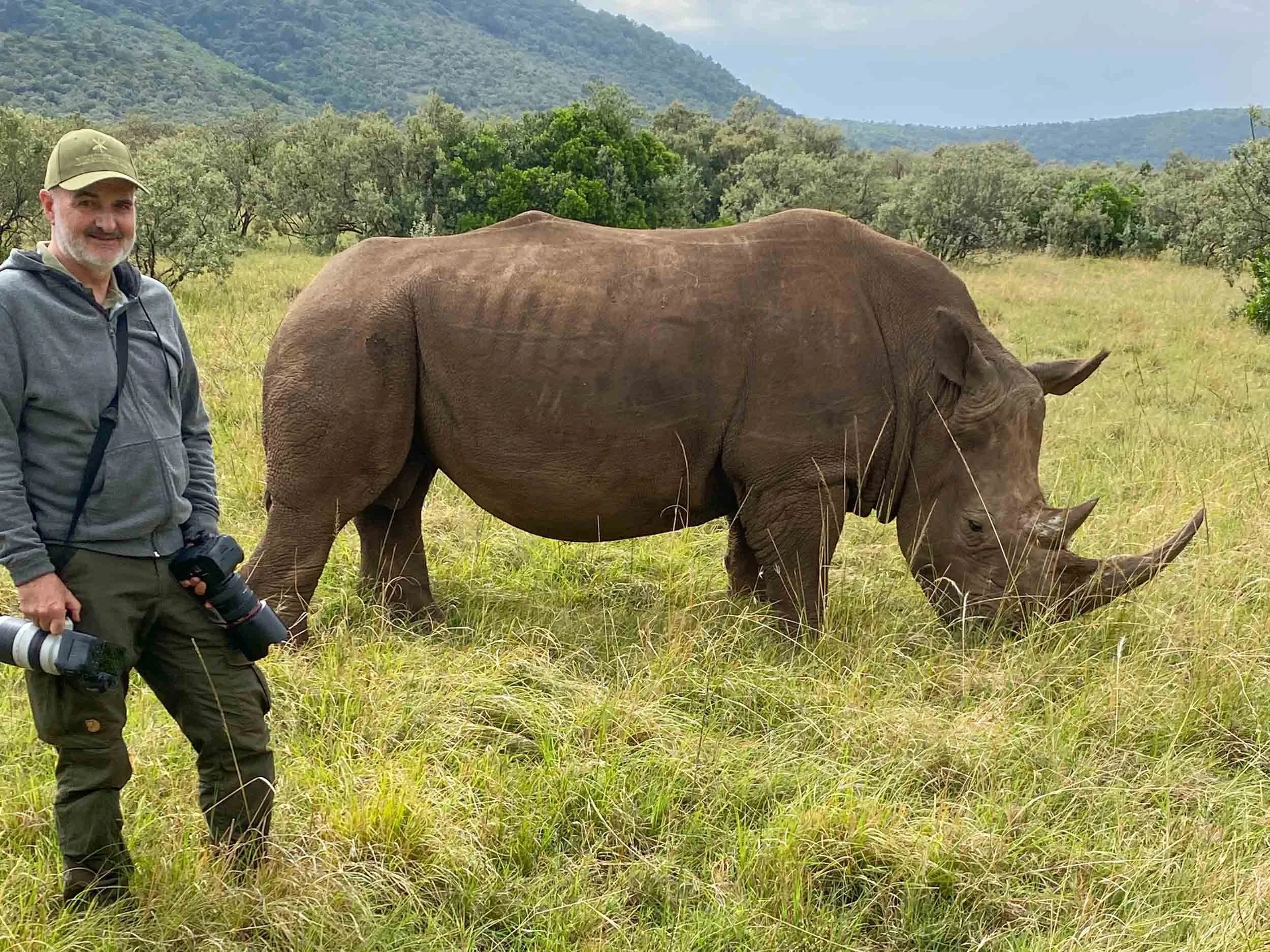
Walking with Queen Elizabeth, one of two white rhinos at Olchorro Oirowua Conservancy
One highlight was visiting the Masai Mara National Reserve during the Great Migration period. A river crossing had taken place the day before our visit, highlighting how dependent these events are on timing and luck. Although we did not witness a crossing ourselves, vast mixed herds of buffalo, wildebeest, and zebra were present, including animals grazing on the Tanzanian side of the Mara River. Standing in such an iconic landscape and seeing the Mara River with my own eyes was still a memorable experience.
Another excursion involved a two hour drive each way to Olchorro Oirowua Conservancy for a guided walking experience with the region’s only two southern white rhinos, Kofi Annan and Queen Elizabeth. Walking alongside armed rangers who protect them around the clock was both unforgettable and sobering.
A guided hike provided yet another perspective, offering time to appreciate the landscape and ecology on foot.
Challenges and Realities
This was not a luxury experience. Accommodation was basic, food was simple, Wi Fi was unreliable, and wildlife was free to move through camp. Strong winds at night, early starts, and long days were the norm.
That said, the experience never felt unsafe. Rules existed for a reason, and following them was essential. You quickly learn that common sense, awareness, and respect for the environment are non negotiable.
Final Thoughts
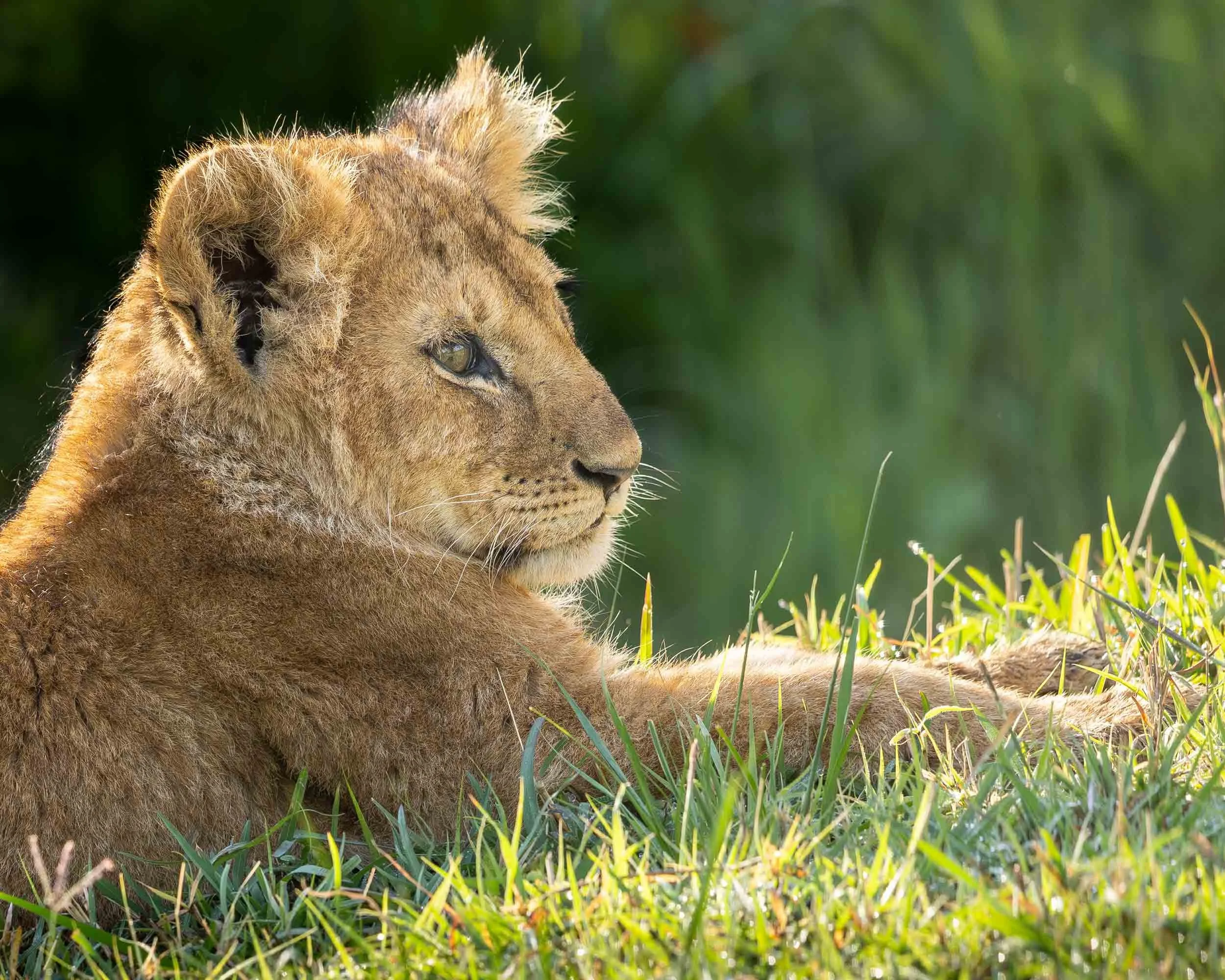
Lion cub portrait at Naboisho Conservancy
This project deepened my understanding of conservation, wildlife behaviour, and the realities faced by communities living alongside wildlife. It reinforced the importance of patience, curiosity, and humility when working in natural environments.
I left with greater respect for the people protecting these ecosystems and a stronger appreciation for the complexity of coexistence. It was an experience that will shape how I travel, photograph, and think about conservation going forward.
Whatever you photograph, have fun.
If You Are Considering a Conservation Volunteering Project
This type of experience suits people who are open minded, adaptable, and willing to contribute. It may not suit those seeking comfort, constant photography opportunities, or guaranteed sightings.
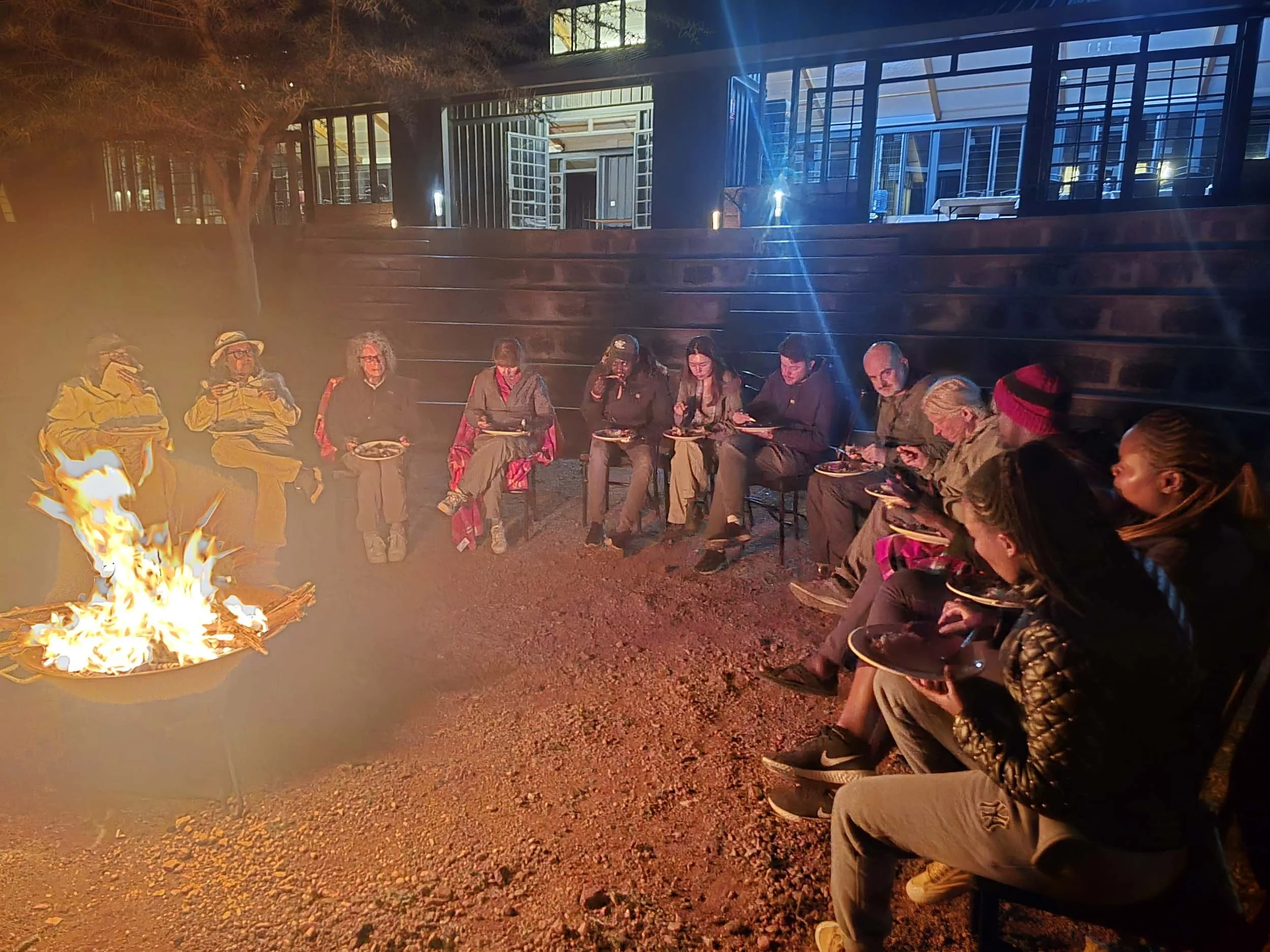
Farewell dinner around the campfire
You truly get back what you put in.
Useful Links
This guide is part of my On Location wildlife photography series, where I share practical advice and real life experiences from photographing wildlife in the UK, Europe and Africa.