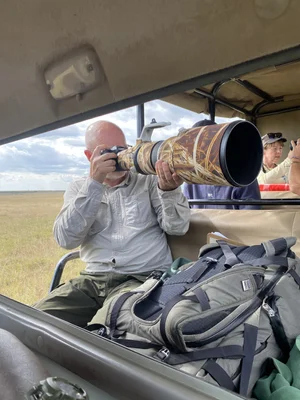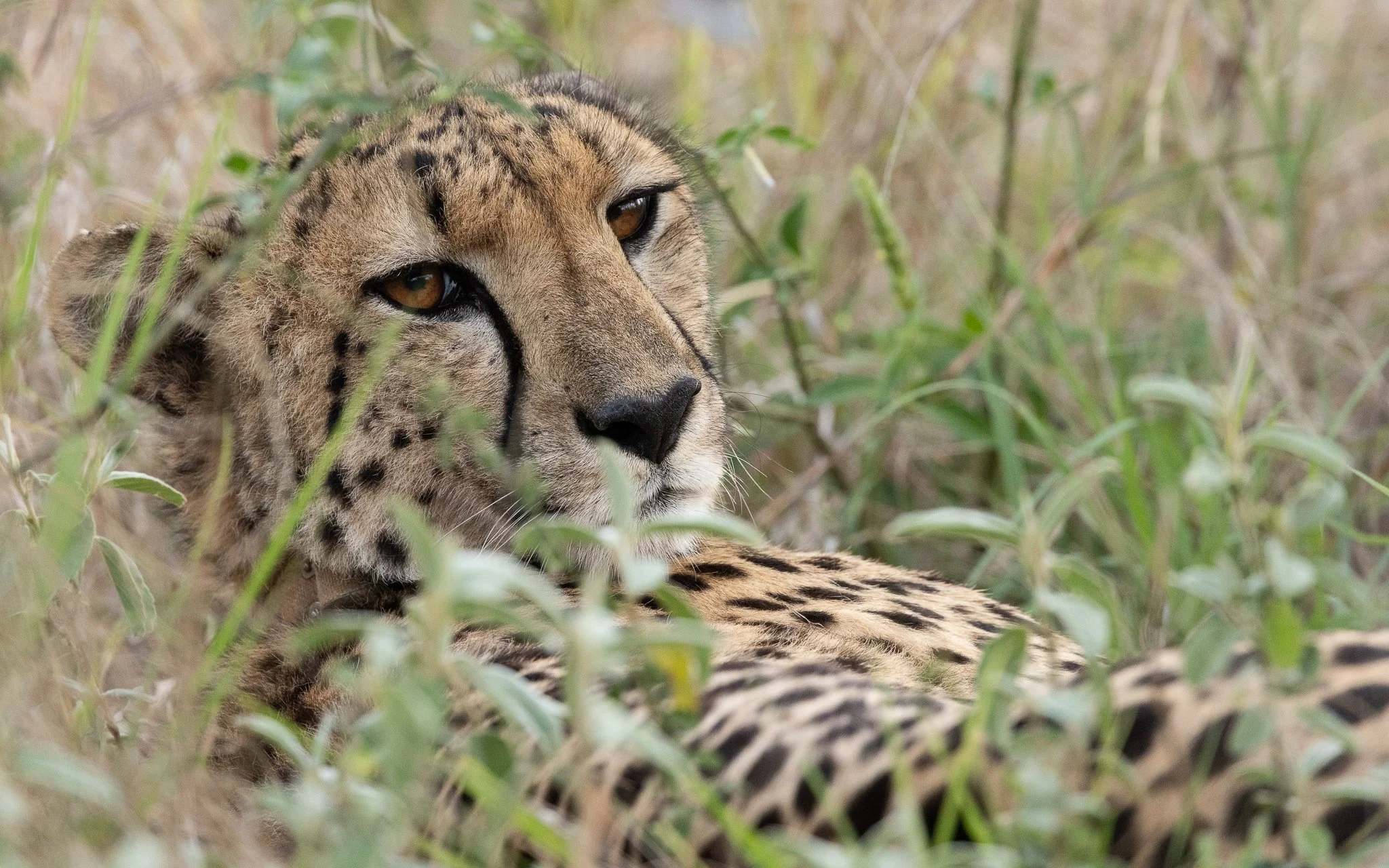
Following my experience volunteering on a big cat conservation project in Kenya in 2025, I was keen to return to Africa to continue learning about wildlife conservation and the challenges involved in protecting and managing wildlife populations.
In October 2026, I spent two weeks volunteering with the research team at Selati Game Reserve, a privately managed reserve in South Africa's Limpopo Province.
I was particularly interested in learning more about animal collaring, telemetry and tracking techniques, and how researchers use this information to monitor wildlife behaviour and wellbeing.
After researching several programmes, I chose Selati for the range of wildlife monitoring activities it offered. An added benefit was being able to book directly with the reserve, making communication straightforward and ensuring my payment went directly to Selati.
During my previous volunteering experience in Kenya, my photography skills had been used to support the research. At Selati, this wasn't required, as the field guides all carried cameras and regularly used their photographs to support research and update individual animal identification kits.
My two weeks at Selati provided plenty of opportunities to continue learning, some memorable wildlife encounters and a valuable insight into the behind-the-scenes workings of a private game reserve, including the many challenges it faces.
About Selati Game Reserve
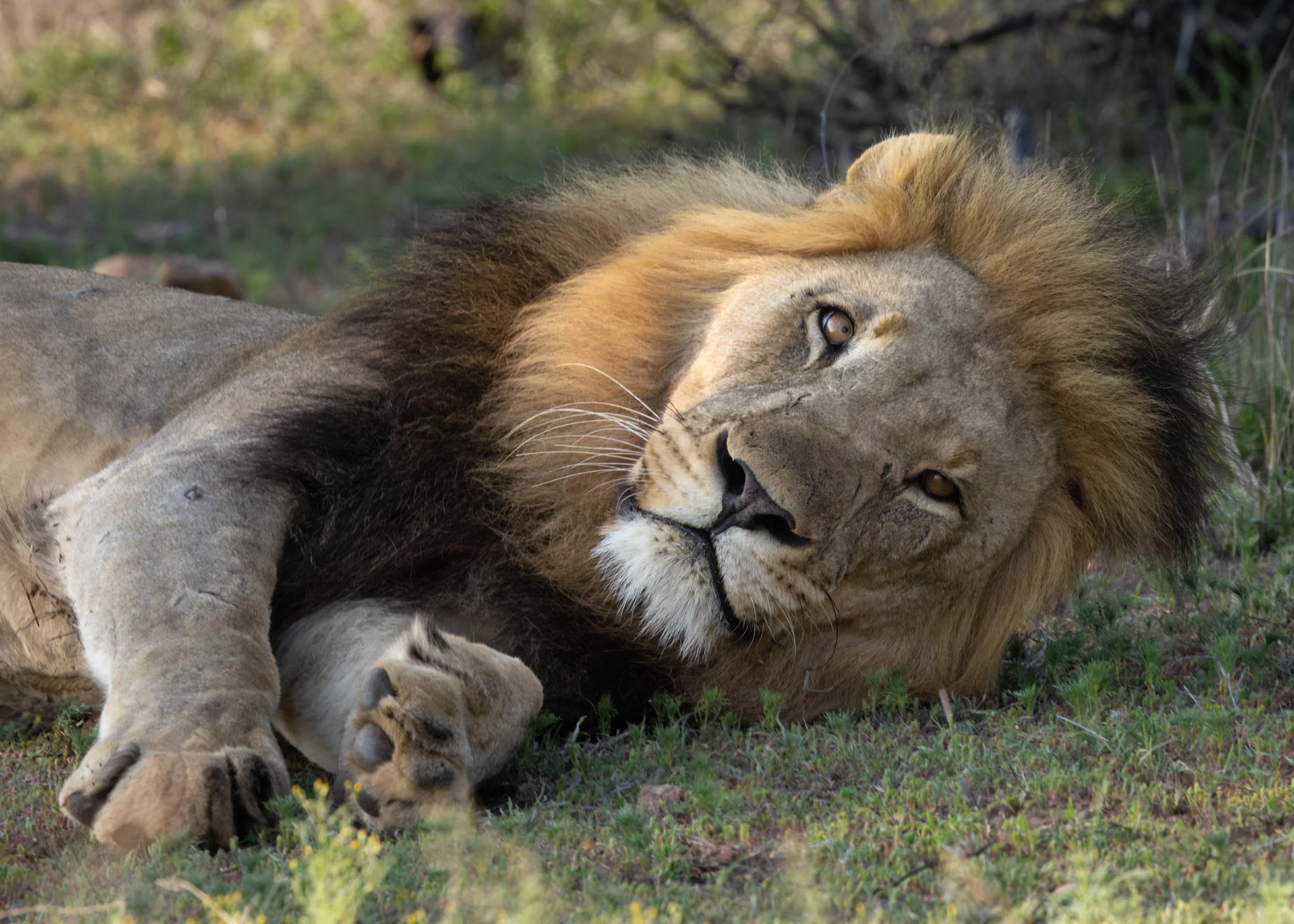
Selati Game Reserve is situated in South Africa's Limpopo Province, near Gravelotte and to the west of Kruger National Park.
Established in 1993 through the consolidation of several privately owned properties, the reserve covers approximately 27,000 hectares. The landowners work collectively through a management structure responsible for conserving the reserve's wildlife and habitats.
Selati is home to the Big Five, along with cheetahs, hyenas, antelope and a wide variety of birdlife and smaller animals.
Unlike the open conservancies I had visited in Kenya, Selati is enclosed by a perimeter fence. Wildlife populations therefore require careful monitoring and, where necessary, management to maintain ecological balance.
Maintaining a reserve like Selati is expensive, with significant ongoing costs associated with fencing, roads, vehicles, wildlife monitoring, anti-poaching operations and veterinary care. What I hadn't appreciated was that, for some reserves, revenue from hunting can play an important role in covering these costs, particularly during their early years as they work towards becoming financially sustainable, which is currently the case at Selati.
Although I remain uncomfortable with hunting, my discussions with the team helped me better understand the financial pressures involved. My understanding was that Selati hopes to reduce its reliance on hunting as alternative sources of income develop.
It was an early reminder that conservation is not always as straightforward as it might appear from the outside.
The Selati Research Team
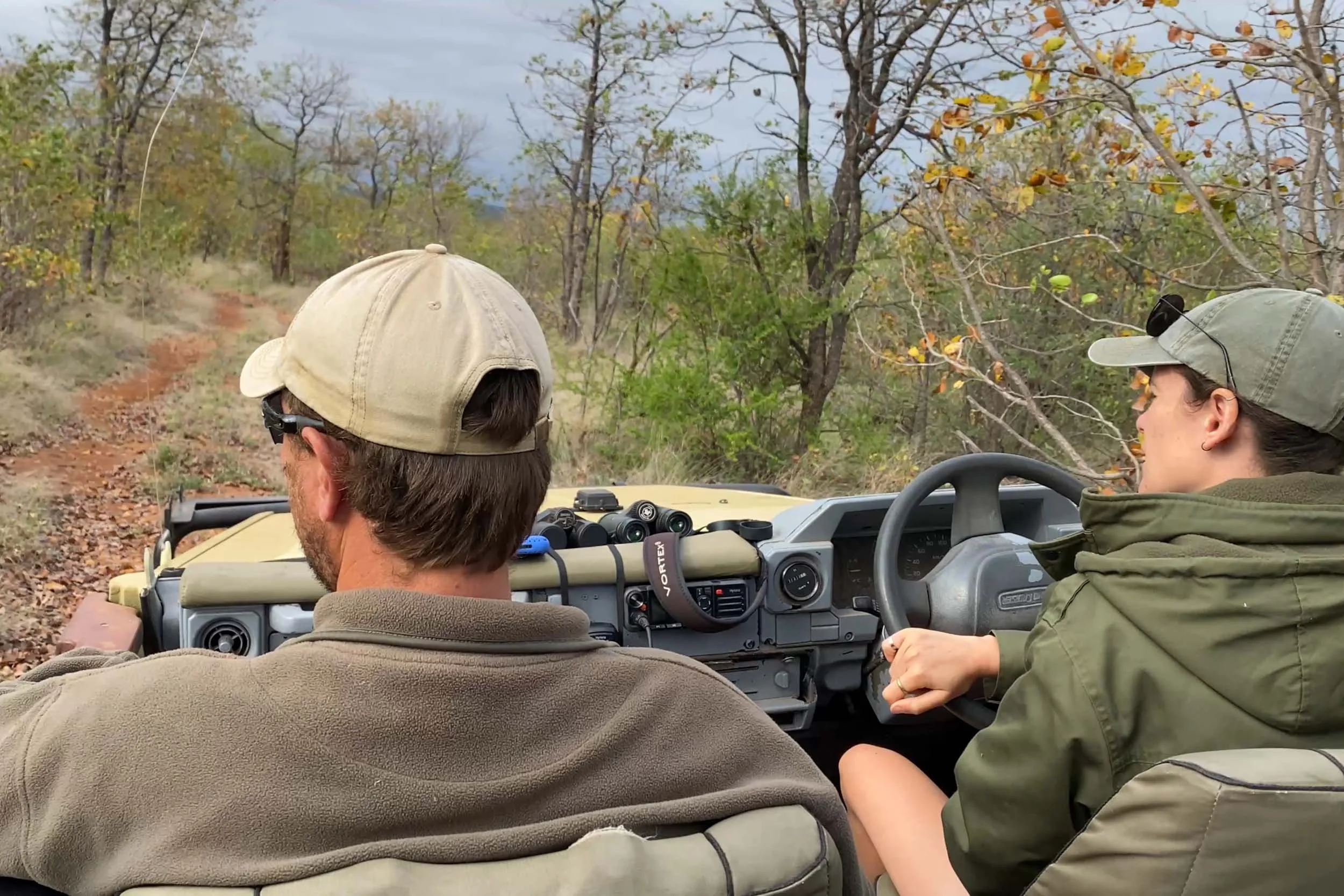
Selati Research field guides Stefan and Storm lead a game drive in search of lion kill sites.
One of the strongest aspects of the experience was the opportunity to work as a volunteer for Selati's in-house research team.
The programme is overseen by Wildlife Manager Steve Seager, who is responsible for monitoring wildlife across the reserve, advising on management decisions and coordinating the volunteer programme and wildlife operations. Steve was back in the UK during my visit, so unfortunately we didn't meet.
In his absence, Madeline Siegel, known as Mads, was managing the day-to-day research operation. As Research Coordinator and Field Guide, she established the weekly monitoring schedule, determined research priorities and coordinated the team's activities, alongside her own fieldwork and data analysis.
Mads was often in the research office while we were reviewing camera-trap footage. She also spent time out on the reserve undertaking monitoring work, including investigating potential lion kill sites, always accompanied by her dog Jasper.
Jasper was the camp's guard dog, completely fearless when out in the bush, but equally happy receiving plenty of fuss and attention from the volunteers.
Our three principal field guides were Storm, Mac and Stefan, who took the volunteers on their daily monitoring drives.
Storm was from South Africa and had previously worked at a safari lodge before joining Selati around eight months earlier. Mac, a fellow Brit, had been at Selati for approximately 18 months and was particularly involved in rhino monitoring. Stefan was an intern who had been with the team for around seven months.
All three were knowledgeable, approachable and clearly passionate about their work.
What particularly impressed me was their willingness to continue learning. They encouraged questions and, if they didn't know an answer, would make a point of researching it rather than guessing.
There was a strong sense of teamwork, and their enthusiasm for wildlife and conservation was infectious.
Selati's research programme began in 2016 and has developed a range of monitoring projects that provide information to support reserve management. Some of the research reports and supporting material are available through the reserve's website.
The Volunteer Group
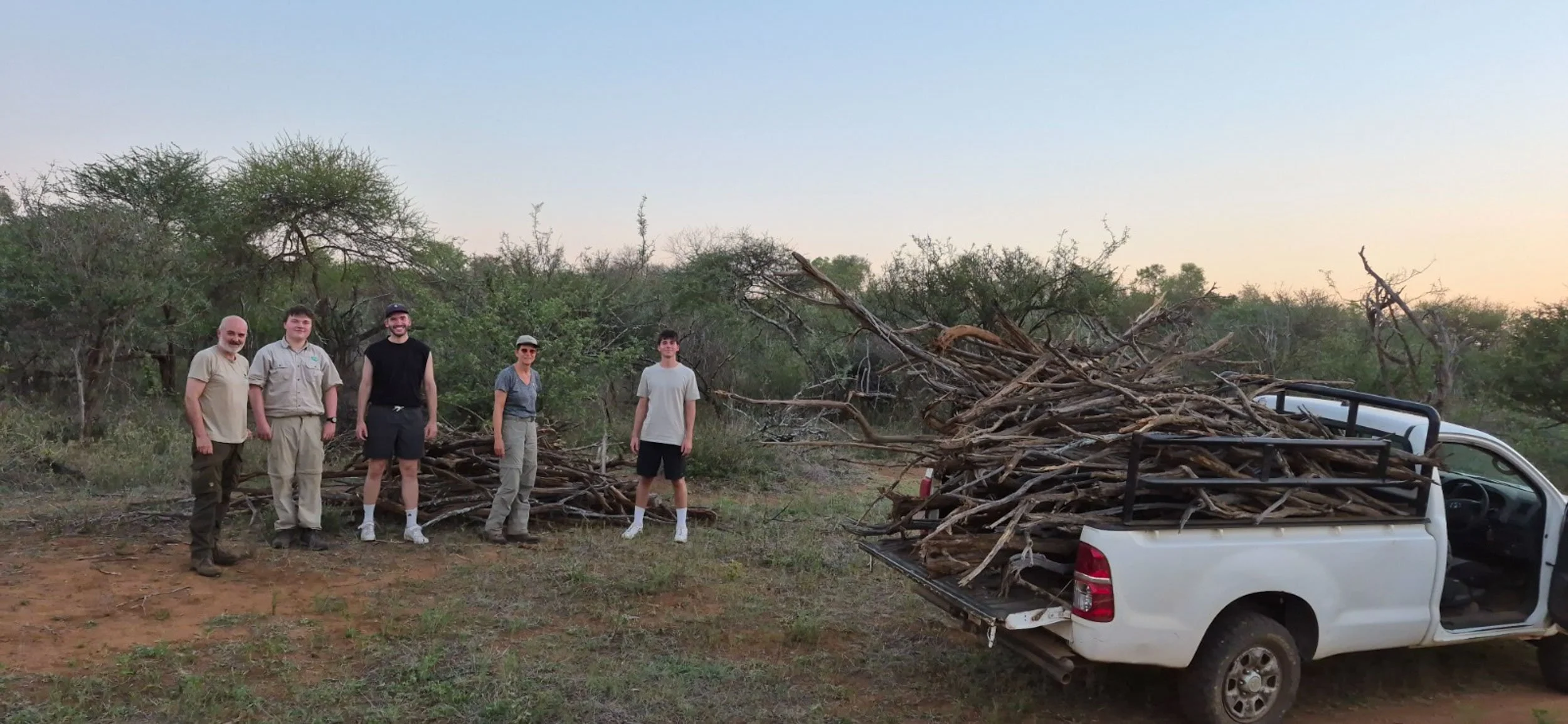
My fellow volunteers posing with the firewood we collected to fuel the pizza oven and braai. To think we had observed lions sleeping in this exact same spot the day before!
The number of volunteers varied throughout my stay, with people joining and leaving at different times.
When I arrived, I met Gerda and Leroy, both from the Netherlands. Gerda was already three weeks into an eight-week stay, while Leroy had arrived just an hour before me.
During my second week, we were joined by Zac, originally from South Africa but now living in Australia, and Christopher from Germany. Both were taking time out before university.
Ciara, from Devon in the UK, arrived shortly before I left, with further volunteers expected over the following weeks.
The relatively small group meant everyone had plenty of opportunities to participate in the research activities and get to know the guides.
We shared responsibilities around camp and spent evenings talking about the day's experiences, wildlife encounters and plans for the following day.
As volunteer numbers increased, the research team could divide participants between vehicles to undertake different monitoring activities simultaneously.
Accommodation and Life in Camp
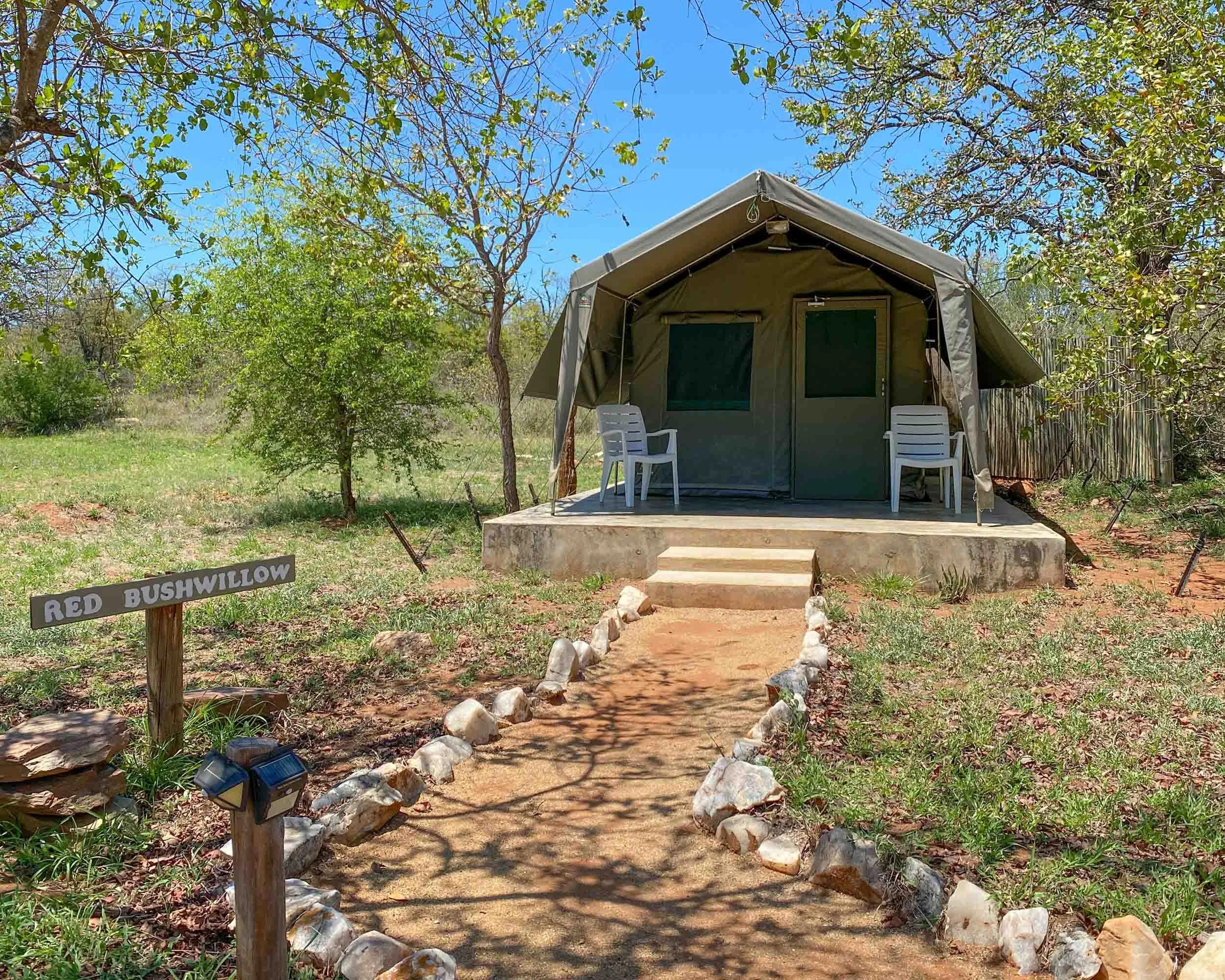
My home for two weeks
Accommodation was provided in large canvas tents, each designed to sleep two or three people. I was fortunate to have a tent to myself.
Each tent had an adjoining toilet and shower area, partially open to the outside. Showering while surrounded by the sounds of the African bush took a little getting used to, but I soon came to enjoy it.
The main communal building provided a dining area, lounge and space for volunteers to relax. Outside was a swimming pool and raised deck overlooking a waterhole, separated by a low electric tripwire fence.
A family of warthogs were regular visitors, along with a particularly impressive male nyala. One evening, a white rhino also appeared at the waterhole.
Food was plentiful and served buffet-style, with everyone helping themselves. Friday evenings involved making our own pizzas, while Sunday evenings usually featured a traditional South African braai.
Unlike my experience in Kenya, where I managed to lose weight, I actually gained weight at Selati. Something the guides might have described as an increasing ‘belly score’, a term used when monitoring the feeding condition of lions and cheetahs!
During the day, the heat could be difficult to escape. The tents were like saunas, despite the electric fans, and although the communal area was a little more comfortable, the air-conditioned research office was by far the best place to be.
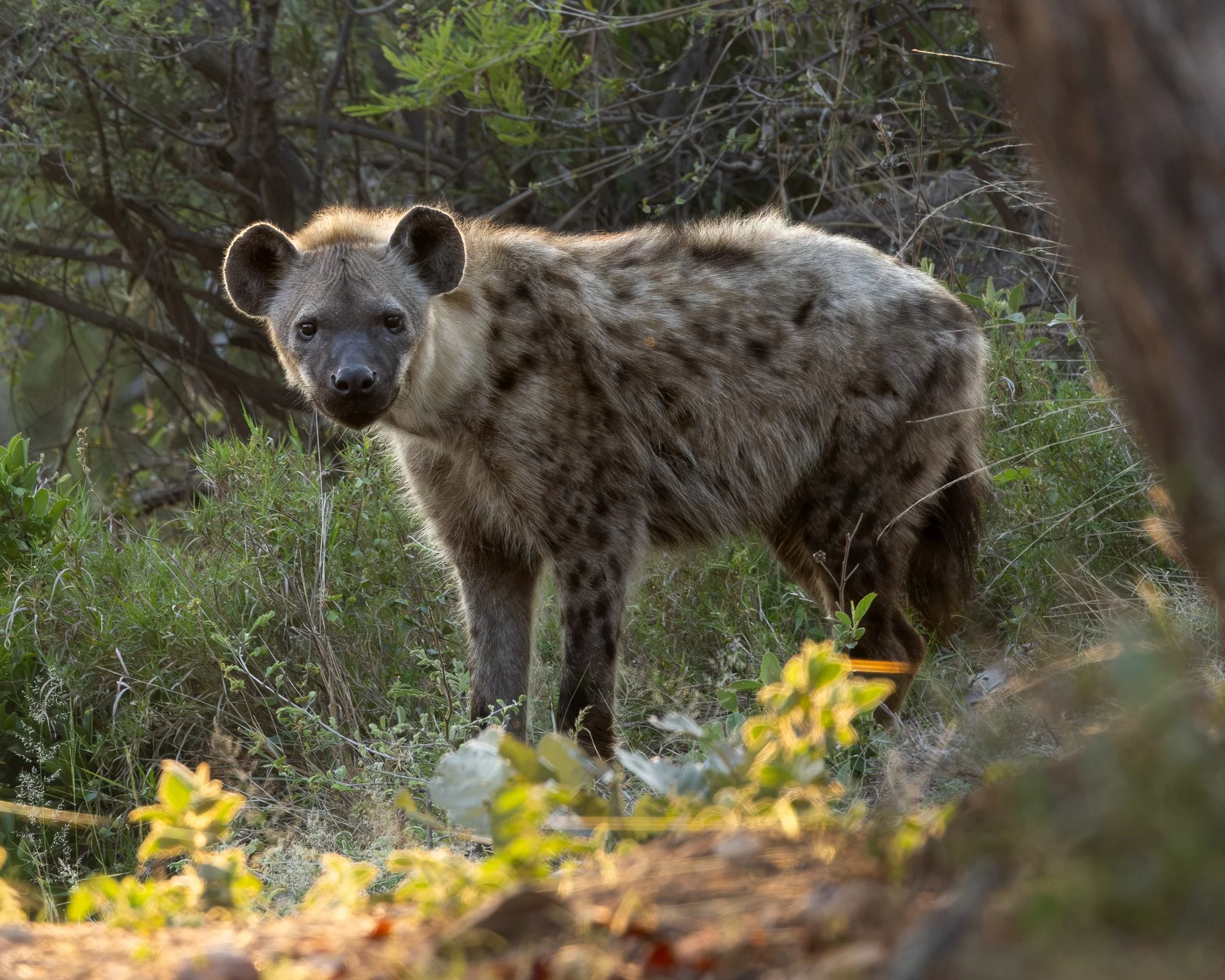
Sleep was often disrupted by hyenas and their eerie ‘whoop’ contact call inside the camp grounds.
Nights in camp were rarely silent.
Hyenas were regular visitors, and their distinctive calls could often be heard around the camp. A particularly vocal African red toad in the waterhole also took several nights to get used to.
Although the camp was fenced, there was an open gateway providing vehicle access to another part of the reserve. This was rarely used by the staff, but we knew that the hyenas and other animals made considerably more use of it, particularly at night.
The hyenas were known to rummage through bins and scatter the collection of skulls and bones that the guides had assembled over the years to help educate volunteers about different species and their anatomy.
One night I was woken by what sounded like a large cat growling, followed by a distressed animal squealing and another growl. I wasn't entirely convinced it hadn't been a dream until Gerda described hearing exactly the same thing over breakfast.
Surprisingly, the greatest disturbance was traffic on a nearby road. Devastating floods had affected large parts of Limpopo Province in January 2026, causing loss of life and extensive damage to roads and bridges, including routes around Gravelotte and Phalaborwa. As a result of the damage, traffic was being diverted past our camp.
It took me several nights to become accustomed to the frequent cars and heavy lorries rumbling past throughout the night.
A Typical Day as a Volunteer
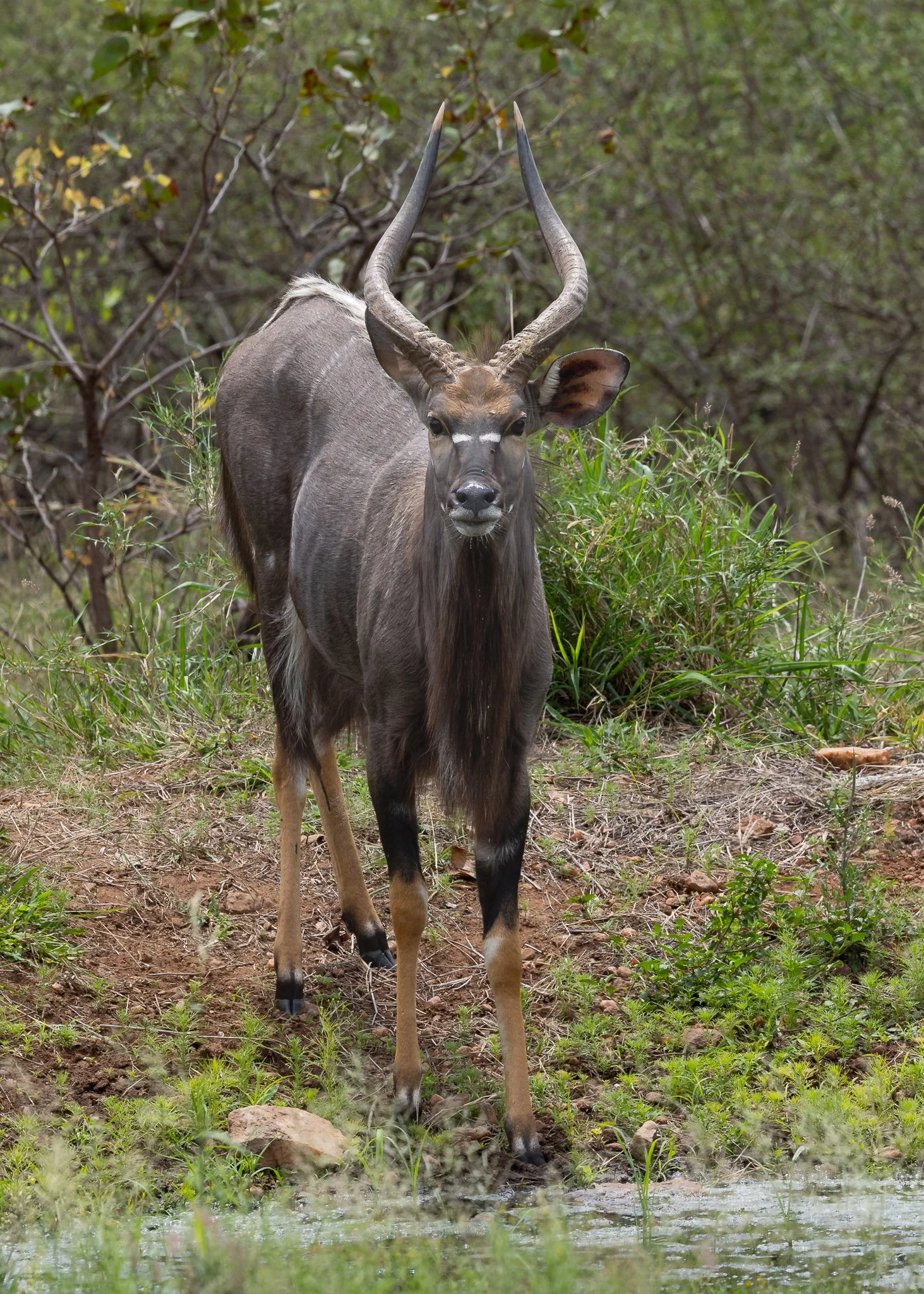
Male Nyala visits the camp waterhole at lunchtime.
The programme operated six and a half days a week, with Sunday afternoons free.
From Monday to Saturday, we normally undertook two game drives each day, with a morning drive on Sundays. As with most wildlife activities, these generally took place during the early morning and late afternoon when animals were more active, with occasional night drives.
These were not conventional safari drives. Each outing had specific research objectives, displayed on a weekly schedule in the communal area.
Activities included locating and monitoring rhinos, cheetahs, lions and elephants, conducting game counts, assessing elephant damage to vegetation, checking camera traps, monitoring raptor nests and investigating potential lion kill sites. There were also practical tasks, such as collecting firewood for the camp's pizza oven and braai.
The daily programme could change depending on sightings, research priorities and operational requirements.
Between game drives, we would normally spend at least an hour each day in the research office reviewing photographs from camera traps positioned across the reserve. The air conditioning in the office was certainly an added incentive during the heat of the day!
Volunteers helped identify species, count animals and, where possible, record information about age, sex and herd structure.
Identification and monitoring of individual larger predators and rhinos, as key research species, were the responsibility of the full-time research team.
This could be painstaking work, particularly when a camera trap recorded a large herd moving through the frame, but it was an important part of the monitoring programme.
There was also a duty rota covering communal responsibilities, including washing up after meals.
Wildlife Monitoring and Research
One of the main reasons I chose Selati was the opportunity to gain practical experience of different wildlife monitoring techniques.
Every drive involved recording wildlife sightings using an iPad-based system.
We recorded species, numbers, body condition and how animals responded to the presence of our vehicle. On selected monitoring days, we also collected more detailed information about herd composition.
Having used paper recording sheets during my Kenya volunteering project, I found the app-based approach considerably easier.
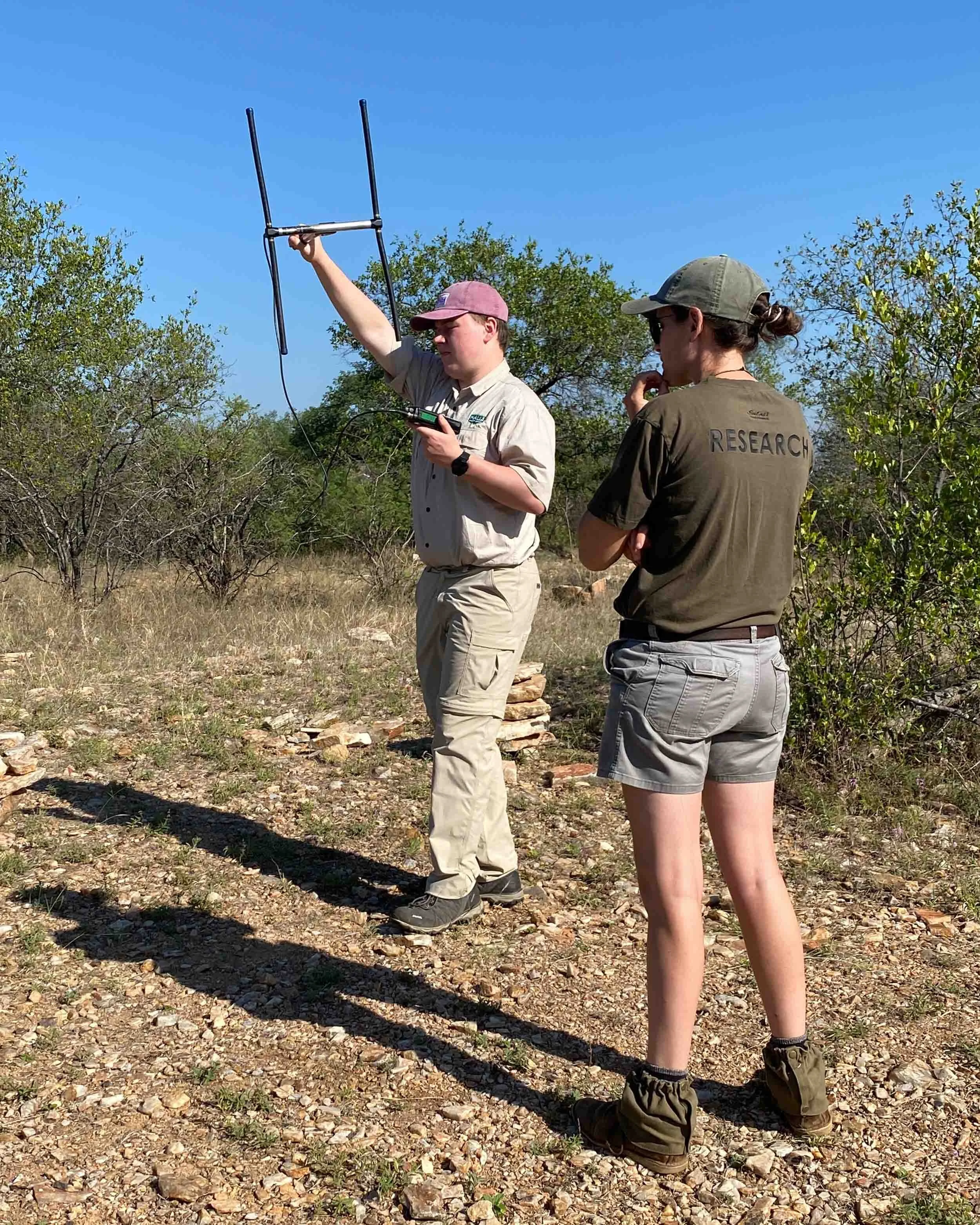
One of my fellow volunteers, Christopher using telemetry to track one of the collared cheetahs under the watchful guidance of our field guide Storm
The research team also used GPS tracking collars and telemetry to monitor important species.
Several lions and elephants, all three resident cheetahs and many of the rhinos were fitted with tracking devices.
The guides could access an application showing the last recorded position of collared animals. However, parts of the reserve had limited coverage, meaning some animals could disappear from the system for several days.
This was where traditional radio telemetry became particularly useful.
We learnt how to operate the tracking equipment, following signals to help locate individual animals. I wouldn't claim to have become particularly proficient, but it gave me a much better understanding of the work involved.
Another interesting activity involved investigating potential lion kill sites.
By studying movement patterns of collared lions on the research app, the team could identify areas where the animals had spent prolonged periods, suggesting a possible kill.
We investigated several locations on foot, which always felt a little daunting, knowing we might be approaching an area where lions had recently been feeding. However, we trusted our guides and their knowledge of the animals and the bush to keep us safe.
On one occasion, we managed to find evidence of a kill involving a female impala.
The remains included bones, fur and undigested grass from the impala's stomach. It was a little gruesome, but also fascinating to see how the researchers could use tracking data and physical evidence to piece together what had happened.
The team also used drones for selected monitoring activities, including locating wildlife away from the roads and surveying raptor nests.
We took part in elephant impact assessments, examining the damage caused to trees by feeding elephants.
These surveys helped build a picture of how elephants were affecting the vegetation and why maintaining a balance between wildlife populations and their habitats is so important.
Cheetah Monitoring
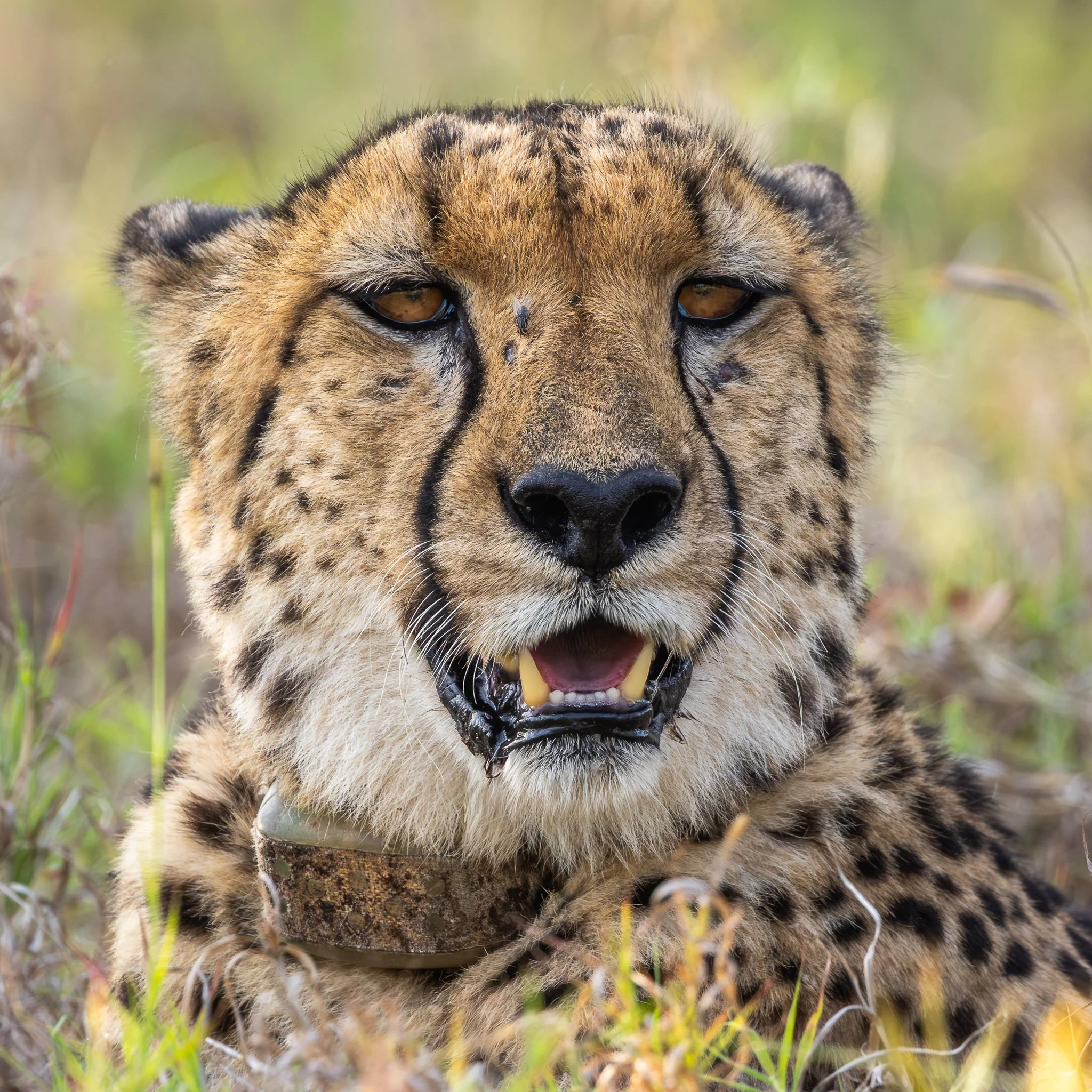
Cheetah with radio collar fitted.
Selati had three resident cheetahs during my visit: an adult male, an adult female and a younger female.
The research team aimed to locate and visually assess each animal every week, checking body condition and general wellbeing.
One of the highlights of my time at Selati was the opportunity to approach and observe these cheetahs on foot, under the supervision of our guides.
The cheetahs were accustomed to being monitored by the research team and generally remained relaxed in our presence. We we able to get surprisingly close to these magnificent big cats.
Being able to spend time so close to these animals, at eye level rather than from a safari vehicle, was a real privilege and provided some excellent photographic opportunities.
The younger female was the daughter of the resident male, making it important to move her to another reserve to avoid inbreeding and maintain healthy genetic diversity.
An exchange with another reserve had already been arranged, with the team awaiting completion of the necessary official paperwork before the move could take place.
It was another example of the decisions that have to be made when wildlife populations are managed within fenced reserves.
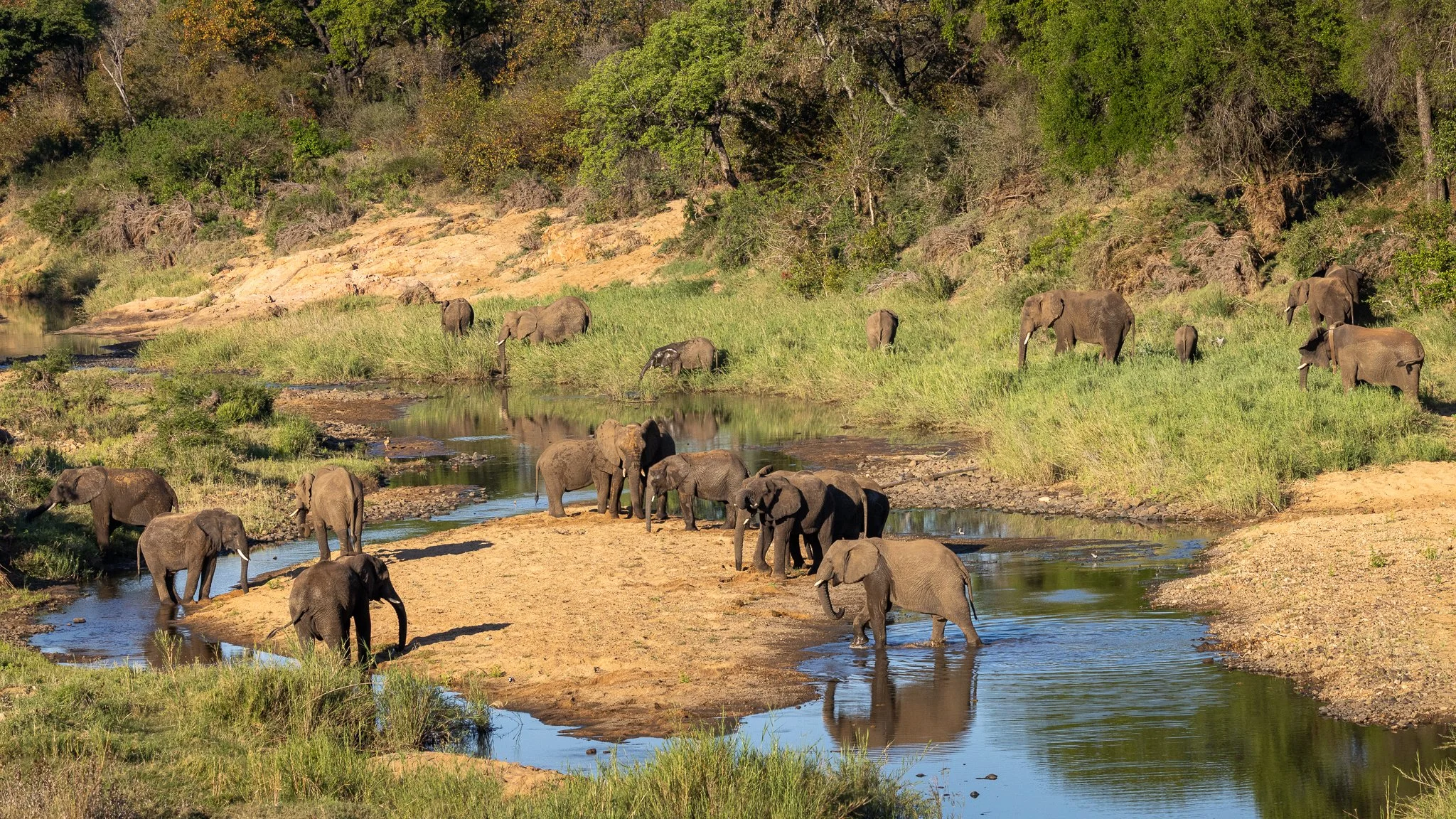
Elephant Encounters
Elephants were another important focus of the research programme.
One particularly memorable location overlooked a sandy area surrounded by water and vegetation, where herds regularly gathered to drink and cover themselves in sand.
I came to think of it as an elephant oasis.
We spent time simply watching the animals interact, with opportunities to observe the different age groups and relationships within the herds.
Immediately afterwards, as we continued along the track, we encountered more elephants feeding among the trees and blocking our way.
Rather than attempting to move them, we stopped and waited.
Several elephants wandered quite close to the vehicle, but our guide Storm remained calm throughout. Occasionally, a few gentle taps on the outside of the vehicle and some quiet words were enough to encourage an inquisitive elephant to move away.
These were some of my favourite elephant encounters of the trip, largely because there was no pressure to move on.
An Unexpected Encounter with African Wild Dogs
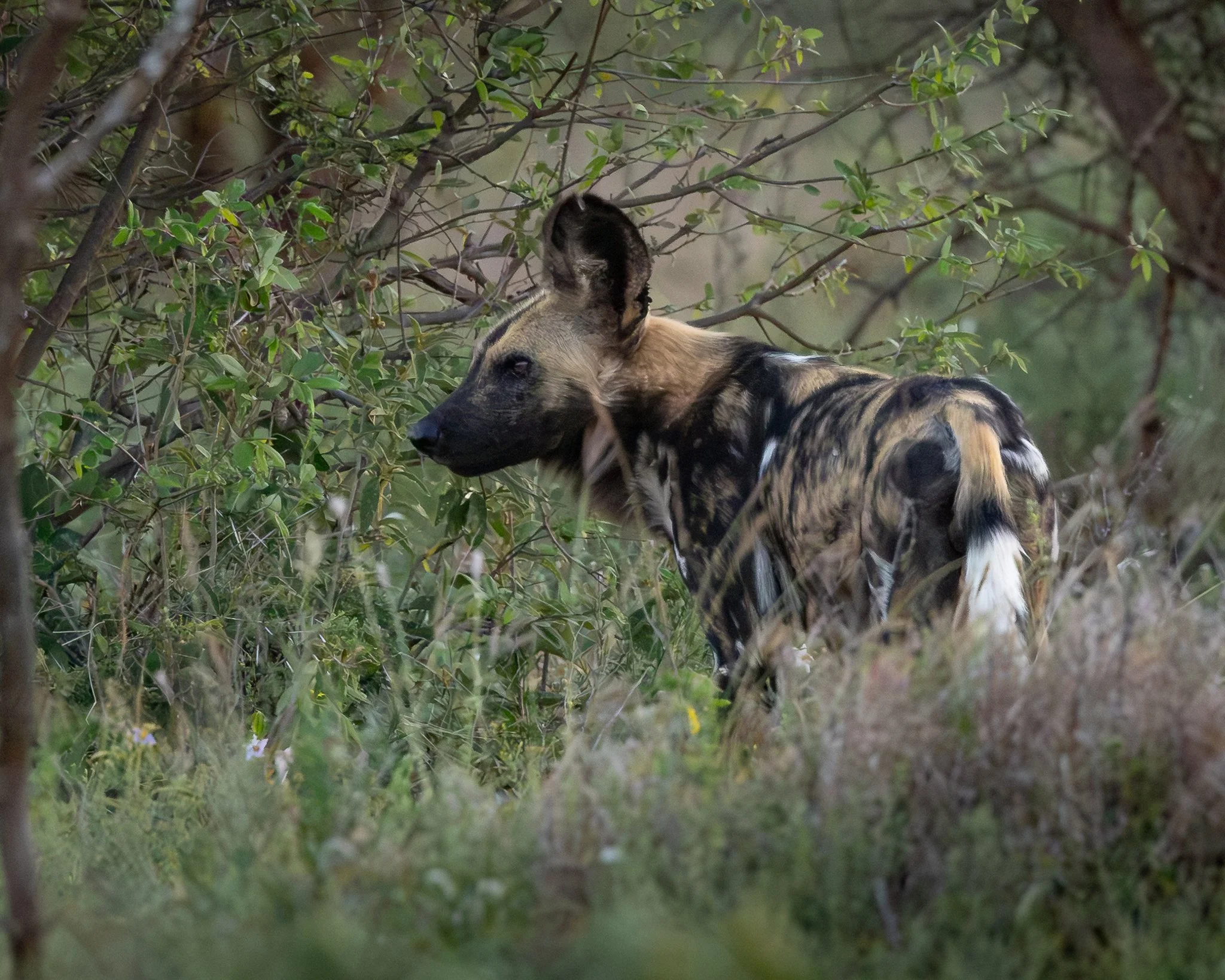
A fleeting glimpse of an African wild dog
African wild dogs had been near the top of my wildlife photography wish list for several years.
When I booked Selati, I knew the reserve no longer had a resident pack. I was told that its previous pack had regularly escaped through the perimeter fence, creating significant logistical and financial problems.
Wild dogs naturally travel considerable distances, and managing them within fenced reserves can be particularly challenging.
However, shortly before my arrival, a small pack that had travelled from Mozambique had found its way onto a neighbouring property whose owners didn't want the dogs to remain.
Selati agreed to lower a section of its fence and help move the pack onto the reserve using a helicopter.
In effect, Selati had gained a new pack of wild dogs, but without the responsibility and associated expense of retrieving them if and when they decided to move on again.
Suddenly there was a possibility of seeing a species I had not expected to encounter.
Fortunately one of the dogs had been collared in Mozambique, so we made several attempts to locate the pack using telemetry, but the dogs seemed to favour particularly dense areas of vegetation, which enabled them to remain hidden.
On one occasion, while we were all concentrating on Stefan slowly manoeuvring the drone in search of the pack in the undergrowth, a dog crossed the road directly in front of our vehicle.
By the time we realised what had happened, we caught little more than a fleeting glimpse of the back of its head!
Our final attempt came late in the afternoon, with Zac and Leroy helping operate the telemetry equipment while Storm worked to locate the pack.
Eventually, we managed to find them moving through the bush.
The light was fading rapidly, the dogs were constantly on the move, and the vegetation made photography extremely difficult.
Those of us with cameras managed a few photographs before the dogs disappeared again.
My photographs were taken at very high ISO settings and from less-than-ideal angles. I could offer plenty of excuses for the results, but none of that detracted from the experience of finally seeing African wild dogs in the wild.
It was one of the highlights of my time at Selati and has made me even more determined to see them again, hopefully with better photographic opportunities next time.
Other Wildlife Encounters
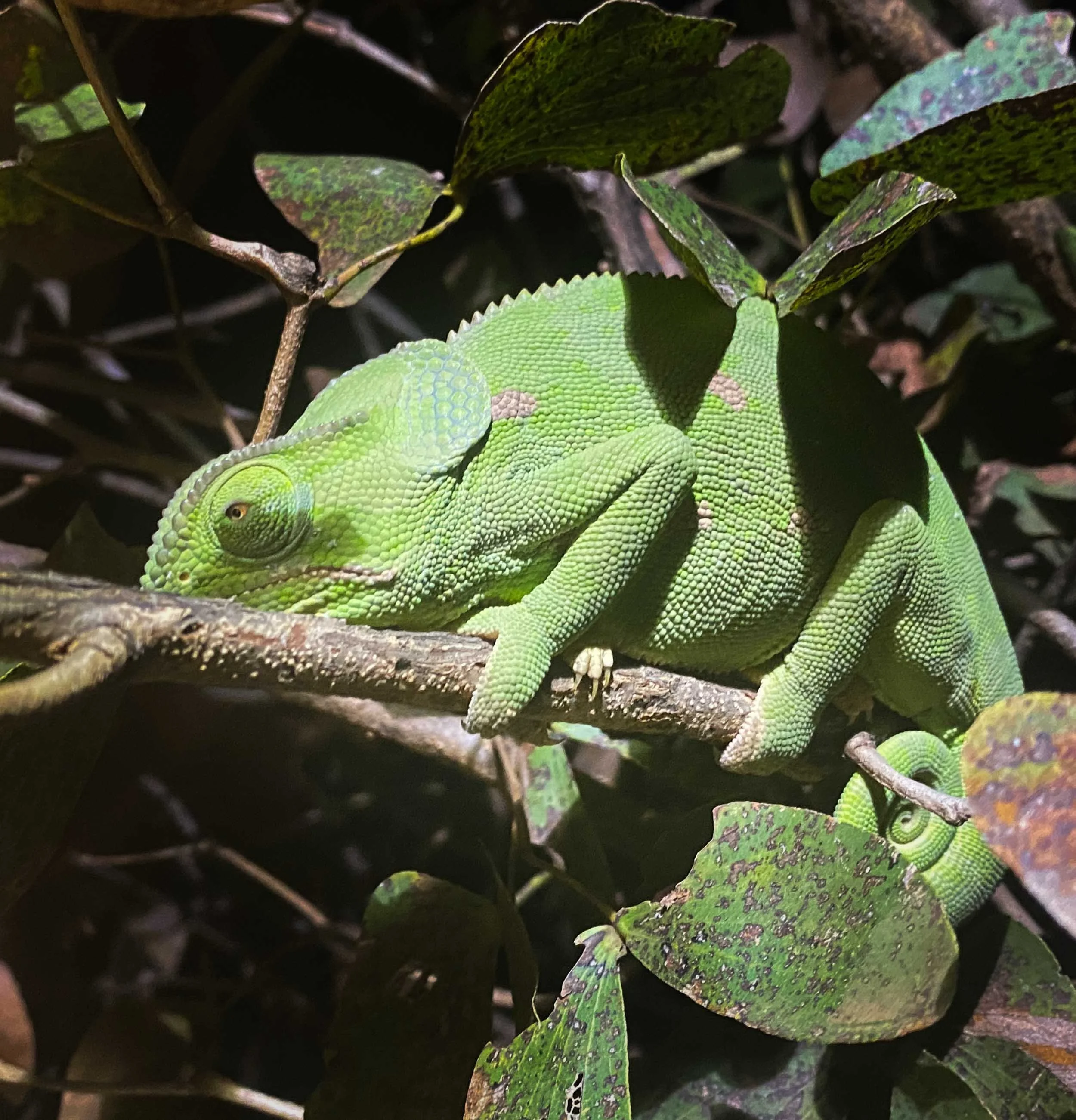
Chameleon taken on my iPhone during a night drive.
Beyond the larger mammals, Selati provided opportunities to observe a wide variety of smaller animals and birds.
Some were species I had never encountered before, including chameleon, dung beetles and a praying mantis.
Night drives were particularly interesting, although photographing nocturnal animals proved challenging.
We encountered civets, genets, scrub hares, bushbabies African scops owls and fiery-necked nightjars, often illuminated briefly by a spotlight before disappearing into the vegetation.
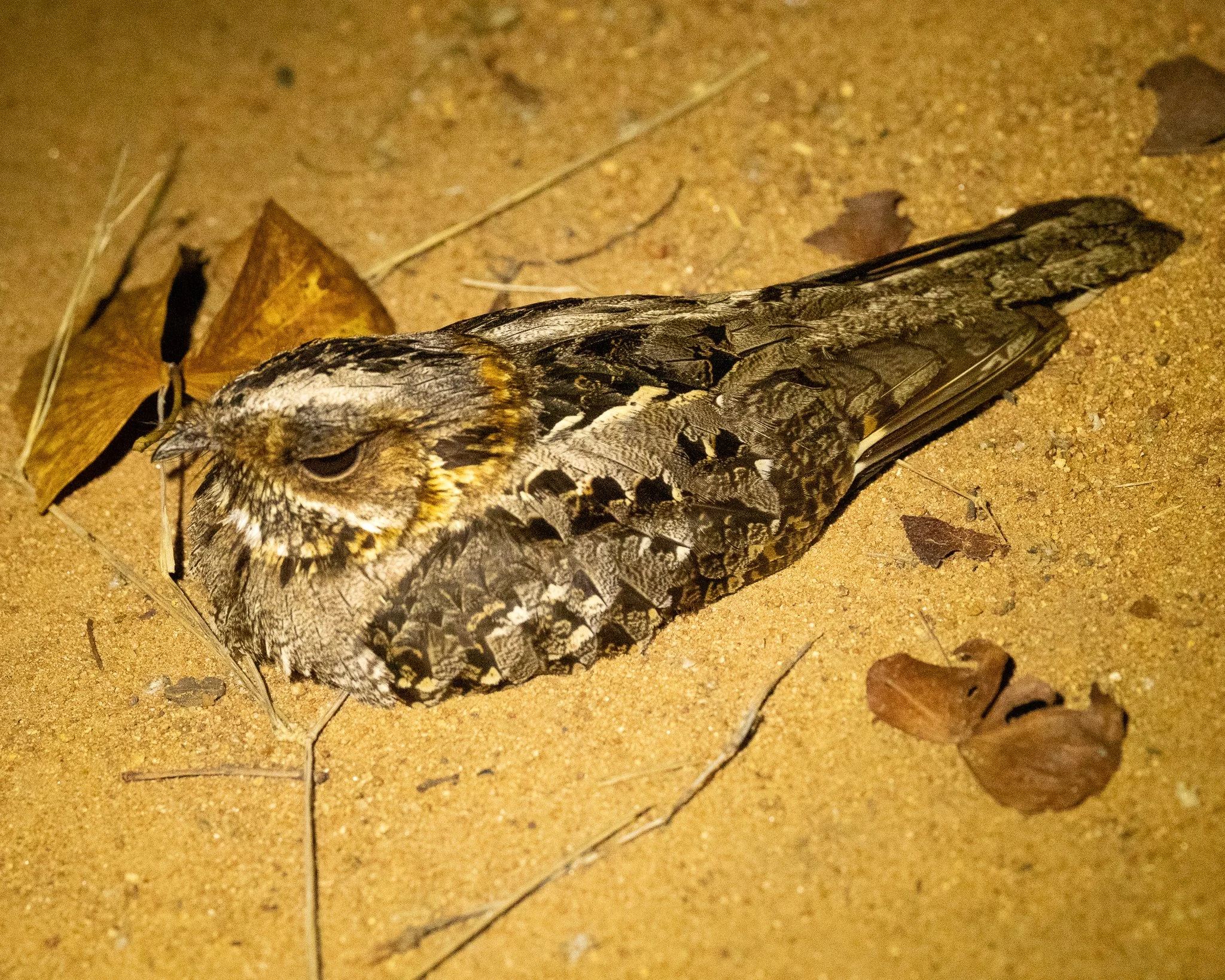
A fiery necked nightjar sits motionless next to our vehicle during one of our night drives.
The bushbabies were particularly difficult to photograph as they moved effortlessly through the trees, seemingly determined to evade the spotlights.
Photography relied on someone keeping a spotlight on the subject while I waited for the autofocus to find something to lock onto.
With small animals moving through vegetation, this wasn't always successful. I often found it quicker and more reliable to switch to manual focus and do things the old-fashioned way.
My favourite nocturnal sighting was an African wildcat, which appeared relatively unconcerned by our presence. It paused to drink before wandering past our vehicle.
Not every species was cooperative, and some sightings were far too brief for photography.
We didn't see buffalo or leopard during my two weeks, although somewhat frustratingly, a leopard was photographed by Stefan and the remaining volunteers on a night drive on the day I left!
Understanding the Challenges of Managing a Private Reserve
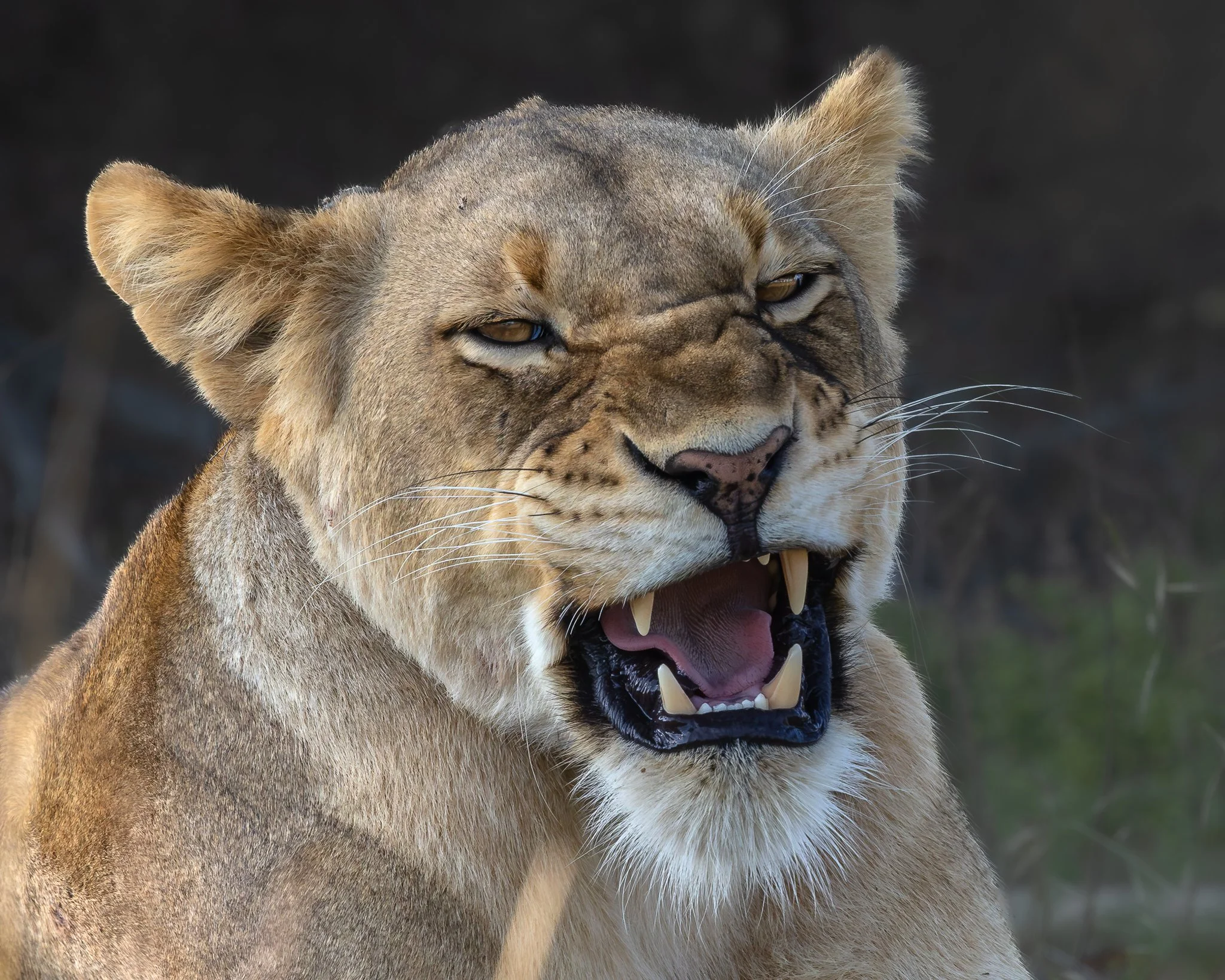
Snarling lioness…
Perhaps the greatest difference between Selati and my previous volunteering experience in Kenya was the management of wildlife within a fenced reserve.
In Kenya, I had worked in conservancies where wildlife could move across much larger areas, interacting with neighbouring communities and livestock.
At Selati, the research team had to consider how populations of different species affected one another and the available habitat.
Some elephants and lions were being managed through contraception, while the movement of selected animals between reserves helped maintain genetic diversity.
I was also surprised to learn how frequently animals could escape from private reserves.
The team explained that reserves are responsible for recovering escaped animals, particularly when tracking collars make their origin identifiable. This can involve hiring helicopters and veterinary teams, with considerable associated costs.
There can also be compensation claims if neighbouring properties suffer damage or lose livestock or game.
These were aspects of wildlife conservation I had previously given little thought to.
The Rhino Dehorning and Collaring Operation
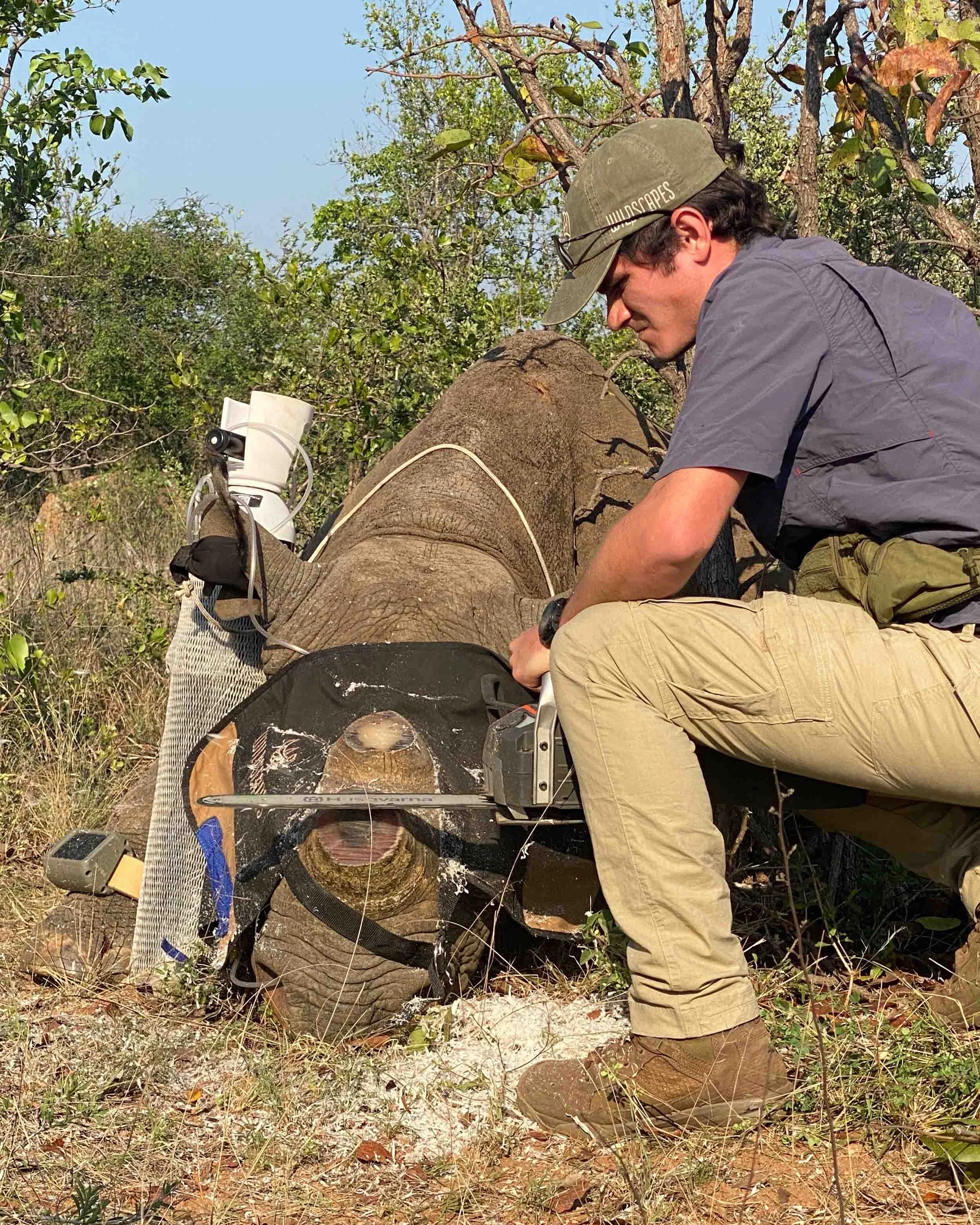
A vet carefully removes the horns of a sedated black rhino and smooths off any rough edges using a chainsaw.
One of the most significant experiences of my time at Selati was being invited to observe a black rhino dehorning and collaring operation.
Along with two other volunteers, I accompanied the reserve's research and veterinary teams as they located and worked with an adult female black rhino.
It was a carefully coordinated operation involving a helicopter, spotter aircraft, veterinary personnel and the Selati research team.
Although I understood that dehorning was undertaken to reduce the risk of poaching, I had always felt uncomfortable with the idea of removing something so important to an animal's natural behaviour.
Witnessing the operation first-hand brought those feelings into much sharper focus.
Looking into the rhino's eye before it was covered is something I will remember for a long time.
At the same time, I could see how committed everyone involved was to protecting the animal.
The experience left me with more questions than answers and prompted me to begin researching the different approaches to rhino conservation, poaching prevention and dehorning across Africa.
It had such an impact on me that I decided to write a separate article exploring the operation and the questions it raised.
Read my guide “Rhino Dehorning: A Personal Experience”
Wildlife Photography and Equipment
Although photography was secondary to the research programme, I still wanted to record some of the wildlife encounters and activities.
For this trip, I decided to leave my Canon EF 500mm f/4 prime lens at home.
Instead, I took my Canon R5 with the RF 100–500mm lens, together with an R6 Mark II and EF 70–200mm f/2.8 lens and 1.4× extender.
I also decided not to take a wide-angle lens.
In practice, I only used the R5 and 100–500mm combination.
The flexibility of the zoom was particularly useful when working from the Land Cruiser, especially as we were frequently stopping to collect data or getting in and out of the vehicle.
A large prime lens would have been awkward to store and handle during many of these activities.
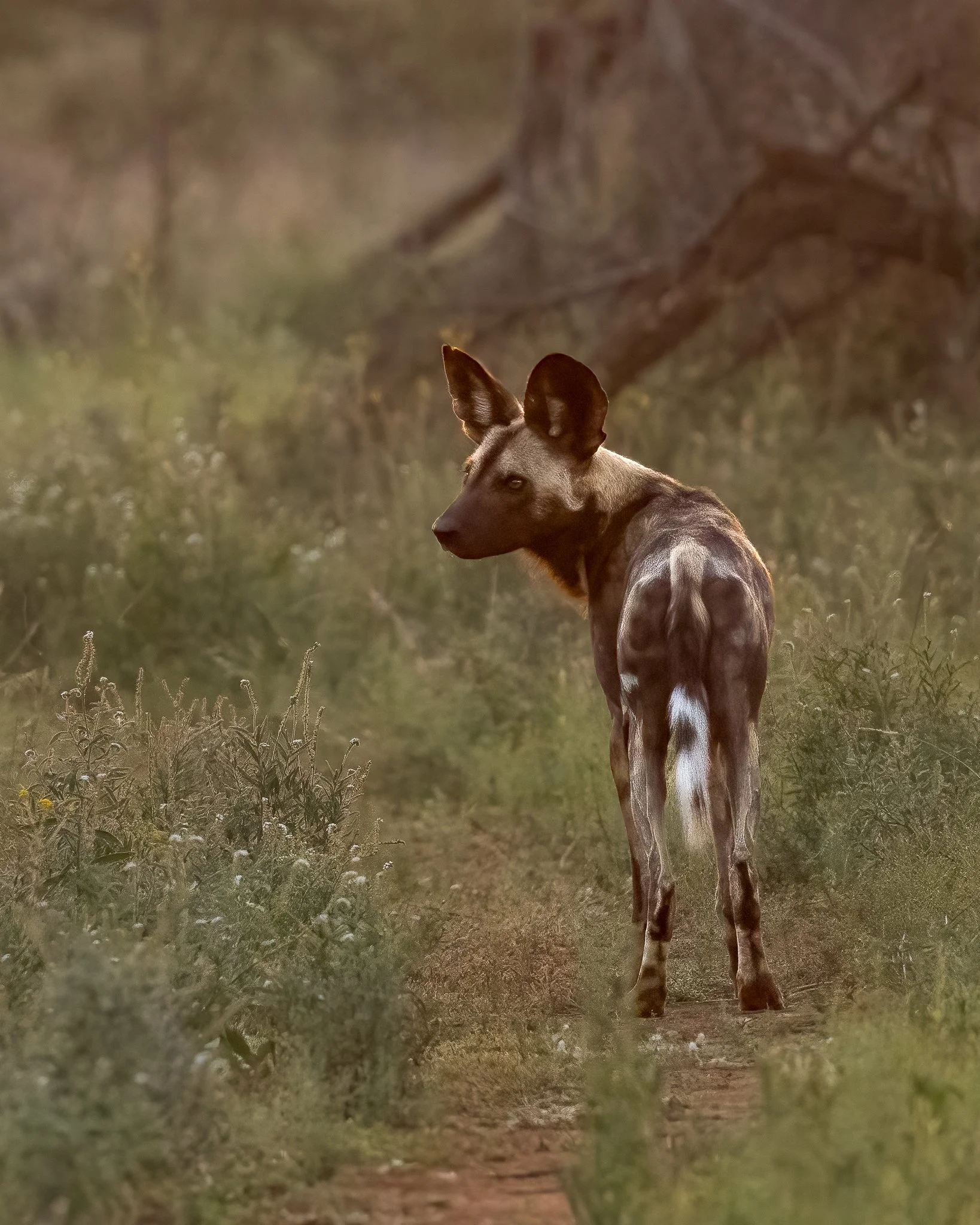
Unfortunately, when we finally caught up with the wild dogs, the light was fading fast, so this backlit image was taken at over 10,000 ISO and needed DXO Pure Raw 6 to try and reduce the excessive noise…
However, there were occasions when I missed the 500mm f/4, particularly during our encounter with the wild dogs.
The fading light and constantly moving animals made photography challenging, and the wider maximum aperture of the prime lens would have been a significant advantage.
Much of the photography at Selati was opportunistic because the priority was completing the research activities.
However, the guides were always accommodating when it came to photography. They were happy to wait, reposition the vehicle where appropriate and help locate animals or birds that volunteers were particularly interested in photographing.
All three guides were competent photographers themselves and regularly used their cameras to support the research, particularly when updating identification records for individual animals.
They also maintain their own Instagram accounts, as does Selati, which provide opportunities to follow their wildlife photography and conservation work.
For anyone considering volunteering primarily for wildlife photography, I think it is important to appreciate the difference between a research programme and a dedicated photographic safari.
That said, there were still some excellent photographic opportunities throughout my stay.
Challenges and Realities
Selati provided a different wildlife viewing experience from some of the national parks and conservancies I had previously visited.
Animals were often more cautious around vehicles, and sightings of larger predators were less frequent than I had experienced elsewhere.
This may partly reflect the relatively low level of vehicle activity across the reserve, with animals less accustomed to regular close encounters.
The guides explained that the monitoring data, including records of animal skittishness, indicated that wildlife was gradually becoming more accustomed to the presence of vehicles.
However, during my visit, some animals remained distinctly wary.
I also came home with considerably fewer wildlife photographs than I would normally take during a two-week trip to Africa.
But that wasn't why I had gone to Selati. The value of the experience was in understanding the research, learning new techniques and gaining a better appreciation of the challenges involved in managing wildlife.
If You Are Considering Volunteering at Selati
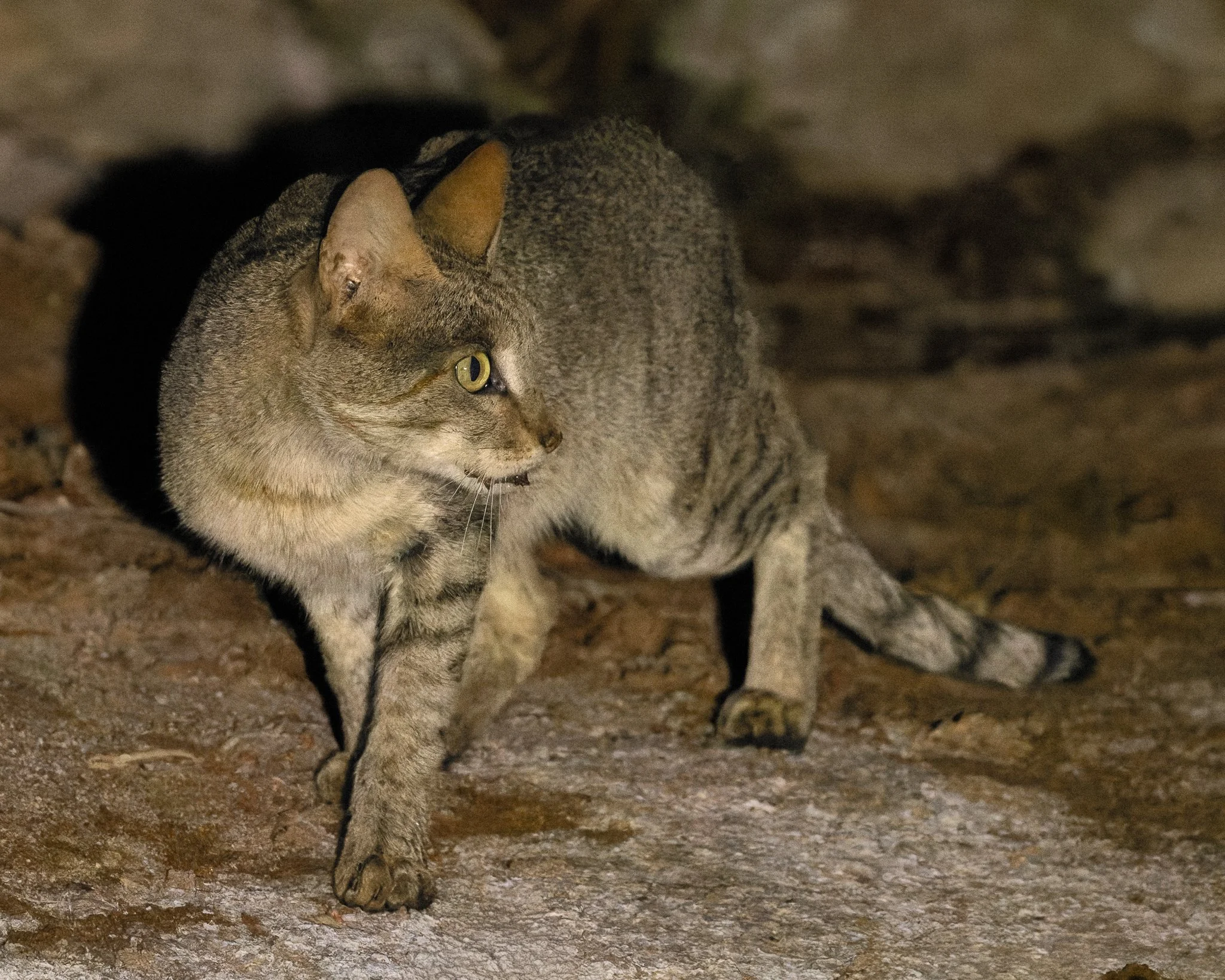
African wildcat photographed on a night drive, illuminated by spotlight.
I would definitely recommend considering Selati if you are interested in learning about wildlife research, animal tracking and the management of a private game reserve.
The programme provides opportunities to take part in meaningful monitoring work alongside a dedicated and knowledgeable team.
However, it is important to approach the experience as a research volunteer rather than a safari guest.
Wildlife encounters cannot be guaranteed, and the primary purpose of the drives is to collect information rather than provide photographic opportunities.
Depending on the timing of your visit, you may also have the opportunity to observe or assist with more hands-on conservation activities, such as cheetah relocations, rhino dehorning and collaring operations, or the capture and movement of other animals between reserves.
These activities depend on the reserve's operational requirements and veterinary schedules, so shouldn't be regarded as guaranteed parts of the programme.
I would also recommend staying for as long as your circumstances allow.
Two weeks gave me a good introduction to the programme, but a longer stay would provide more opportunities to become familiar with the monitoring equipment, understand the individual animals and contribute more effectively to the research.
It would also increase the likelihood of experiencing a wider variety of activities and wildlife encounters.
For me, the opportunity to work with such a committed team and gain a better understanding of the realities of wildlife conservation made the experience worthwhile.
Final Thoughts
On my final evening, I was asked to share my favourite sighting, most memorable experience and something they had learnt.
For me, the wild dogs were the favourite wildlife encounter.
The rhino dehorning and collaring operation was undoubtedly the most significant experience, both emotionally and in terms of the questions it prompted.
But I also came away with a much greater appreciation of the work undertaken by the Selati research team.
Their enthusiasm, commitment and willingness to share their knowledge made a lasting impression.
The programme reinforced just how much there is to learn about conservation, particularly the difficult balance between protecting wildlife, maintaining healthy ecosystems and making privately managed reserves financially sustainable.
It also reminded me that the more I learn about conservation, the more I realise how much I still don't know, and how much more I would like to understand.
Whatever you photograph, have fun.
Useful Links
This guide is part of my On Location wildlife photography series, where I share practical advice and real life experiences from photographing wildlife in the UK, Europe and Africa.