During my two weeks volunteering with the research team at Selati Game Reserve in South Africa, I was fortunate to be invited to observe a black rhino dehorning and collaring operation.
It was an experience that would have a far greater impact on me than I had anticipated.
I knew that dehorning was used in parts of southern Africa to reduce the incentive for poachers to kill rhinos. However, I had always felt uncomfortable with the idea of removing something that plays such an important part in an animal's natural behaviour.
What I hadn't fully appreciated was the complexity of the decisions facing conservation teams trying to protect these animals.
Witnessing the operation first-hand left me with mixed emotions, particularly one brief moment when I found myself looking directly into the eye of the immobilised black rhino.
It's an image that has stayed with me, and one that prompted me to start questioning my own assumptions and researching the wider issues surrounding rhino conservation.
This is a slightly different article from my usual On Location guides. It's an account of what I witnessed, what I learnt and some of the questions I am still trying to understand.
The Rhino Dehorning and Collaring Operation
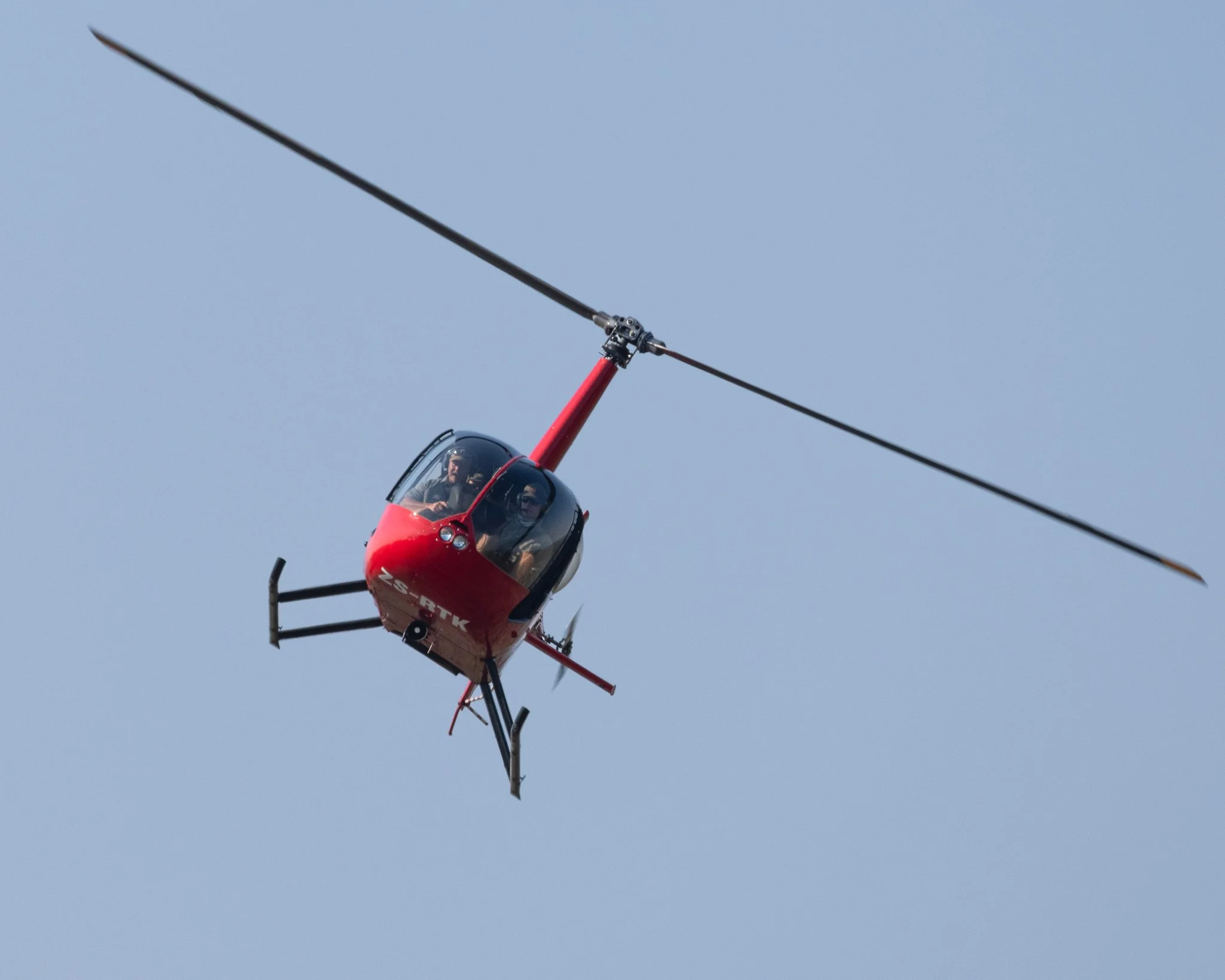
A highly skilled pilot manoeuvres the helicopter so the wildlife veterinarian can accurately administer the tranquilliser.
The Selati research team had identified an adult female black rhino whose horns had not been trimmed for some time and whose tracking collar needed replacing.
The operation required considerable planning and involved the reserve's research and management teams, an experienced wildlife vet, a helicopter and a spotter aircraft.
The operation was funded by a sponsor who was also present on the day.
Mads and Mac had been out on the reserve since 4am, using a thermal drone to locate the rhino ahead of the operation. Alternative rhinos had also been identified in case the original target could not be found.
Three of us were invited to attend as volunteers.
We were naturally concerned about getting in the way, particularly given the number of experienced people involved and the importance of completing the operation safely and efficiently.
However, the veterinary team reassured us that we could help with some straightforward tasks.
Before leaving camp, the vet gave everyone a briefing, explaining what would happen, the differences between handling black and white rhinos, and the safety procedures we needed to follow.
Each volunteer was given responsibility for carrying a particular piece of equipment from the vehicle to the animal and returning it afterwards.
It might sound like a small contribution, but it meant everyone understood their role and the importance of following instructions.
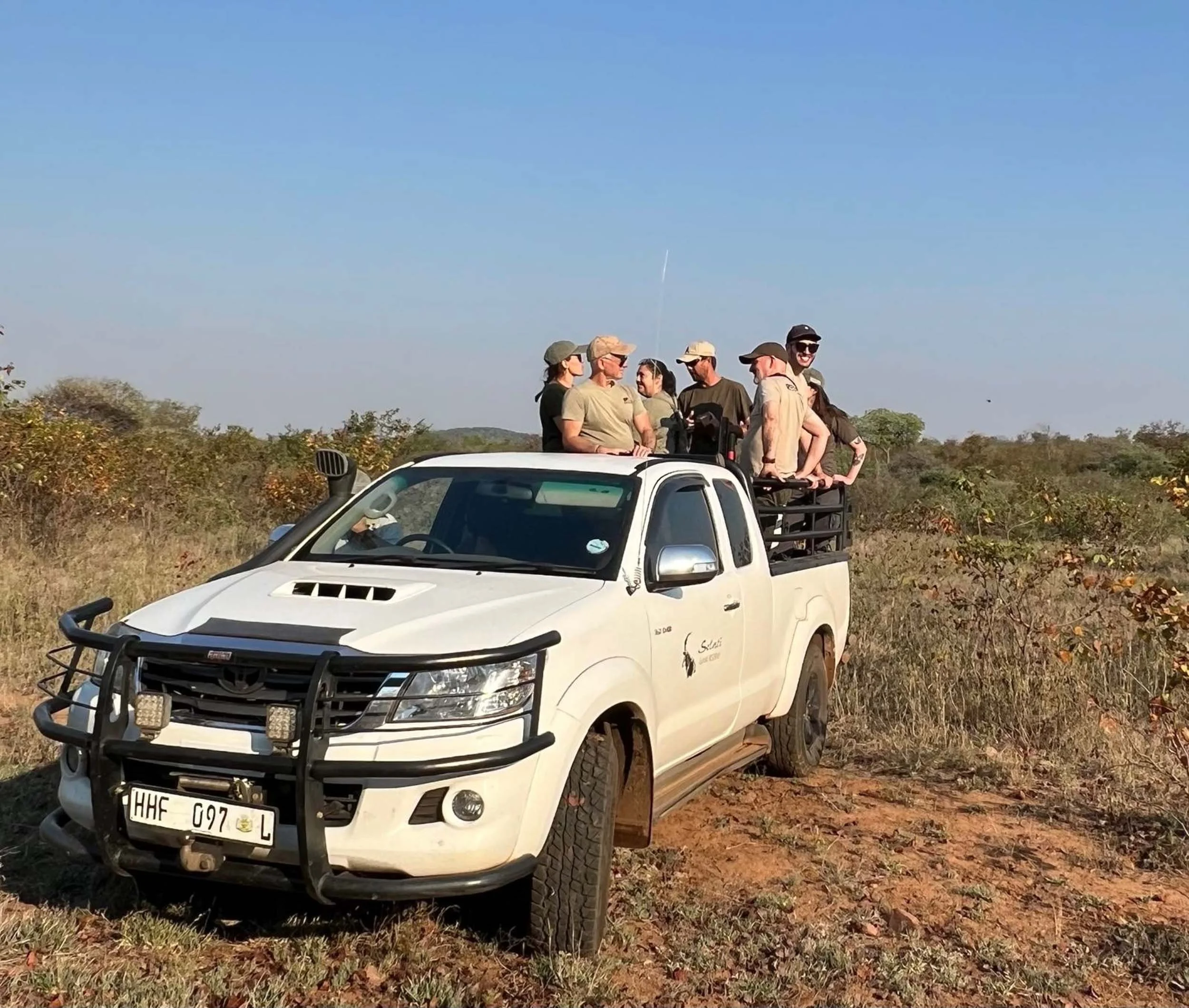
Travelling across the reserve in the bakkie
Travelling Across the Reserve
We travelled across Selati in the back of a pickup truck, known locally in South Africa as a bakkie.
Standing in the back and holding onto the supporting bars as we travelled along the reserve's tracks was certainly an experience.
At times it felt rather like being on a rollercoaster, although without the usual safety restraints!
Once we reached the designated meeting area, the vet and Mac transferred to the helicopter to locate and dart the rhino.
The rest of the team waited with the equipment, ready to move as soon as it was safe.
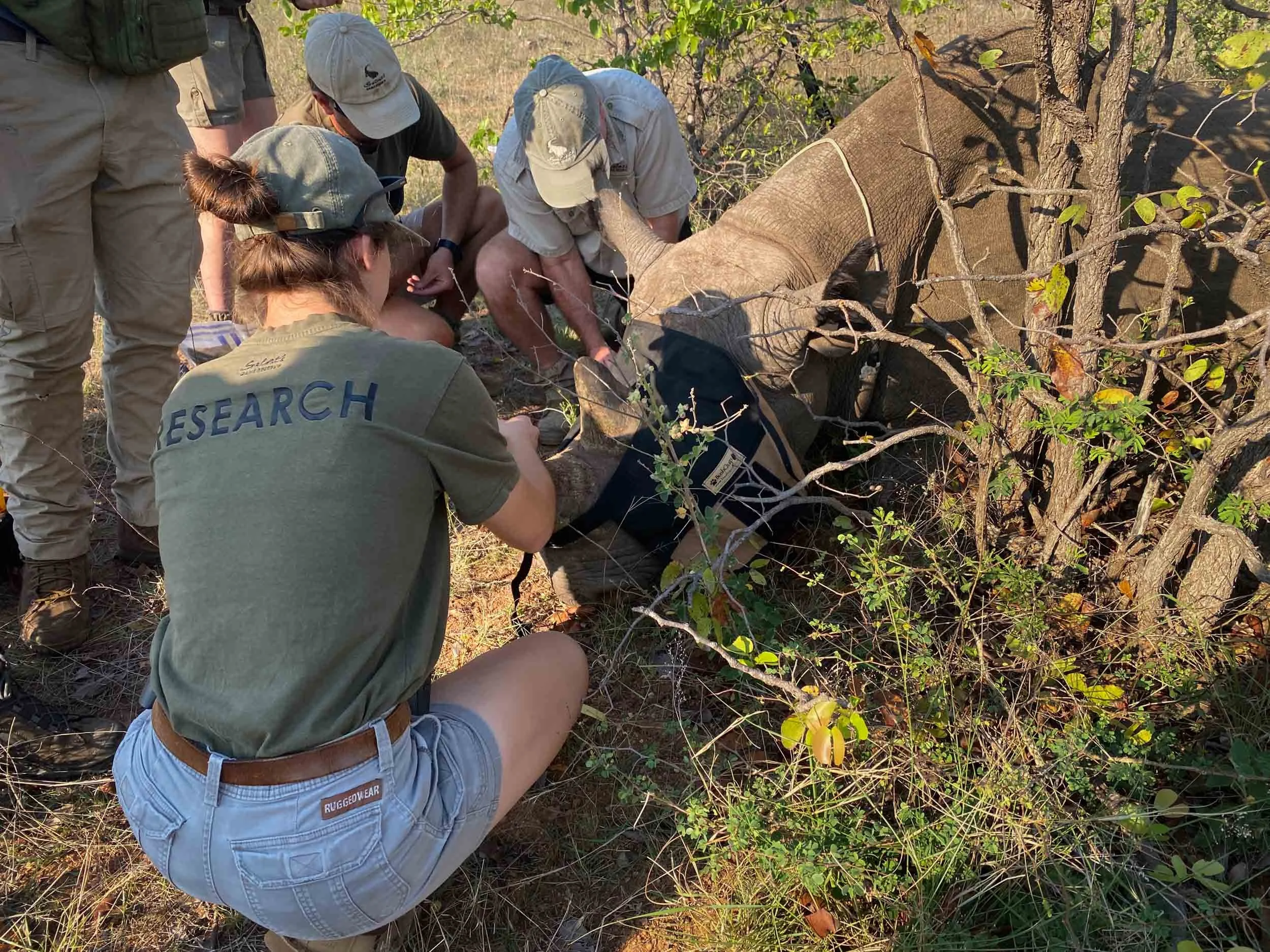
Selati’s research team take key measurements and tissue samples
Working with a Black Rhino
Black rhinos can be particularly unpredictable when disturbed. The veterinary team explained that, after being darted, they may run in a straight line until the immobilising drugs take effect, potentially colliding with trees or other obstacles along the way.
The helicopter team successfully located and darted the adult female, but her calf ran off in the opposite direction and could not be darted.
As soon as the mother had stopped and the veterinary team gave the instruction, everyone collected their allocated equipment and moved towards her. The speed and coordination of the operation were impressive.
The vet and assistants immediately began attending to the rhino, checking its condition, positioning it safely and monitoring its breathing. A cover was placed over its eyes to reduce stimulation, and oxygen was administered while the animal remained immobilised.
But before the cover was put in place, I found myself looking directly into one of its eyes. It was only a brief moment, but I found it deeply unsettling. I couldn't help wondering what the animal was experiencing or how frightened it might have been.
I felt incredibly sad.
I also knew that everyone around me was there for one reason: to protect this rhino and give it the best possible chance of avoiding the attention of poachers. Holding those two thoughts together was difficult, and perhaps that was what made the experience so powerful.
Removing the Horns
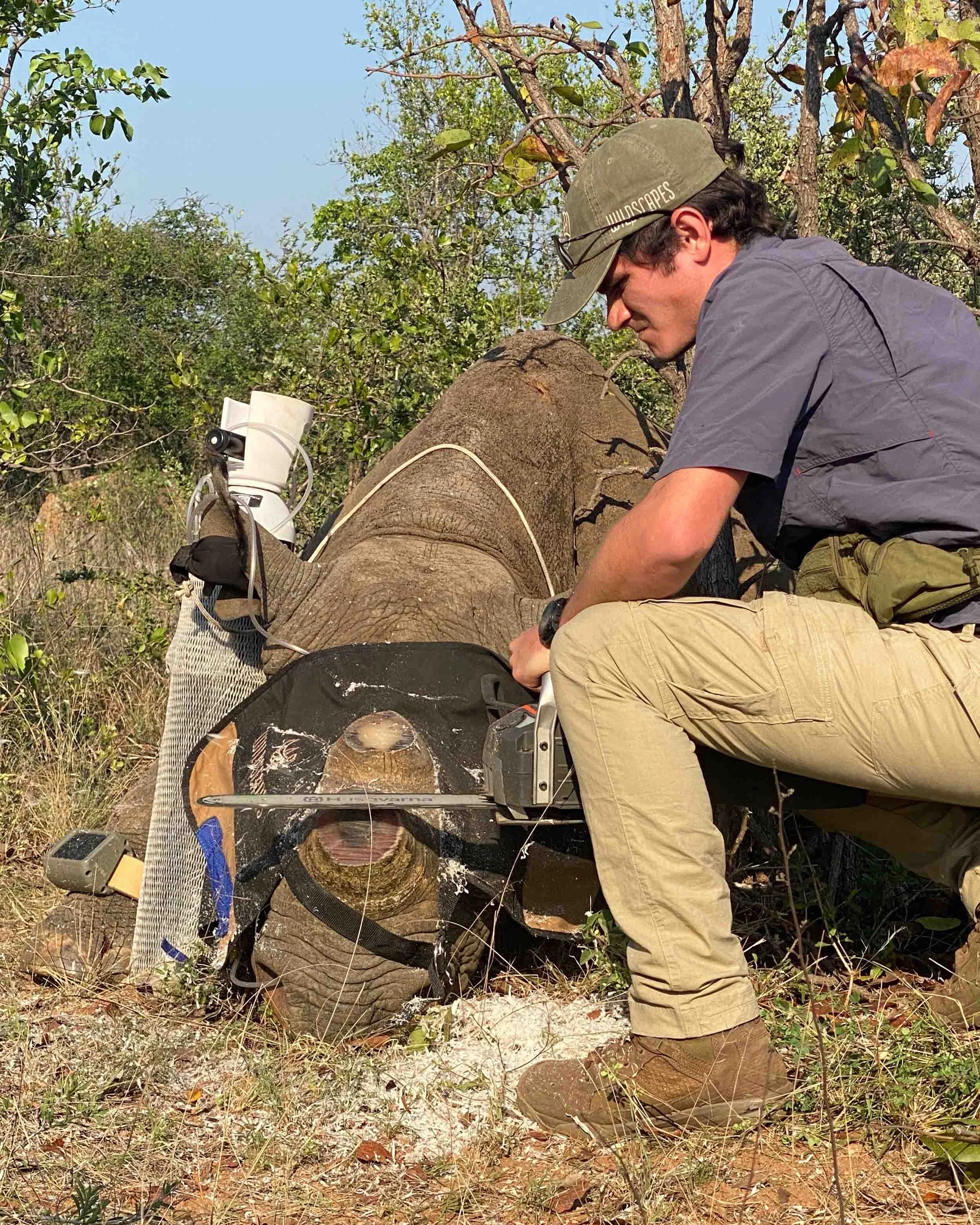
Vet carefully removes the horns using a chain saw. Note the rhino has ear plugs to help reduce the impact of the noise whilst under sedation.
While the veterinary team continued monitoring the rhino, members of the research team collected biological samples and attended to the replacement tracking collar.
Everything was carefully recorded, with each person concentrating on their assigned responsibility.
The vet then began removing the horns using a chainsaw.
It was a strange sight, watching such a familiar piece of equipment being used as part of a carefully controlled veterinary procedure.
The horns were carefully cut above the living tissue at their base, leaving sufficient material for the horn to regrow. The remaining edges were then smoothed, and a protective treatment was applied.
Several people involved in the operation, including the vet and research staff, referred to rhino horn as being worth more than its weight in gold. It was an extraordinary comparison, and one that really brought home the financial incentive behind poaching.
Whether or not rhino horn is literally worth more than gold, the financial rewards remain sufficiently attractive to sustain an international criminal trade.
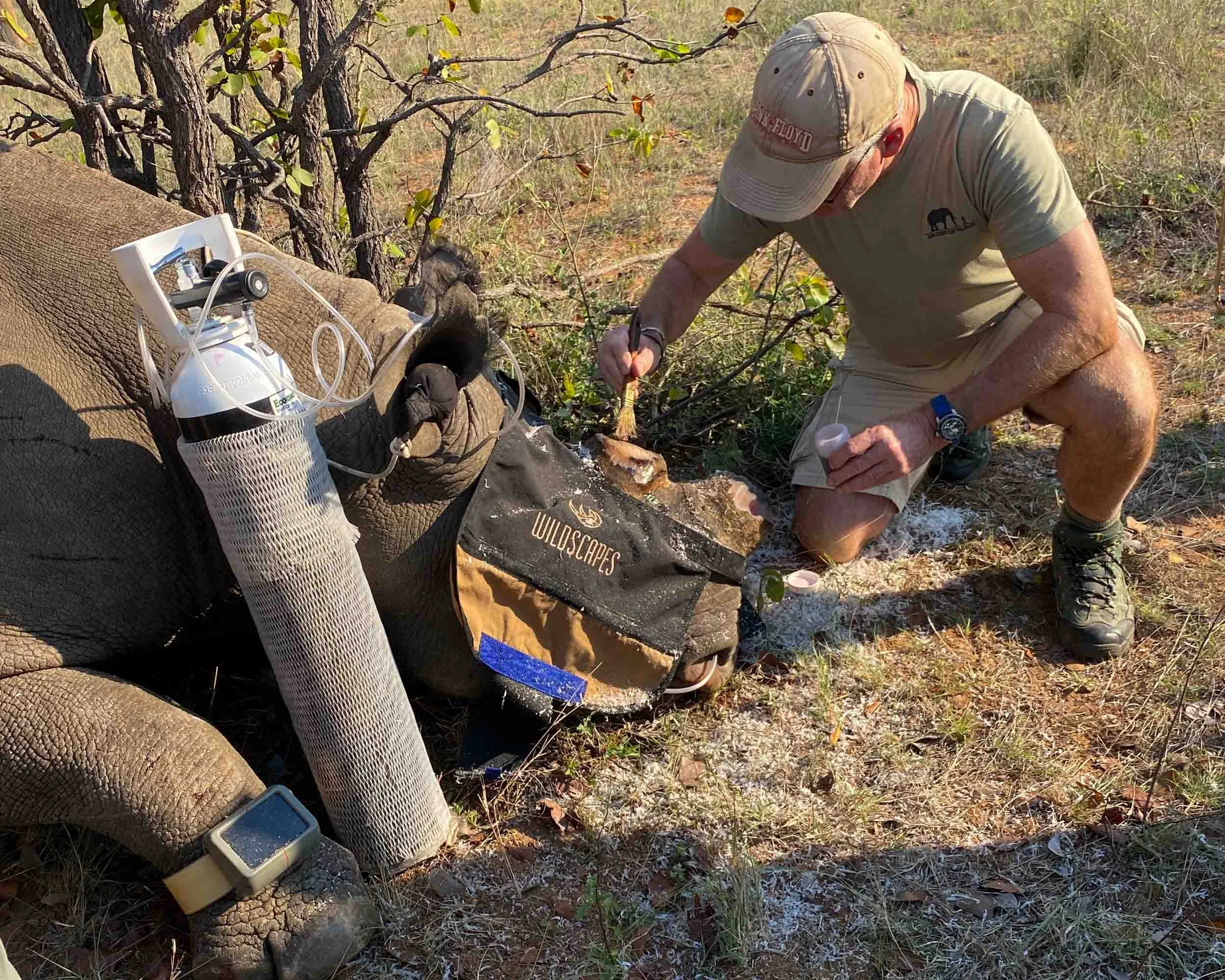
Protective treatment applied to the cut edges of the horn
What I found particularly difficult to comprehend was that something growing naturally from an animal could create such an enormous threat to its survival.
We were also given the opportunity to have our photographs taken alongside the immobilised rhino, something I agreed to at the time.
However, looking back at that photograph afterwards, I felt increasingly uncomfortable with it. There was something about posing beside an immobilised animal that reminded me of the trophy photographs taken by hunters.
I don't regret attending the operation, and the photograph remains a personal record of an experience that had a profound impact on me. But I have decided not to publish it.
The removed horns were carefully documented and handed over to the authorised government representative.
We had been advised not to photograph the government officials involved, for their personal safety. We were also asked not to publish photographs of the operation for at least a few days afterwards and to remove any GPS location information from our images.
These were sensible precautions, intended to protect both the people involved and the rhinos themselves.
Source: United Nations Office on Drugs and Crime, World Wildlife Crime Report 2020.
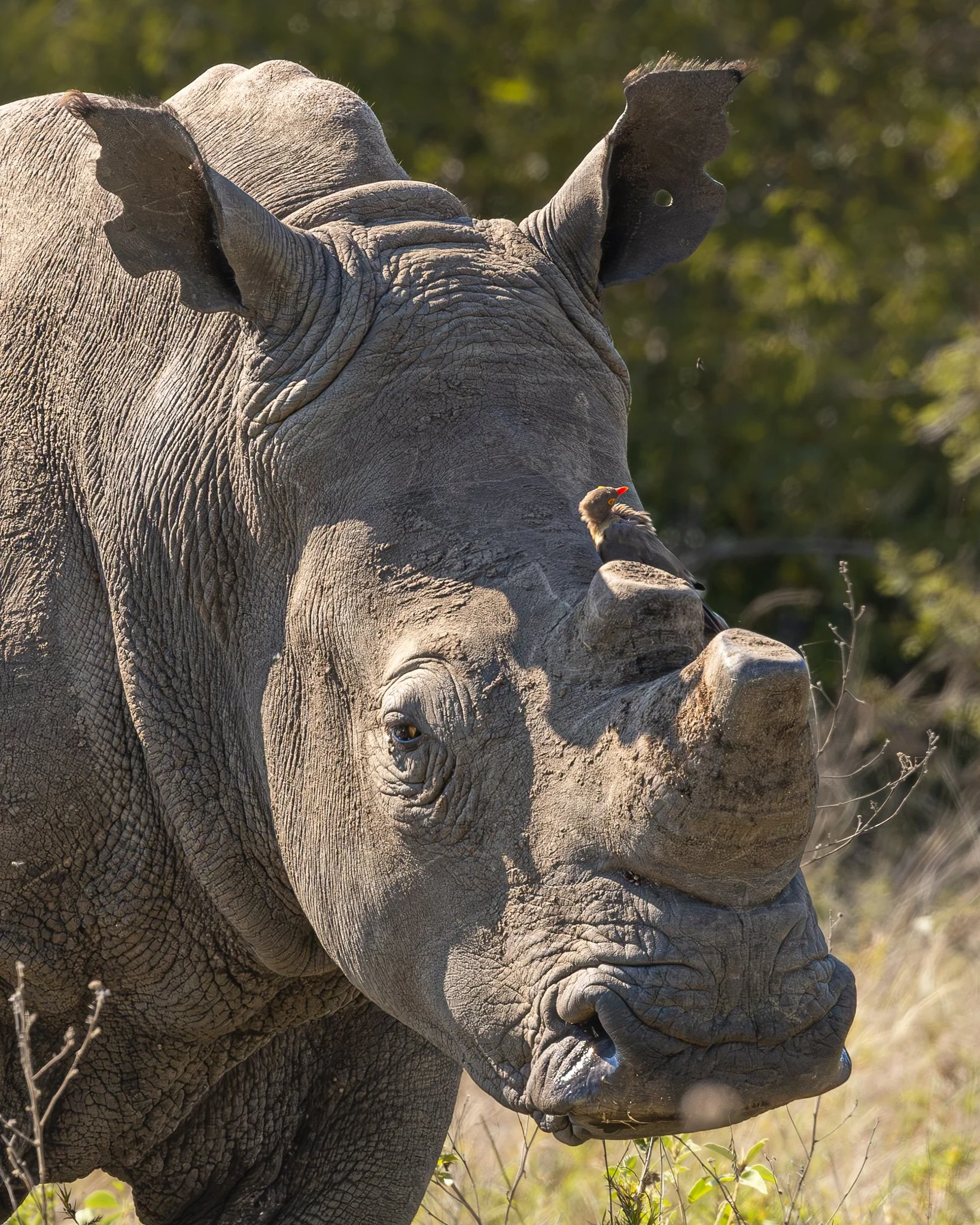
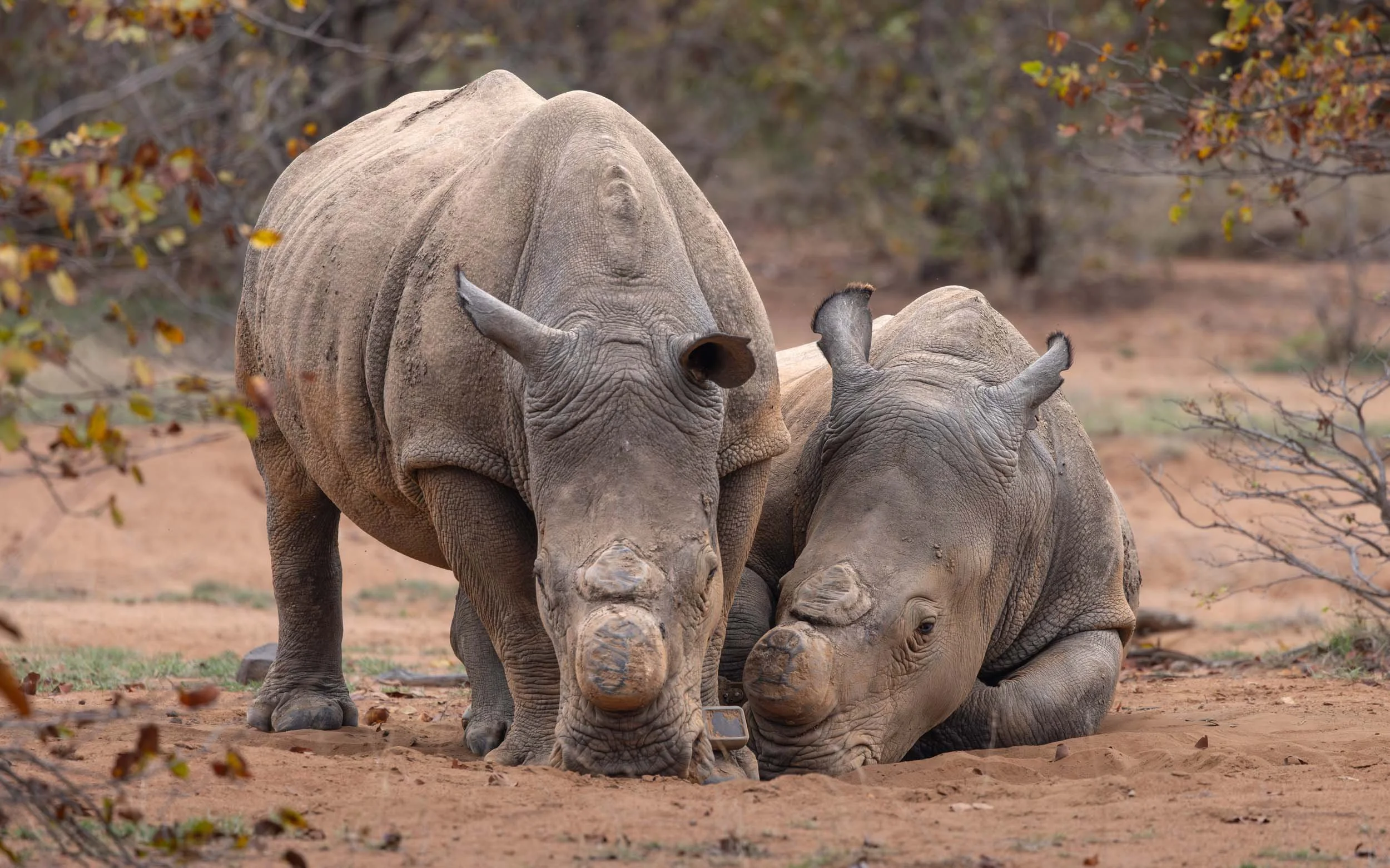
A dehorned white rhino. Note the different ear notches which are unique to each rhino and enable the research team to quickly ID individuals.
The Rhino's Recovery
Once the procedures had been completed, everyone was instructed to return to the vehicles and maintain a safe distance.
Because black rhinos can be unpredictable during recovery, only the vet remained close enough to administer the reversal medication before withdrawing to safety.
We were kept well away from the animal and did not witness her recovering.
The original plan had been to work with both the mother and her calf. Unlike the mother, the calf had not previously been captured and was due to have its ears notched to enable the research team to identify it individually in the future.
Ear notching involves making small, carefully positioned notches in the outer edges of a rhino's ears while it is immobilised. The pattern represents an identification number, allowing researchers to recognise individual animals without having to capture them again.
The calf had run off when its mother was darted, and the team made a further attempt to locate it.
However, the vet was working within a limited window before rising temperatures made further intervention inadvisable. When the calf could not be located in time, the decision was made to end the operation.
I was impressed by the discipline of the whole team and the way the animals' welfare was prioritised throughout.
Why Are Rhinos Dehorned?
The immediate objective of dehorning is straightforward: to make a rhino less attractive to poachers by removing most of the horn they are seeking.
Rhino horn is composed primarily of keratin, a structural protein also found in human fingernails and hair.
Unlike elephant ivory, which consists largely of dentine, rhino horn will continue to grow if it is trimmed without damaging the growth tissue.
However, dehorning does not eliminate the risk of poaching.
A portion of horn must remain to avoid damaging living tissue, and even that remaining material, along with subsequent regrowth, can still attract poachers.
Dehorning must also be repeated periodically, requiring considerable resources and exposing animals to further capture and immobilisation.
I was particularly interested to discover research published in the journal Science in June 2025.
The researchers examined the effectiveness of anti-poaching measures across 11 reserves in South Africa's Greater Kruger region between 2017 and 2023.
During the study, 2,284 rhinos were dehorned across eight reserves, with the researchers reporting an approximately 78% reduction in poaching associated with dehorning.
The study also highlighted that dehorning was comparatively inexpensive when measured against the wider costs of anti-poaching operations.
However, dehorned animals were still being killed, and the authors emphasised the importance of combining dehorning with other conservation and law-enforcement measures.
It was persuasive evidence that dehorning can make a significant difference, even if it cannot provide complete protection.
Source: Kuiper et al. (2025), Dehorning reduces rhino poaching, Science.
How Many Rhinos Are Left in Africa?
I had been told during my visit that South Africa was home to the great majority of Africa's rhinos.
The published figures confirm just how important the country is to their survival.
According to the IUCN's African rhino population assessments, Africa had an estimated 22,540 rhinos at the end of 2024, comprising 6,788 black rhinos and 15,752 white rhinos.
South Africa reported a minimum national population of 15,096 rhinos at the end of 2025, including 2,565 black rhinos and 12,531 white rhinos.
Although these figures relate to different reporting years, they demonstrate that South Africa holds a substantial majority of the continent's rhinos.
There is some encouraging news. Black rhino populations have shown long-term recovery, although they remain classified as Critically Endangered.
White rhinos have suffered significant declines in recent years, largely associated with poaching in South Africa.
The scale of the continuing threat is sobering.
South Africa reported 230 rhinos poached during the first eight months of 2026, compared with 248 during the same period in 2025.
These are not simply statistics. Every animal lost represents another setback for conservation teams trying to maintain and rebuild populations.
Sources:
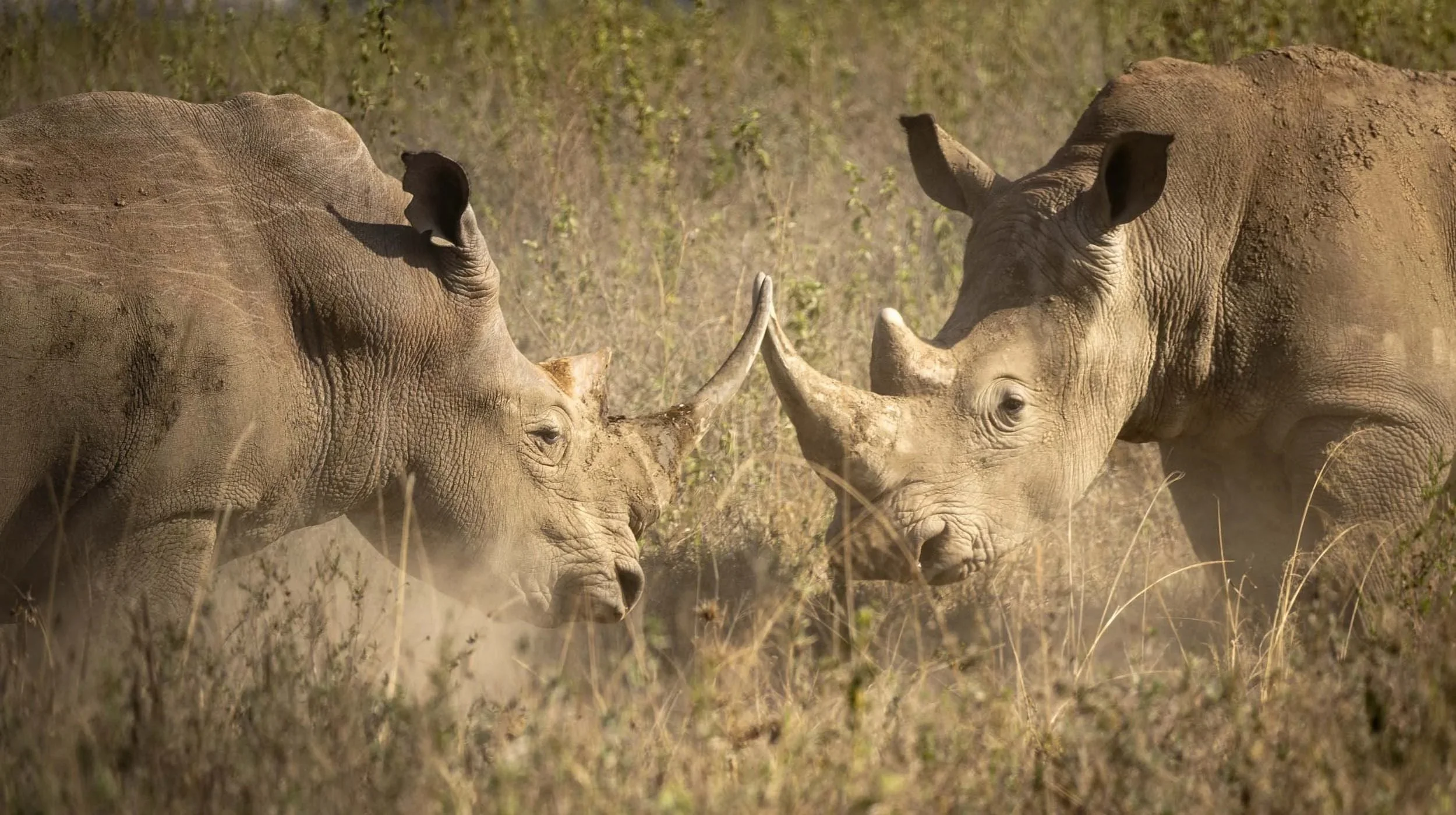
Pair of white rhinos face off at Nairobi National Park, Kenya
Does Removing a Rhino's Horn Affect Its Behaviour?
This was one of the questions that troubled me most.
Rhinos use their horns for defence, protecting calves, establishing dominance, interactions with other rhinos and, in some circumstances, feeding.
Surely removing their horns must affect the way they behave?
Following the operation, I contacted friends involved in conservation work in Kenya to discuss the different approaches to rhino protection.
They explained that dehorning wasn't generally used in the Kenyan conservation programmes they were familiar with, and raised concerns about how removing horns might affect behaviour, particularly interactions between males.
At Selati, the research team had explained the importance of dehorning as a protective measure.
I wanted to understand what scientific evidence existed to support these differing perspectives.
The answer, perhaps unsurprisingly, is complicated.
A study published in 2023 examined the behaviour of 368 black rhinos across ten South African reserves. Researchers found that dehorned animals reduced the size of their home ranges by an average of 45.5% and were 37% less likely to engage in social encounters.
This raised further questions for me. Could reduced movement affect interactions between males, breeding opportunities or the genetic diversity of populations?
Would smaller home ranges allow more males to live within a given area, or might reduced social interaction create other problems?
The study did not establish those wider population consequences, but it certainly suggested that removing horns can influence behaviour.
A broader review of 120 publications, published in Biological Conservation in November 2025, found little evidence that dehorning affected reproduction. However, it identified possible changes in social structure and ranging behaviour that warrant further investigation.
Other studies have found little or no evidence of significant effects on certain measures of survival, reproduction or behaviour.
The research therefore suggests that dehorning can alter some aspects of behaviour, but the wider implications for rhino populations are still not fully understood.
I now better understand why conservationists may accept those potential consequences when the alternative could be losing the animal to poachers.
However, I still find the trade-off uncomfortable.
Sources:
Reductions in home-range size and social interactions among dehorned black rhinoceroses, PNAS (2023)
Why Do Different African Countries Take Different Approaches?

White rhino photographed in Kenya.
One of the things that puzzled me was why dehorning is undertaken in South Africa and Zimbabwe, while Kenya generally takes a different approach.
My discussions with conservation contacts in Kenya suggested that the emphasis there is on intensive protection, monitoring, law enforcement and strong penalties for wildlife crime.
I subsequently discovered that dehorning was first introduced as an anti-poaching measure in Namibia in 1989, with Zimbabwe adopting similar programmes in the early 1990s.
South Africa has also used dehorning extensively, particularly in areas experiencing significant poaching pressure.
The extent to which dehorning is used varies between countries and individual reserves, depending on local circumstances, available resources and conservation policies.
Kenya has developed a conservation model that includes protected rhino sanctuaries, dedicated monitoring teams and strong anti-poaching measures.
Its national strategy for combating poaching also highlights the importance of improved law enforcement, wildlife management and coordinated action against illegal trafficking.
I had initially wondered whether differences in the severity of criminal penalties might explain these contrasting approaches. However, effective protection involves much more than the penalties written into legislation.
Detection, arrests, successful prosecutions, corruption, intelligence sharing and the resources available to ranger teams all influence whether poaching can be prevented.
The more I read, the more I realised that there isn't a single approach that will work in every country or reserve.
South Africa's much larger rhino population, the number of different properties holding rhinos and the varying densities of animals all add to the challenges of monitoring and protecting them.
The resources available to conservation teams, local poaching pressures, habitat conditions and the effectiveness of law enforcement also have to be considered.
It seems more useful to understand why different conservation strategies have developed and how effective they have proved under different circumstances.
Sources:
Why Is There Still Such a Demand for Rhino Horn?
Perhaps the most difficult part of this whole subject to understand is why rhino horn remains so valuable. Historically, rhino horn has been used in traditional medicine in parts of Asia, particularly China and Vietnam.
It has been associated with treating fever and various illnesses, while more recent demand has also been driven by its perceived status and value as a luxury product.
Yet there is no credible scientific evidence that rhino horn provides the remarkable medicinal benefits sometimes claimed for it.
Given that it is composed primarily of keratin, the continued demand is particularly difficult to understand. However, demand isn't driven by medicinal beliefs alone. Wealth, status, cultural traditions, speculation and organised criminal networks also play a part.
Perhaps the most important long-term question is how to reduce the desire to buy rhino horn in the first place.
I like many others, hope that education will eventually reduce demand, particularly as younger generations become more familiar with the scientific evidence.
But I now realise that changing behaviour and established beliefs is rarely straightforward.
Sources: TRAFFIC, Rhino horn in Asia and International Rhino Foundation, State of the Rhino.
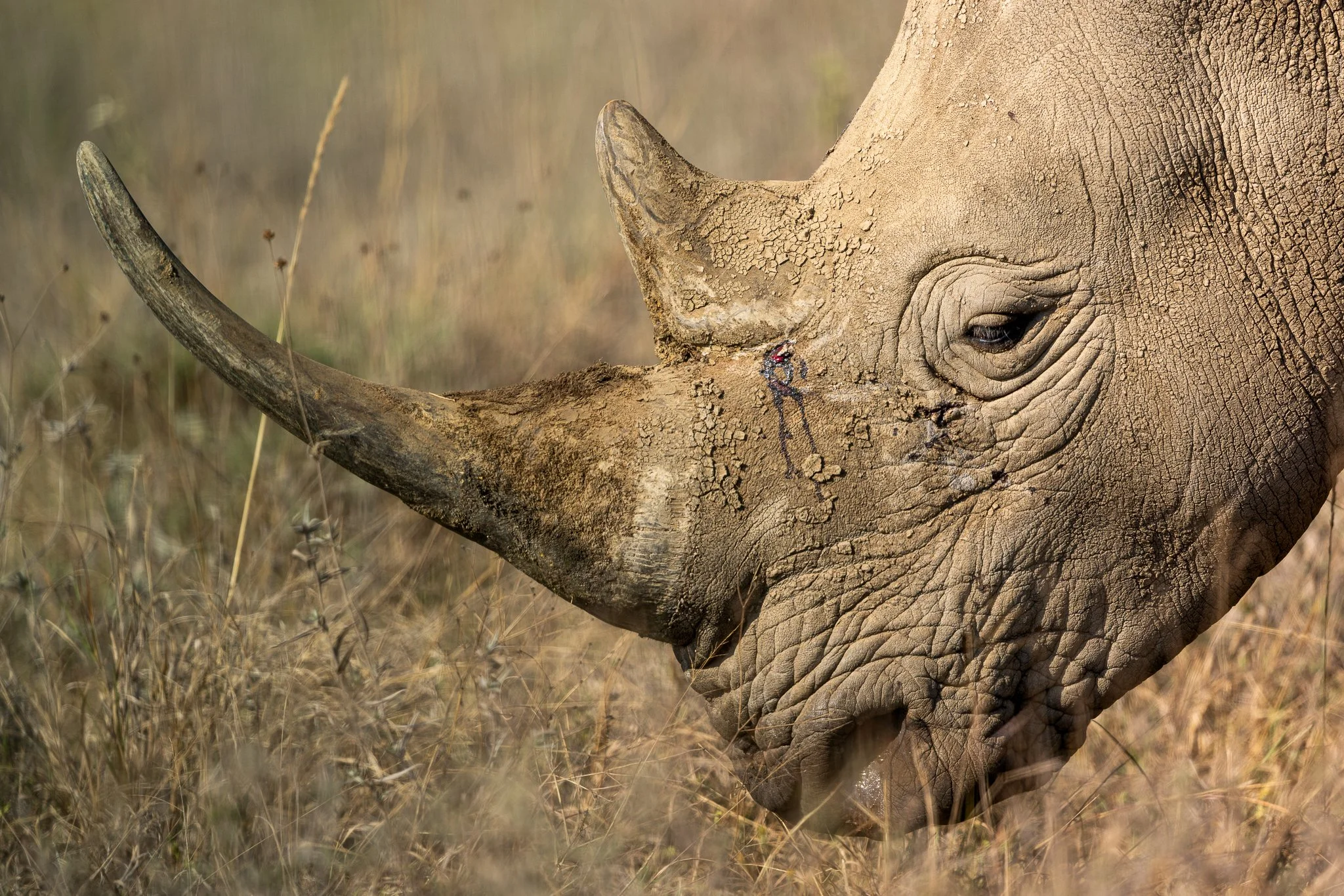
Should the Sale of Rhino Horn Be Legalised?
This is another question I had given relatively little thought to before visiting Selati.
Supporters of legalising international trade argue that, because rhino horn regrows, it could be harvested without killing the animal. They suggest that a carefully regulated market could provide income for conservation, increase supply, reduce prices and undermine criminal trafficking networks.
At first, I could see the logic.
But the more I considered it, the more questions I had.
Would making horn legally available increase demand by giving the product greater legitimacy?
Could criminal organisations use a legal market to disguise illegally obtained horn?
Would greater availability encourage more people to buy it?
And would the financial benefits actually reach the conservation teams and communities responsible for protecting rhinos?
Opponents of legalising trade raise many of these concerns and argue that enforcement, demand reduction and continued international restrictions offer a safer approach.
South Africa's position on rhino horn trade is more complicated than I had initially appreciated.
Although international commercial trade remains prohibited under CITES, South Africa's domestic ban was lifted following a court ruling in 2017. Domestic sales are permitted, but only under strict regulations and with the appropriate permits.
The country also maintains records of rhino horn held in government and private stockpiles, with identification and registration requirements including DNA sampling and microchipping.
The quantities involved are considerable. A 2025 report by the Environmental Investigation Agency cited government figures from 2019 recording approximately 27.7 tonnes of horn in government stockpiles and 22.5 tonnes in private stockpiles. More recent comprehensive figures were not reliably available.
I was surprised to discover that historical estimates have valued South Africa's accumulated rhino horn at more than a billion US dollars. However, these are speculative valuations based on assumed prices and the possibility of legal international trade, rather than an established commercial value.
In October 2025, the South African government reaffirmed its opposition to reopening international commercial trade in rhino horn.
This raises another question for me. If such substantial quantities of horn are accumulating in secure storage, what should ultimately happen to them?
Some argue that selling these stocks could generate much-needed conservation funding. Others believe that legalisation could increase demand and create further opportunities for illegal trading.
I can understand both arguments, but I am not yet convinced that either provides a straightforward solution.
I haven't read enough evidence to form a firm opinion on which approach would produce the best long-term outcome.
Sources:
South African Government - Rhino Horn Trade Clarification (2017)
Department of Forestry, Fisheries and the Environment - Domestic Trade Permit Requirements
Environmental Investigation Agency - Horns on the Horizon (2025)
The Importance of Monitoring and Technology
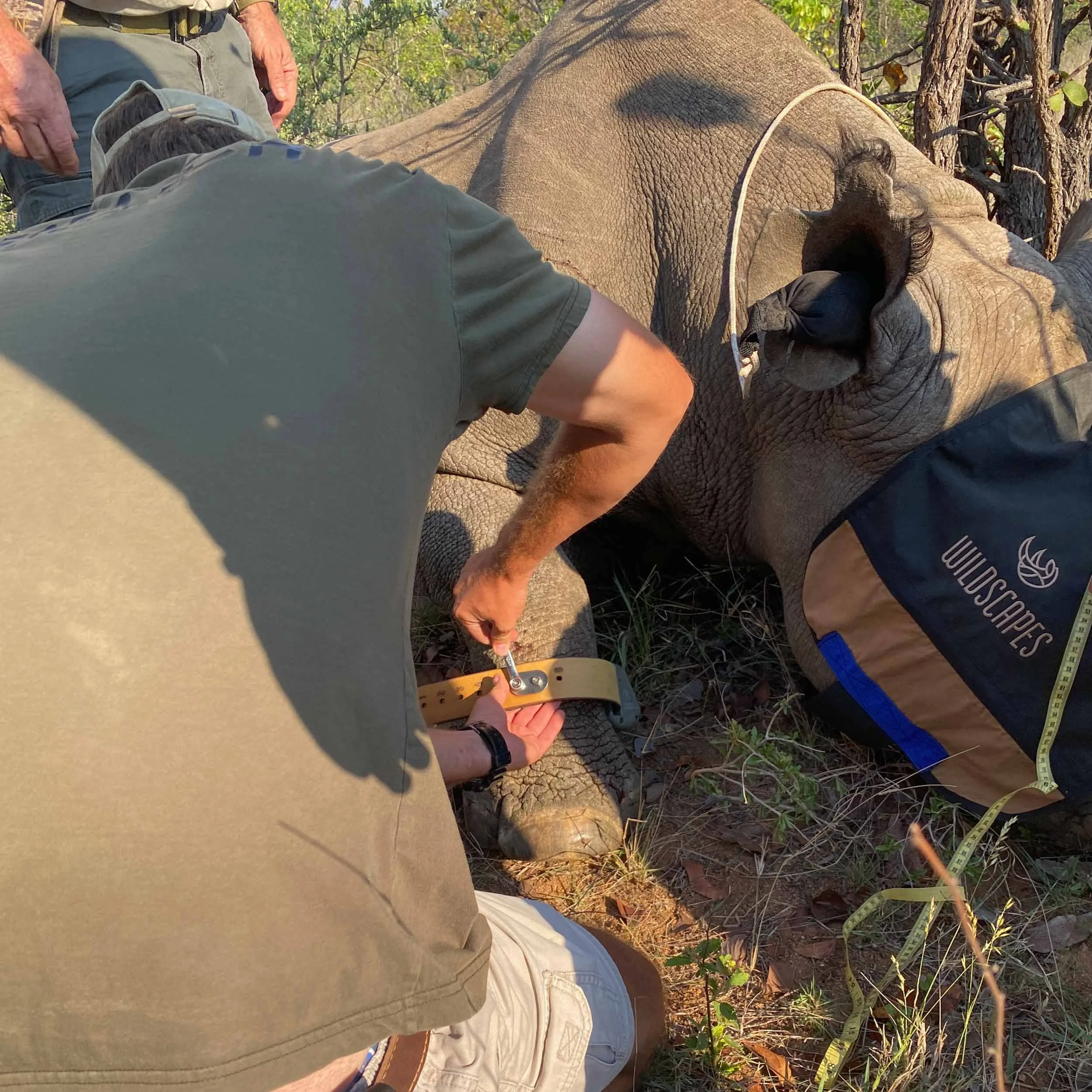
New tracking collar being fitted to black rhino
Another aspect of the Selati operation was the replacement of the rhino's tracking collar.
Throughout my volunteering experience, I had been learning how tracking technology could help researchers monitor animal movements, behaviour and wellbeing.
Modern systems can combine satellite or GPS location information with movement data, while some increasingly sophisticated devices use automated analysis to help identify unusual activity.
This can provide conservation teams with information that might otherwise be impossible to obtain, particularly across large areas of difficult terrain.
However, technology doesn't remove the need for experienced field guides, veterinary teams and anti-poaching personnel.
It provides another tool to help them make informed decisions and respond to potential problems.
Having seen how much work goes into locating and monitoring individual animals, I came away with a greater appreciation of the contribution this technology can make.
An Experience That Has Stayed With Me
On our final evening at Selati, the volunteers who were leaving were asked to share their favourite wildlife sighting, most memorable experience and something they had learnt.
My favourite sighting was undoubtedly the unexpected encounter with African wild dogs.
But the rhino dehorning and collaring operation was the experience that affected me most.
I had arrived with a fairly simple view of dehorning. I understood why it was done, but instinctively felt that removing an animal's horn was unnatural and potentially damaging.
Having witnessed the operation, spoken with the research team and begun exploring the wider evidence, I can now better appreciate the difficult decisions conservationists face.
That doesn't mean all my concerns have disappeared.
I still think about the moment I looked into the black rhino's eye.
I wonder what the experience was like for the animal, how it will adapt to living without its full horns and whether there will eventually be a better way to protect it.
I also think about the people involved in the operation, their professionalism, knowledge and determination to protect these remarkable animals.
The experience has encouraged me to question my assumptions and learn more about the wider challenges facing rhino conservation.
I haven't reached a conclusion about dehorning or the legal trade in rhino horn, and perhaps I never will.
But I have come to appreciate that there are rarely simple answers to complex conservation problems.
And above all, I hope that efforts to reduce demand for rhino horn will eventually make such difficult interventions less necessary.
Whatever you photograph, have fun.
Further Reading and Research
For anyone interested in understanding more about rhino conservation, these are some of the resources I have found useful or intend to explore further.
Scientific research and conservation organisations:
Save the Rhino International - Rhino conservation, dehorning and anti-poaching information.
International Rhino Foundation - Population estimates, conservation programmes and annual State of the Rhino reports.
TRAFFIC - Research into illegal wildlife trade, trafficking and demand reduction.
IUCN - Conservation assessments and research on endangered species.
Kuiper et al., Dehorning reduces rhino poaching (2025) - A major study examining the effectiveness of dehorning across Greater Kruger reserves.
Reductions in home-range size and social interactions among dehorned black rhinoceroses (2023) - Research examining changes in behaviour and ranging patterns.
My Selati Volunteering Experience
The rhino dehorning and collaring operation was just one part of my two weeks volunteering with the research team at Selati Game Reserve.
You can read more about my experience, including wildlife monitoring, animal tracking and encounters with cheetahs, elephants and African wild dogs, in my Volunteering at Selati Game Reserve guide.
This guide is part of my On Location wildlife photography series, where I share practical advice and real life experiences from photographing wildlife in the UK, Europe and Africa.