Photographing Puffins on Skomer Island

Skomer Island, off the Pembrokeshire coast in Wales, is one of the most important seabird colonies in the UK and a remarkable place to experience wildlife photography at close quarters. It is a place where the birds come first. Visitors adapt to them, not the other way around.
I first visited Skomer in April 2018 on a three night spring migration trip led by Dave Astins of West Coast Birdwatching, working alongside the Wildlife Trust of South and West Wales. At that point I had already photographed puffins on the Farne Islands, but Skomer offered something very different. Fewer people, birds nesting right beside the paths, and a feeling of being immersed in the island rather than just visiting it.
Since then I have returned for a day trip in June 2021, had a trip cancelled while travelling in June 2024, and I have a two night stay booked for May 2026. Each visit has been different, shaped by weather, light, timing, and behaviour. That unpredictability is part of what makes Skomer such a special place to photograph.
Planning Your Visit
Access to Skomer is tightly controlled to protect the wildlife. All visits must be booked in advance, either as a day trip or, if you are fortunate enough to secure it, an overnight stay.
Day trips run from spring through summer, with peak puffin season usually between May and July. Booking opens well in advance, with Wildlife Trust members receiving priority access. Boats depart from Martin’s Haven and crossings take around 15 to 20 minutes, though sailings are weather dependent and cancellations are common.
Overnight stays offer a very different experience. Once the day visitors leave, the island becomes quiet, and you have access at dawn and dusk when the light is at its best and wildlife activity increases. From 2026 onwards, commercial operators will no longer be able to book overnight accommodation on Skomer or Skokholm. This change is intended to increase access for individual visitors and members, while continuing to prioritise conservation.
Facilities on the island are basic. There are no shops or cafes. You need to bring food, water, and suitable clothing. Mobile signal is limited. This simplicity is part of the charm, but it does require preparation.
Wildlife You Can Expect to Photograph
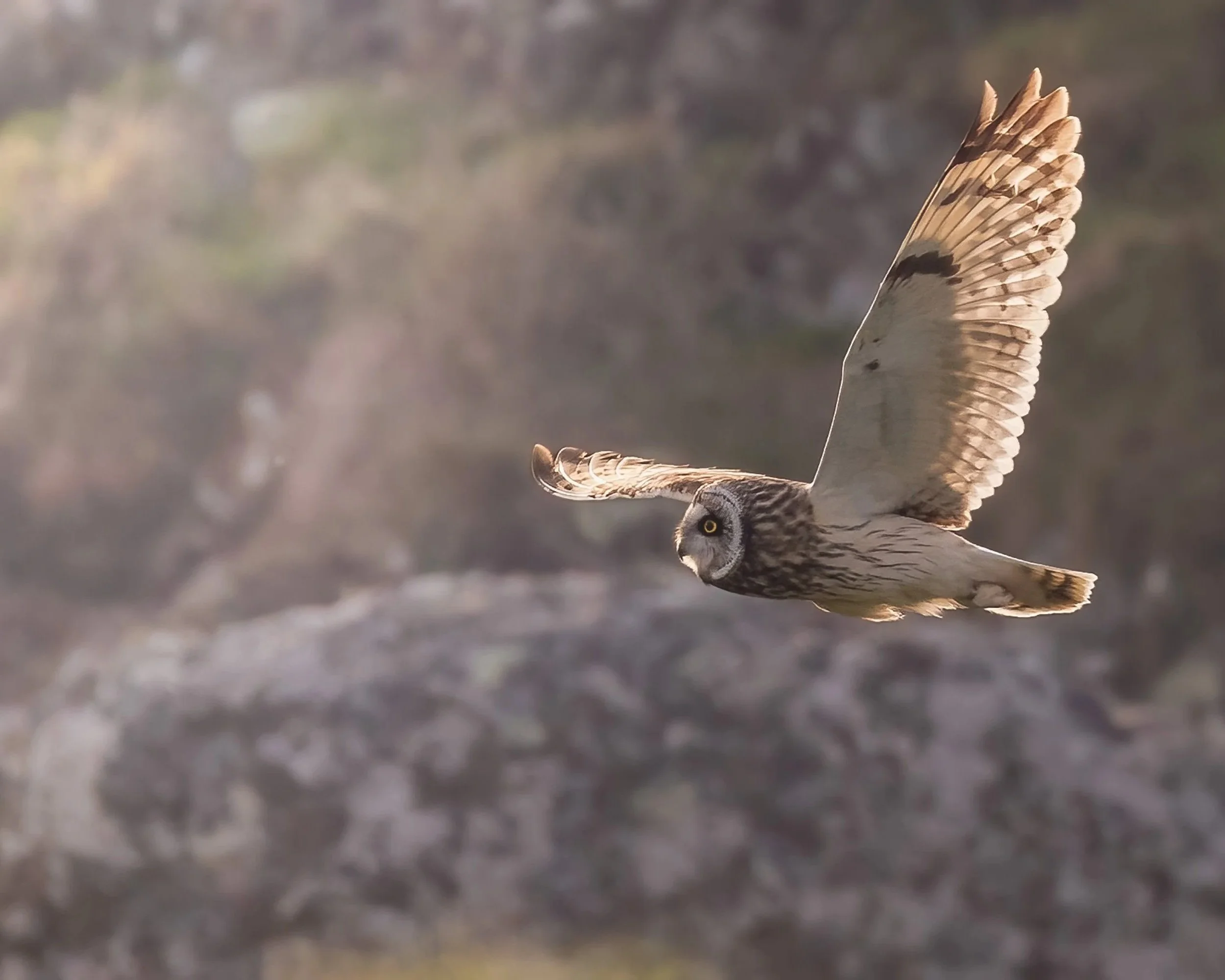
A hunting short-eared owl.
Skomer supports internationally important seabird populations. Puffins are the main draw for many photographers, nesting in burrows close to the paths and often passing within a few feet of visitors.
Other regularly encountered species include razorbills, guillemots, kittiwakes, Manx shearwaters, ravens, chough, and peregrine falcons. Grey seals are often seen from the cliffs or near the landing area, particularly around North Haven.
One of the highlights for me has always been short eared owls. When conditions are right, they can be seen hunting during daylight hours, particularly around the old farm buildings and surrounding grassland. Migration periods can also bring unexpected visitors, with rare birds occasionally appearing after strong winds.
Best Areas to Photograph on Skomer
The Wick is the most famous location on the island and for good reason. Puffin burrows sit right beside the path, allowing for eye level photographs without disturbing the birds. It can become busy during the middle of the day, particularly with day visitors.
The area around the farm buildings is a good place to watch short eared owls when they are present, especially early morning or late afternoon.
Cliff edges provide opportunities for seabirds in flight, including razorbills and guillemots, as well as raptors such as peregrines. Near the landing point at North Haven, seals can often be seen bobbing in the water below.
Approaching and Photographing Responsibly
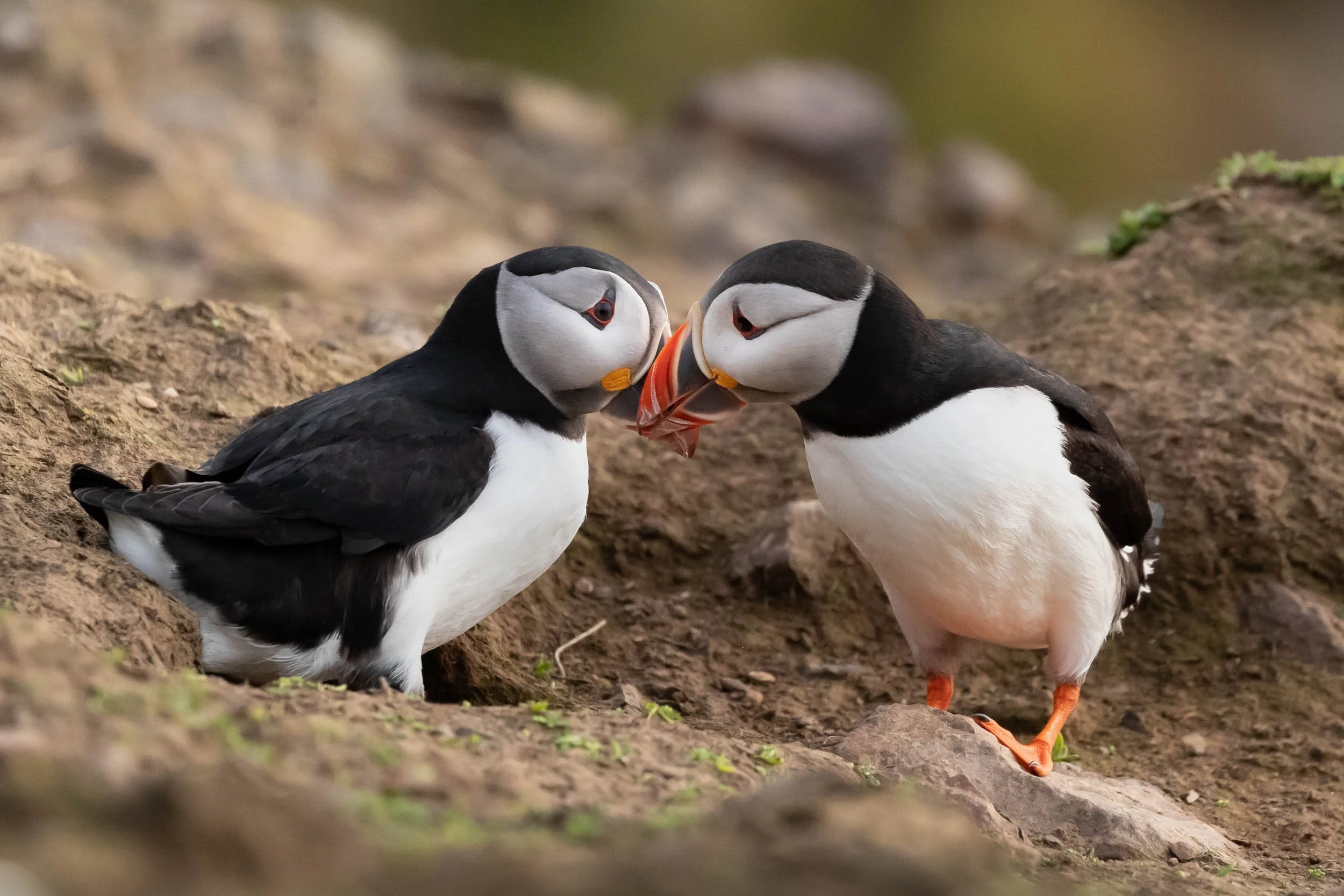
A pair of puffins billing.
On Skomer it is essential to stay on the paths at all times. Puffin burrows and nesting sites are everywhere, often hidden beneath grass. One misplaced step, a dropped camera bag, or a tripod leg off the path can collapse a burrow.
One of the most memorable things about photographing puffins here is how unconcerned they can be. It is not unusual for a puffin to land nearby and walk over your boots as it makes its way back to its burrow. The key is to stay still, keep movements slow, and let the birds dictate the encounter.
Camera Gear and Approach
I tend to work with a combination of lenses depending on the subject and behaviour. A 100 to 400mm zoom is ideal for flight shots and general flexibility, particularly when hand holding. A 500mm prime works well for more static portraits and isolated compositions, often supported on a bean bag rather than a tripod.
Tripods can be useful for video work but need to be used carefully. Tripod legs can be a trip hazard and risk damaging burrows if placed carelessly. Bean bags offer a safer and more flexible alternative on Skomer.
Rain covers are essential. Weather can change quickly, and sea spray or sudden showers are common, especially on the boat crossing.
Photography Moments and Lessons Learned
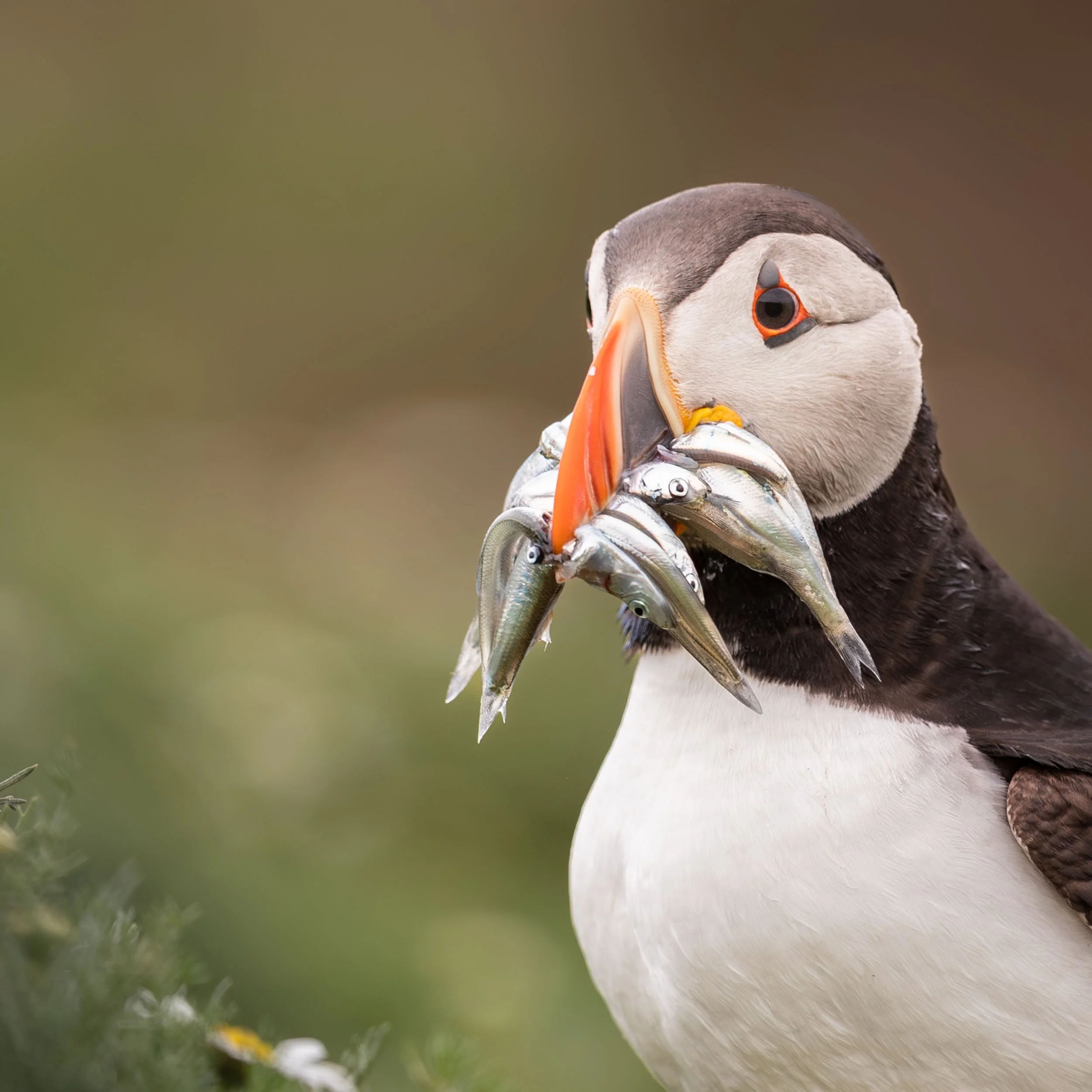
Classic image of a puffin with a beak full of sand eels.
Some of my favourite images from Skomer have come from patience rather than action. Puffins billing near their burrows, birds returning with beaks full of sand eels, or individuals pausing briefly before disappearing underground.
One behaviour I continue to try and improve on capturing is kleptoparasitism. Puffins often land away from their burrow entrances and then run across open ground to avoid gulls attempting to steal their fish. It is fast, unpredictable, and easy to miss if you are in the wrong place or focused elsewhere.
Exposure can be challenging. White birds against bright sea or dark cliffs can easily result in blown highlights. Keeping an eye on the histogram and using exposure compensation is essential. Autofocus can also struggle when multiple birds overlap in the frame, so selecting a single subject and sticking with it often produces better results.
Conservation Notes
Skomer is a conservation success story, managed by the Wildlife Trust of South and West Wales. Strict access controls, predator free status, and long term monitoring have allowed seabird populations, particularly puffins, to thrive here.
That does not mean the birds are immune to wider pressures. Climate change, changes in fish stocks, avian influenza, and marine heatwaves all pose ongoing risks. Responsible visiting and continued conservation work are essential to protecting the island’s wildlife for the future.
Final Thoughts
Skomer is one of those places that stays with you. Whether it is sitting quietly as puffins shuffle past, watching an owl quarter the grass at dusk, or simply listening to the sound of seabirds echoing across the cliffs, it offers moments that go far beyond photography.
Whatever you photograph, have fun.
If You Are Planning Your Own Skomer Photography Trip
Book as early as possible, especially for peak puffin season or overnight stays.
Travel light and think carefully about where you place your kit at all times.
Bring rain protection for both yourself and your camera gear.
Talk to wardens and volunteers. They are an invaluable source of up to date information on wildlife activity.
Have a plan, but be prepared to adapt. Weather, light, and behaviour rarely unfold exactly as expected.
Useful Links
Guided birding and photography trips, including visits to Skomer.
Wildlife Trust of South and West Wales
Information on Skomer Island, bookings, conservation work, and visitor guidance.
Pembrokeshire Islands Boat Trips
Boat crossings to Skomer Island.
This guide is part of my On Location wildlife photography series, where I share practical advice and real life experiences from photographing wildlife in the UK, Europe and Africa.