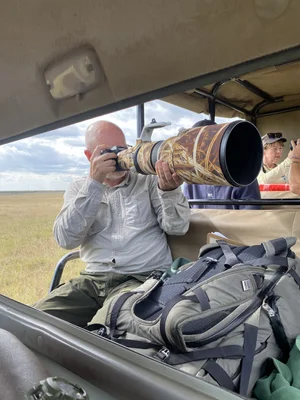
Photographing Mountain Hares

Mountain hares are one of the UK’s most distinctive mammals, perfectly adapted to life in exposed upland environments. Found in parts of Scotland and northern England, they are best known for their dramatic seasonal coat change, turning from brown and grey in summer to white in winter. Photographing them can be challenging, but also deeply rewarding, requiring patience, fieldcraft, and a strong respect for the animal’s welfare.
I have photographed mountain hares in the Cairngorms, Glenshee, and the Peak District, both independently and with experienced local guides. Over time, and through plenty of mistakes, these encounters have taught me far more than just how to get closer or improve my settings. They have shaped how I approach wildlife photography more broadly.
Planning your visit
Mountain hares can be seen year-round, but the experience varies hugely with season and location. Winter offers the classic white coat shots, particularly in the Scottish Highlands, though hares can be surprisingly difficult to spot when settled in snow. Spring and autumn bring transitional coats, while summer offers opportunities for environmental images against heather and grassland.
The Cairngorms provide vast, open terrain and are one of the best places to see hares in winter conditions. Glenshee is excellent for summer visits, especially when photographing hares on higher ground. The Peak District, while more accessible, can be just as rewarding and offers the chance to photograph hares in snow during colder spells.
Using a local guide can significantly improve both your success and your fieldcraft. I have spent time with Neil McIntyre in the Cairngorms and Bob Smith in Glenshee, and both helped me better understand hare behaviour, approach techniques, and when to back off. Hiring a guide is not about shortcuts; it is an investment in learning how to photograph wildlife responsibly.

Mountain hare in summer coat photographed in the Peak District
Approaching mountain hares responsibly
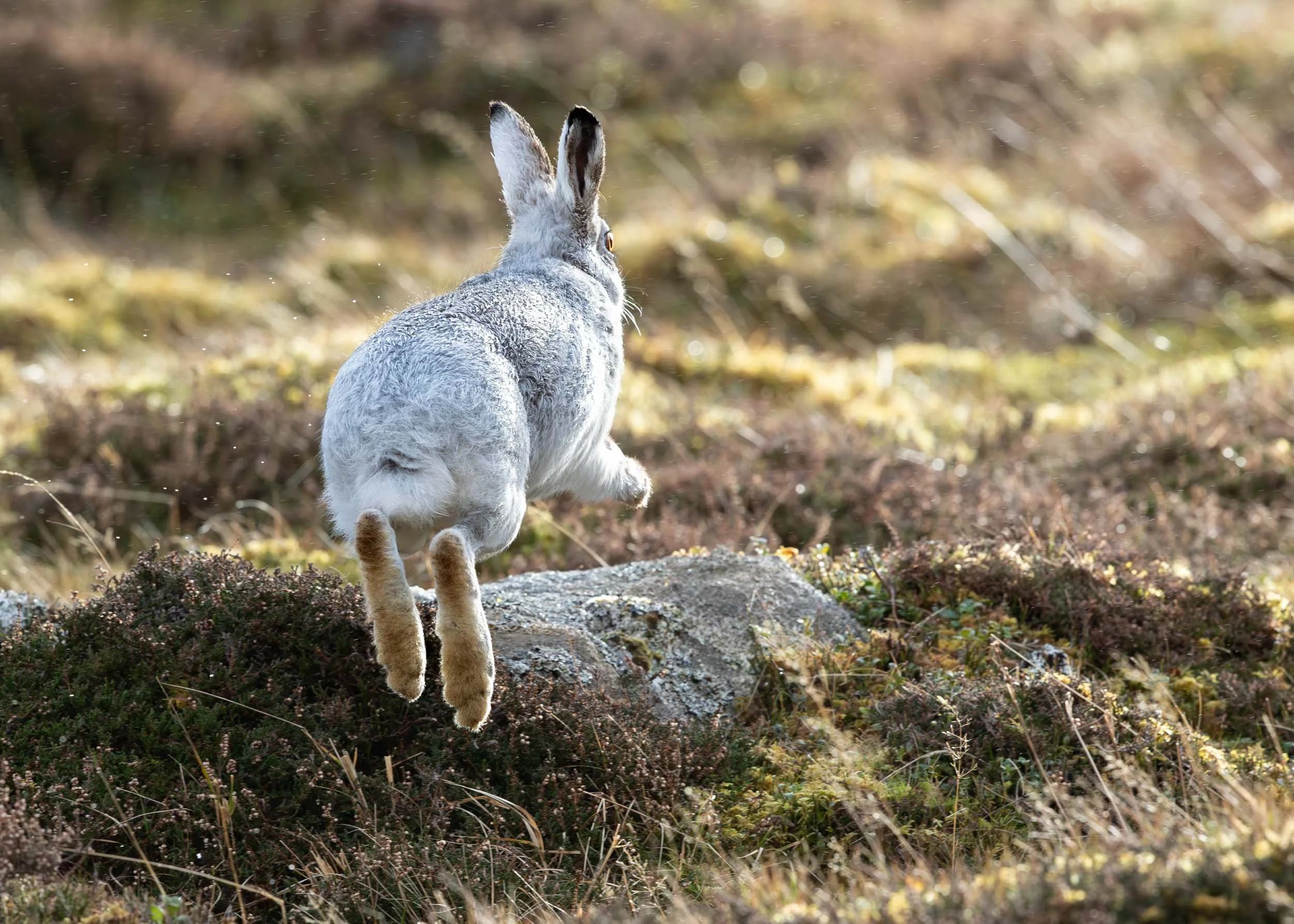
Mountain hare bolts for cover.
Mountain hares are extremely alert and will bolt if they feel threatened. A slow, measured approach is essential, often involving long periods of waiting and very gradual movement. Approaching from below on a slope, moving in a zigzag rather than directly, and getting low to the ground all help reduce perceived threat.
There have been times when I misread a hare’s behaviour and caused it to run. Those moments stay with you and reinforce the importance of welfare over images. A relaxed hare that grooms, stretches, feeds, or simply sits watching you will always lead to better photographs than one pushed beyond its comfort zone.
Sometimes the right decision is to stop moving entirely, or to leave the animal alone. Learning when not to press the shutter is just as important as knowing when to do so.
Camera gear and settings
A long telephoto lens is essential for mountain hare photography. Lenses in the 100-400mm or 500mm range allow you to keep a respectful distance while still achieving frame-filling images. Teleconverters can be useful, particularly in open terrain.
Fast shutter speeds are important, as hares can bolt without warning. I generally aim for at least 1/1000 sec, increasing this when hares are moving or when photographing action. When shooting against snow, underexposing slightly and regularly checking the histogram helps preserve highlight detail, which is easily lost with white fur.
I tend to work hand-held for flexibility, though monopods or beanbags can help during longer waits with heavier lenses. Cold conditions also affect both batteries and dexterity, so planning for warmth and ease of operation matters more than you might expect.
Behaviour to watch for

A relaxed mountain hare laughing at the photographer trying to hide in the wet grass
Mountain hares are far more expressive than many people realise. A relaxed hare may groom itself, stretch after resting, or nibble quietly on vegetation. These subtle behaviours often produce the most engaging images.
They rest in shallow depressions known as forms, usually positioned to give a clear view of their surroundings. Spotting these forms, often with binoculars, is key to finding hares without walking directly into their line of sight
Photography moments and lessons learned
Some of my most memorable images have come from waiting quietly and allowing the hare to accept my presence. One such moment in the Peak District involved a hare still in its summer coat, sitting against a backdrop of fresh snow. Others came during guided trips in Scotland, where careful positioning allowed us to observe a single hare for extended periods without causing stress.
Mistakes are part of the process. I have blown highlights in snow, misjudged shutter speeds when hares suddenly ran, and struggled with exposure when light changed quickly. Checking the histogram, using exposure compensation, and accepting that not every encounter leads to a usable image are all part of learning.
Other wildlife often features during hare outings, from red grouse in the Peak District to red deer and ptarmigan in the Highlands. These encounters add to the experience and remind you that you are photographing within a wider ecosystem.
Light, weather, and seasonal challenges
Winter conditions bring their own risks. Snow can hide uneven ground, holes, and boggy areas, and I have more than once found myself stuck mid-step. Poor visibility from mist, cloud, or snowfall can be dangerous, particularly in remote areas. Travelling with a guide or companion and checking forecasts carefully is essential.
Spring and summer bring different challenges, with hares blending into their surroundings and becoming harder to spot. Each season demands a slightly different approach and mindset.
Fascinating facts about mountain hares

Mountain hare caught out by unexpected snow.
Mountain hares are the UK’s only native hare species. Brown hares were introduced centuries ago. They can live at altitudes above 1,000 metres and are born fully furred with open eyes. Their winter coats do not always turn fully white in milder conditions, which can increase predation risk. Natural predators include golden eagles, foxes, and wildcats.
Conservation notes
Mountain hare populations face ongoing pressures from habitat change, climate change, and historical management practices. Reduced snow cover affects their camouflage and survival. Responsible photography, guided experiences, and awareness of these challenges all play a role in supporting their future.
Final thoughts
Mountain hares are full of character, and every encounter feels like a privilege. Whether it’s watching a hare groom itself quietly in the Cairngorms, Glenshee, or the Peak District, or simply observing from a respectful distance, these moments stay with you long after the day ends.
Whatever you photograph, have fun.
If you’re planning your own mountain hare photography trip
A little preparation makes a big difference. Research locations and seasons carefully, and consider hiring a local guide to accelerate your learning and improve your fieldcraft. Dress appropriately for exposed conditions, travel with care, and always prioritise the welfare of the hare over the photograph.
Useful links and references
This guide is part of my On Location wildlife photography series, where I share practical advice and real life experiences from photographing wildlife in the UK, Europe and Africa.