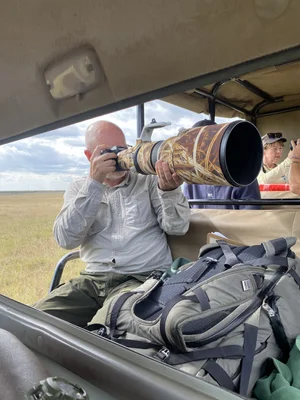
Wildlife photography is often about patience and persistence, but every so often a trip delivers one of those unforgettable “wow” moments. In June 2025 I travelled to Slovenia for a short break with my brother and niece, and we booked a session with Slovenian Bears Wildlife Photography Tours. It turned into one of the most rewarding wildlife hide experiences I’ve ever had.
Why Slovenia?
Slovenia is home to around 900 brown bears, one of the highest densities in Europe. The forests of the Notranjska and Kočevska regions provide ideal habitat, and over time a small number of organisations have developed responsible ways for photographers to observe and photograph these animals without disturbance.
Slovenia Bears, run by Miha Mlakar and his team, operates a network of purpose built hides designed specifically with photographers in mind. Each hide is positioned carefully for light, background, and subject distance, and most are set at eye level with the bears. This makes a huge difference to the feel of the images, helping them look natural rather than observational

Hawfinch drinking at the
reflection hide
The reflection hide
Before heading out to the bear hide, Miha kindly gave us access to their on-site reflection pool hide. On a sweltering 35 degree celsius day, this was a very welcome start to the experience. The hide was air conditioned, comfortable, and fitted with large one way glass panels and a long shelf with mounts for tripod heads and gimbals.
A variety of woodland birds came down to drink and bathe, including hawfinch. While hawfinches are present in the UK, they are often shy and difficult to photograph. Here they were far more relaxed, providing some unexpected but excellent photographic opportunities before the main bear session.
The bear hide experience
In the late afternoon we drove in convoy to one of the bear hides selected for our session. From the drop off point, a short silent walk with Miha’s ranger led us to a raised wooden hide designed to give photographers an eye level view of the bears. Once inside, the ranger locked us in until collection later that evening.
The hides are simple but very well thought out:
Long shelves running the width of the hide with mounts for tripod heads and gimbals
Beanbags provided if you don’t use a tripod head or gimbal
Elasticated slots to push lenses through
One-way glass panels for observation
Inside the hide, movement needs to be kept to an absolute minimum. For that reason, switching lenses is strongly discouraged.
I was fortunate to have access to two slots, so I opted to set up two cameras:
Canon R5 with a 500mm prime on a gimbal head
Canon R6 Mk II with a 100–400mm zoom on a beanbag
This allowed me to switch between tight portraits and wider environmental shots without needing to change lenses. Having a solid gimbal head made long waits far more comfortable with the heavy prime lens and helped maintain smooth control when bears moved unpredictably.
For long sessions in hides like this, I tend to favour a gimbal head for its balance and ease of movement. The one I use is listed on ‘My Photo Gear’ page if you’re interested.
First Sightings
Within minutes of settling in, we were astonished to see a mother bear with two year old cubs wander into view. Trying to stay silent while full of excitement is not easy, but it was an unforgettable moment.
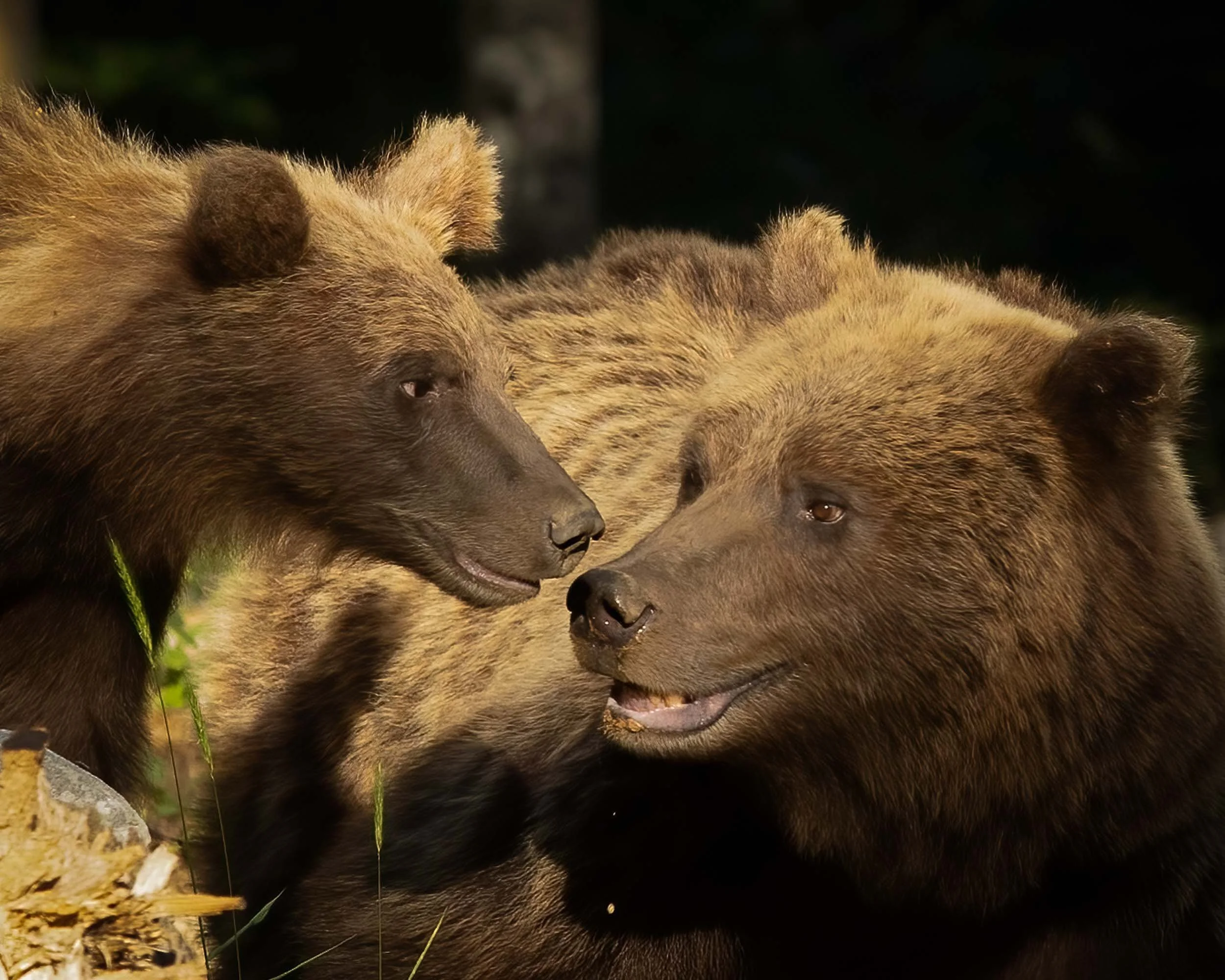
The bond of a mother & cub
Photographing bears in forest habitat brings its own challenges. There were deep shadows under the trees, bright sunlit patches, pale rocks reflecting light, and moments of strong backlighting that created rim light around the bears.
Exposure decisions were critical. Too little light and detail was lost in the fur. Too much and highlights quickly blew out. Constantly checking the histogram and making small adjustments was essential.
Through careful exposure and later post processing, I was able to recover detail in both shadows and highlights, and came away with a set of images I am genuinely happy with.
Key tips for photographing bears in Slovenia
1. Be prepared for heat: The heat inside the hide can be intense, particularly in summer. Bring more water than you think you will need and pace yourself. I made the mistake of drinking most of mine in the first hour.
2. Use two camera bodies if possible: Switching lenses inside the hide is strongly discouraged. A telephoto prime plus a zoom is a great combination.
3. Expose carefully: The forest environment can trick your camera meter. Check histograms and be prepared to adjust settings frequently.
4. Patience is essential: Sightings are never guaranteed and some visitors see nothing at all. When it works, the reward is worth the wait.
5. Respect the rules: Silence, no phones, no flash, and no leaving the hide are all in place for the welfare of the bears
Final Thoughts
This was one of those rare occasions where everything came together. A well run operation, thoughtful hide design, and wildlife that allowed us to observe quietly and respectfully.
If you are considering a place to photograph wild brown bears in Europe, Slovenia Bears should be high on your shortlist. It is an experience built around ethics, patience, and respect for the animals.
Whatever you photograph, have fun.
If you are planning your own bear photography trip
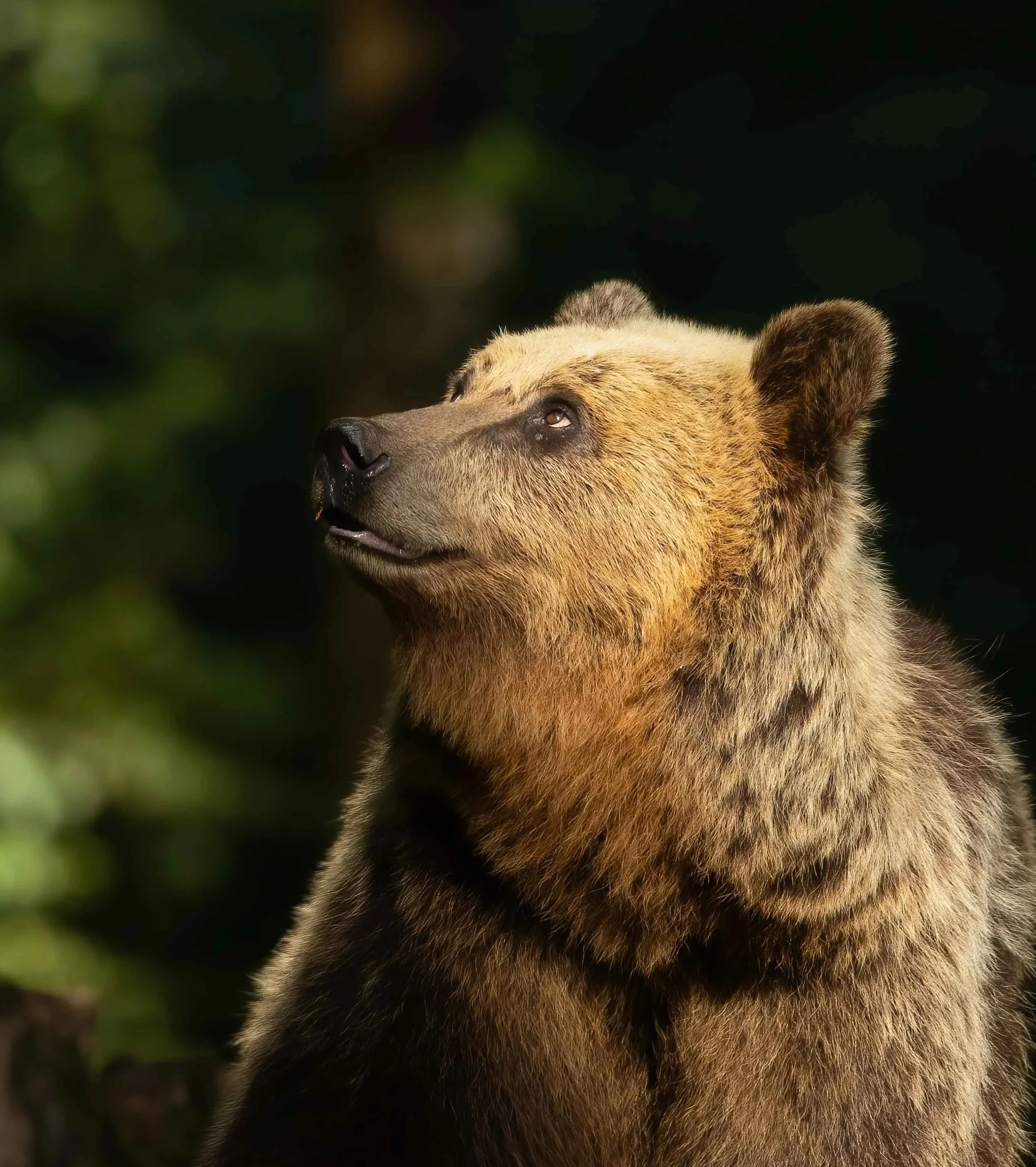
European Brown Bear
If this is an experience you’re considering, a little preparation goes a long way.
Research the different hide options offered by Slovenia Bears and book well in advance, particularly for peak summer months. Think carefully about your camera setup before you arrive. Using two bodies with complementary lenses can help minimise movement inside the hide.
Finally, consider building the hide session into a longer visit to Slovenia. Beyond the bears, the country offers beautiful landscapes, forests, and wildlife that are well worth exploring.
Useful Links
This guide is part of my On Location wildlife photography series, where I share practical advice and real life experiences from photographing wildlife in the UK, Europe and Africa.