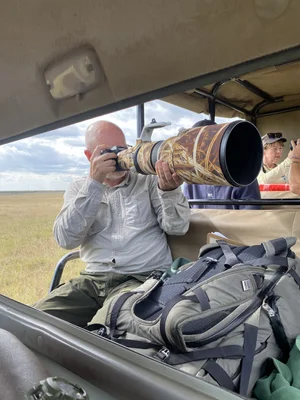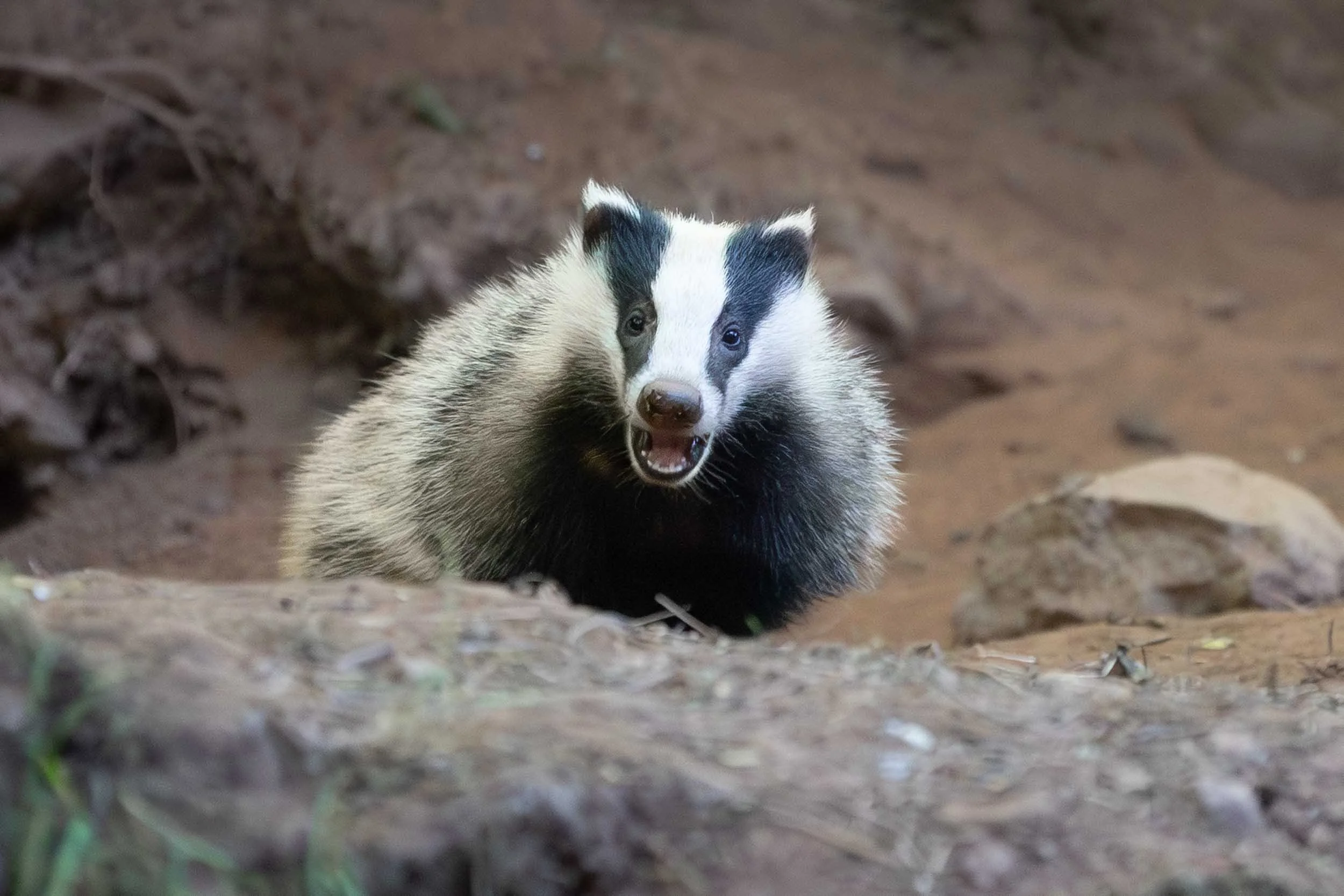
Badger photography can be one of the most rewarding wildlife experiences in the UK, but it is also one that needs to be approached with patience, fieldcraft, and a strong sense of responsibility.
My own experience comes from volunteering with Shropshire Wildlife Trust on a private reserve in Shropshire, where I used camera traps to record a wide range of wildlife, from deer, foxes, hares, and otters to herons, snipe, and woodland birds. Badgers gradually became my main focus, and later the subject I most wanted to photograph.
For me, photographing badgers has never just been about the images. Some of the best evenings have been spent simply watching cubs emerge, chase one another around, and bring the sett to life as daylight fades.
Why badger photography is so special
Badgers are one of those subjects that feel particularly memorable because so much of the experience happens before you ever press the shutter.
There is the anticipation of sitting quietly in position as the light starts to fade, taking in the sights, sounds, and smells of a spring evening while you wait for the first sign of movement. Often there is plenty else to hold your attention as well. Birds move through the woodland, wings flicker through the trees, and sometimes other wildlife appears unexpectedly. On one occasion I even photographed a roe deer helping itself to some of the peanuts I had left out for the badgers, while wood mice, jays, and other woodland birds also made the most of them.
One of the most memorable parts of sitting quietly near a sett is hearing activity underground before the badgers emerge. That sense of hidden life below your feet adds hugely to the experience, and when cubs are present the anticipation becomes even stronger. Watching them emerge, play fight, feed, and clamber over the adults can be every bit as enjoyable as the photographs themselves.
Unlike some more obvious wildlife photography opportunities, badger photography usually comes after a period of careful observation and preparation. That is part of what makes it so rewarding.
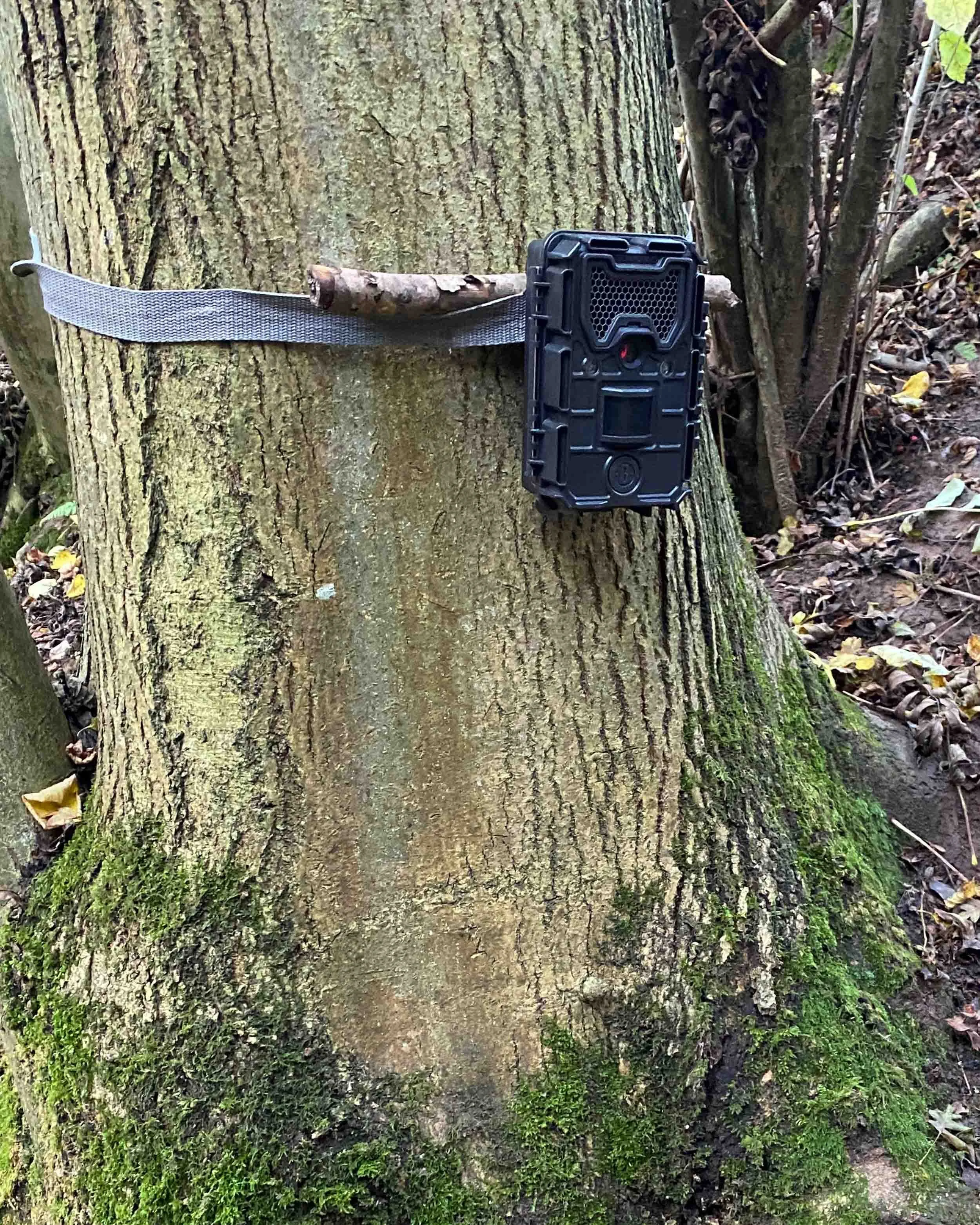
A camera trap allows unobtrusive 4/7 monitoring of a badger sett
Finding an active sett
Most of my badger monitoring and photography took place during 2020, when I was regularly checking two setts on the reserve. One of those was abandoned over the winter of 2024 after periods of heavy rain caused some of the entrances to collapse. One of my camera traps even recorded a badger covered in mud emerging from the sett that was later abandoned after some of the entrances collapsed, which was both funny and slightly sad to see.
The photography itself has all been at the sett that remains active, mainly because it offers me a good hidden position at eye level or lower. I still monitor that sett as part of my volunteering, although now I only tend to visit the site two or three times a year to change batteries and check the footage.
Before thinking about photography, the first step is to establish whether a sett is active.
There are several signs worth looking for, including multiple holes, freshly dug spoil heaps, discarded bedding such as straw or dry grass, and a nearby latrine. Clear paths leading to and from the sett can also indicate regular use.
Once an active sett has been identified, a camera trap can be a very useful next step. Used carefully, it can help confirm whether the sett is still in regular use, what time the badgers are emerging, how many animals are present, and whether cubs are around. In my experience, this makes later observation and photography much more informed and far less intrusive.
Understanding badger behaviour
Badgers have relatively poor eyesight, but their hearing and sense of smell are much more important, especially when detecting danger and communicating with one another.
That is one reason why movement, noise, and scent matter so much when you are trying to observe or photograph them. Strong deodorants or perfumes, rustling clothing, sudden movement, or shifting position too quickly can all work against you.
Badgers are also more vocal than many people expect. Around the sett I have heard a range of sounds, from quieter snuffling and grunting to more animated interactions between adults and cubs. Listening to those sounds, both above and below ground, is part of what makes time spent near a sett feel so immersive.
From reviewing camera trap footage, badger activity also seems to be less predictable in heavy rain or strong wind. I certainly would not choose to sit out in woodland in those conditions myself, but the footage suggests poor weather can affect both activity and emergence times.
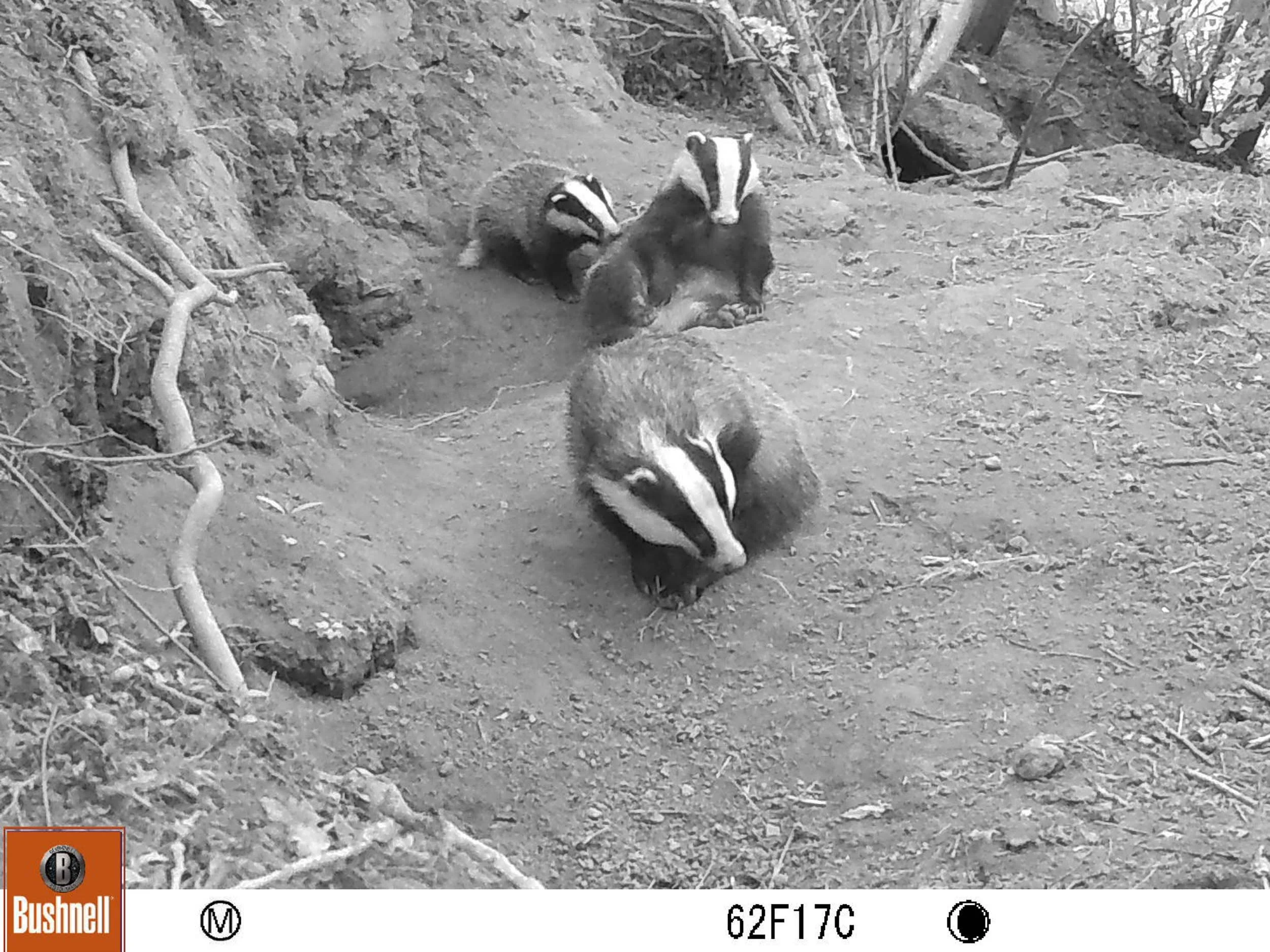
A camera trap helps determine when the badgers emerge from their sett
Watching badgers without causing disturbance
My first sessions were all about observation rather than photography. After establishing activity with camera traps, I started using a small pop-up hide near the active sett. It gave me confidence and helped me settle into position well before the badgers emerged.
That said, I do not think a hide is always essential. In many cases, careful fieldcraft matters more. Wearing drab clothing, avoiding strong-smelling deodorants or perfumes, keeping movement to a minimum, and staying downwind are all more important than elaborate concealment. A few broken branches placed naturally in front of your position can also help break up your shape.
For anyone starting out, I would suggest confirming activity first, arriving at least an hour before the expected emergence time, and then simply waiting quietly. The first time a badger appears from the sett, especially if cubs are involved, is always a special moment.
I do think badger photography is generally best approached on private land with the landowner’s permission, or through conservation involvement where access and welfare can be managed properly. That said, I know other wildlife enthusiasts and photographers who have observed or photographed badgers in public parks and woods. In those situations, it becomes even more important to stay discreet, avoid drawing attention, and never do anything that could expose the badgers to disturbance or persecution.
Photography challenges and equipment
Badgers are not easy subjects to photograph well, and light is often the biggest challenge.
The sett I have photographed is in woodland, and by the evening it can be in deep shade. That makes it difficult to balance shutter speed, depth of field, and ISO. Even when using a fast lens, high ISO settings are often unavoidable.
My own approach has been to use a long lens on a tripod. The tripod helps in two important ways. First, it allows slower shutter speeds than I would be comfortable using handheld, which helps keep ISO under control. Second, it allows the camera to remain trained on the sett for long periods of inactivity, reducing the need for sudden movement.
That said, there is always a balance to strike. You still need a shutter speed that is fast enough to cope with badger movement, especially when cubs are involved. And even on a tripod, it is important to resist the temptation to pan quickly if activity breaks out somewhere else. Slow, quiet movement is always better.
Most of the wider range of behaviour I have recorded has come from camera traps. In person, I have photographed cubs play fighting, grooming, feeding, and climbing over the adults, including their mother. Those quieter family moments are often the ones I value most.
I choose not to use flash. Some commercial wildlife set-ups do use it, but I prefer not to. General wildlife photography guidance from The Wildlife Trusts advises caution with flash because animals can be very sensitive to strong light and may be scared or temporarily blinded by it.
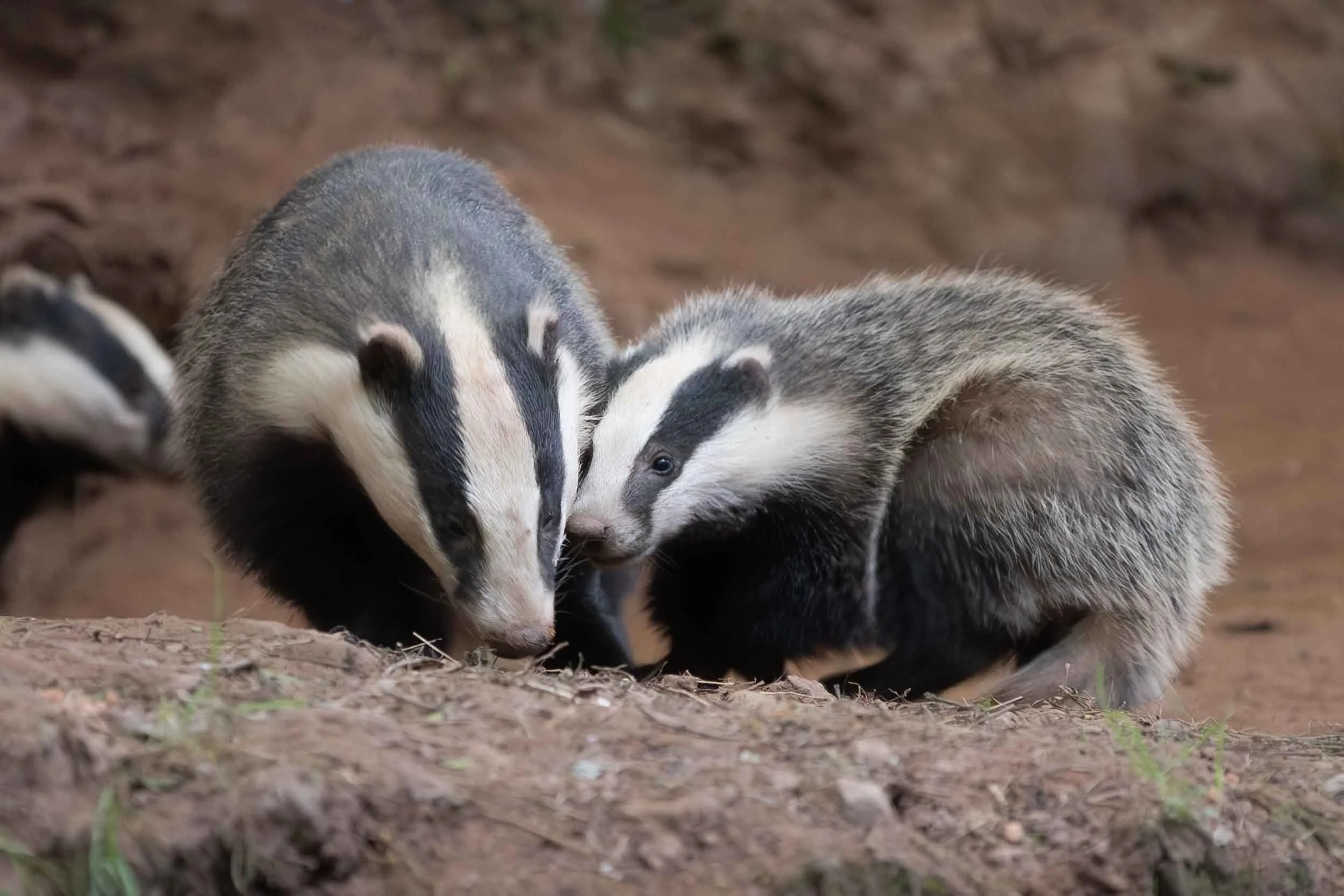
A tender moment between Mother and cub
Best time of year
In my experience, spring and early summer are the best times for badger photography, particularly April, May, and June.
April and May can be especially enjoyable because this is when you may first see young cubs above ground. If you are able to return regularly, it is a real privilege to watch them grow in confidence over the following weeks and months, as I did in 2020.
June has been a particularly good month for me, mainly because the longer daylight hours in the UK give you a better chance of the badgers emerging while there is still enough light to work with. Of course, a lot depends on the location of the sett. If it is deep in woodland beneath a dense canopy, light will disappear more quickly. If it is in a more open position, perhaps near the edge of a field, conditions may be more forgiving.
Ethics and responsibility
Badgers and their setts are protected under the Protection of Badgers Act 1992, and that protection needs to be taken seriously. Photography should never come before welfare.
That means keeping a respectful distance, avoiding noise and unnecessary movement, never blocking entrances or pathways, and taking great care not to reveal the location of an active sett.
That last point is particularly important. Badgers still face persecution, and sharing precise locations, even with good intentions, can put them at risk. For that reason, I would never disclose the whereabouts of a productive sett publicly.
Before sharing any footage or photographs relating to the setts on my social channels, I also contacted the Shropshire Badger Group for advice. I wanted to make sure I was not putting the badgers at risk by sharing sightings or behaviour publicly. Their main advice was not to reveal locations, to be responsible when filming, and to keep disturbance around the sett to an absolute minimum.
It is also one of the reasons I would be cautious about offering badger workshops at this stage. The experience is incredibly special, but the protection of the badgers has to come first.
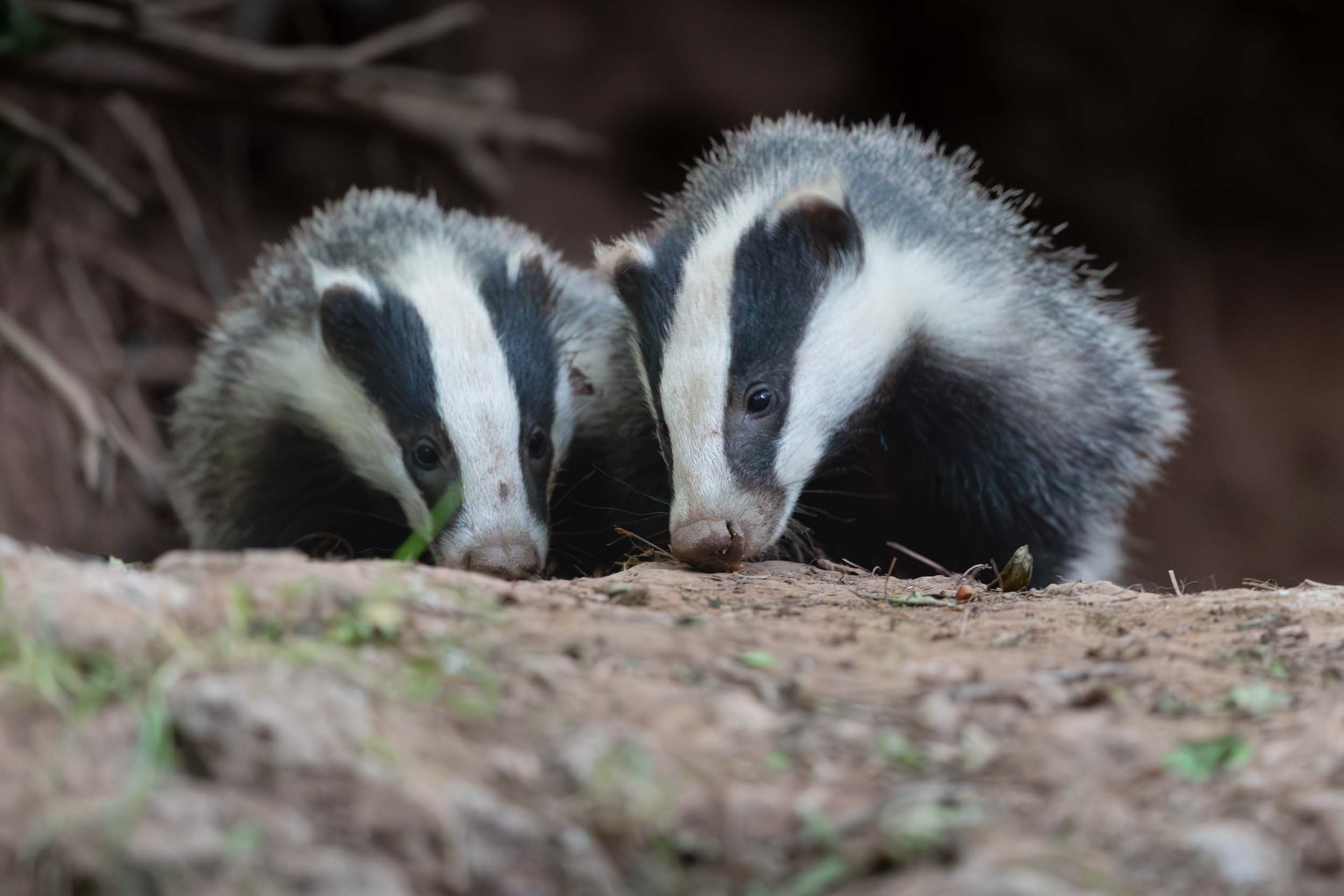
Badger cubs enjoying a few peanuts
Final thoughts
For me, badger photography is at its best when it is built on time, patience, and familiarity with a place.
Some evenings the light has been too poor for good photographs, but that has never really mattered. Sitting quietly with a flask of hot chocolate and watching cubs chase one another, play fight, and scramble over the adults has often been reward enough.
If you are interested in photographing badgers, the most important thing is to start with observation, learn the signs of an active sett, use camera traps responsibly where appropriate, and always put the welfare of the animals first.
The photographs matter, but the experience matters more.
Whatever you photograph, have fun.
Planning your visit
If you are hoping to photograph badgers, the most important planning is not travel logistics but preparation and patience. Confirm activity first, either through repeated observation or the careful use of camera traps, and avoid the temptation to rush straight in with a camera.
Think carefully about wind direction, your clothing, and how you will get into position without drawing attention to yourself. Arriving early is essential, both to allow the area to settle and to avoid disturbance close to emergence time.
You should also be realistic about the photography itself. Light levels may be poor, views may be brief, and some evenings may be better for watching than photographing. On other evenings the badgers may not emerge at all while you are there. That has happened to me on several occasions, only for the camera traps to record the first emergence well after dark and long after I had gone home. Nothing is guaranteed with nature, and that is part of the experience too.
Useful links
This guide is part of my On Location wildlife photography series, where I share practical advice and real life experiences from photographing wildlife in the UK, Europe and Africa.