Photographing the black grouse lek is one of the most unusual and memorable wildlife experiences the UK has to offer. It is not a subject for casual photography or close approaches. It demands planning, patience, restraint, and above all a willingness to put the welfare of the birds first.
My own experience comes from visits to the lek at World’s End in North Wales. The images I have taken there will never be among my closest bird photographs, but that has never really mattered. What stays with me is the spectacle itself: the sound, the movement, the strange choreography of displaying males, and the privilege of witnessing something so special without disturbing it.
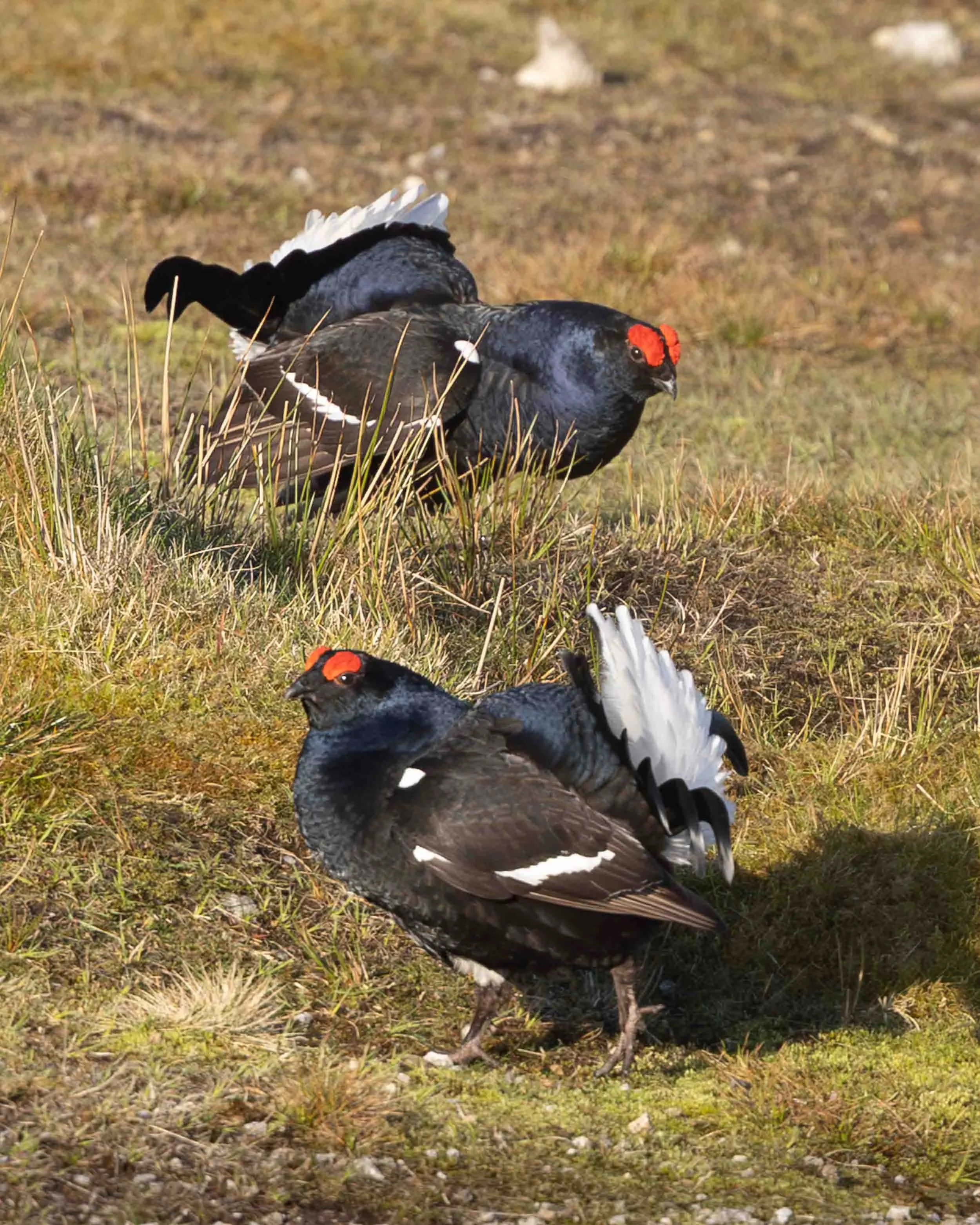
Male black grouse displaying
Why the black grouse lek is so special
A black grouse lek is one of those wildlife spectacles that is almost impossible to describe properly until you have seen and heard it for yourself. Before my first visit, I had read about it and watched clips online, but none of that really prepared me for the experience.
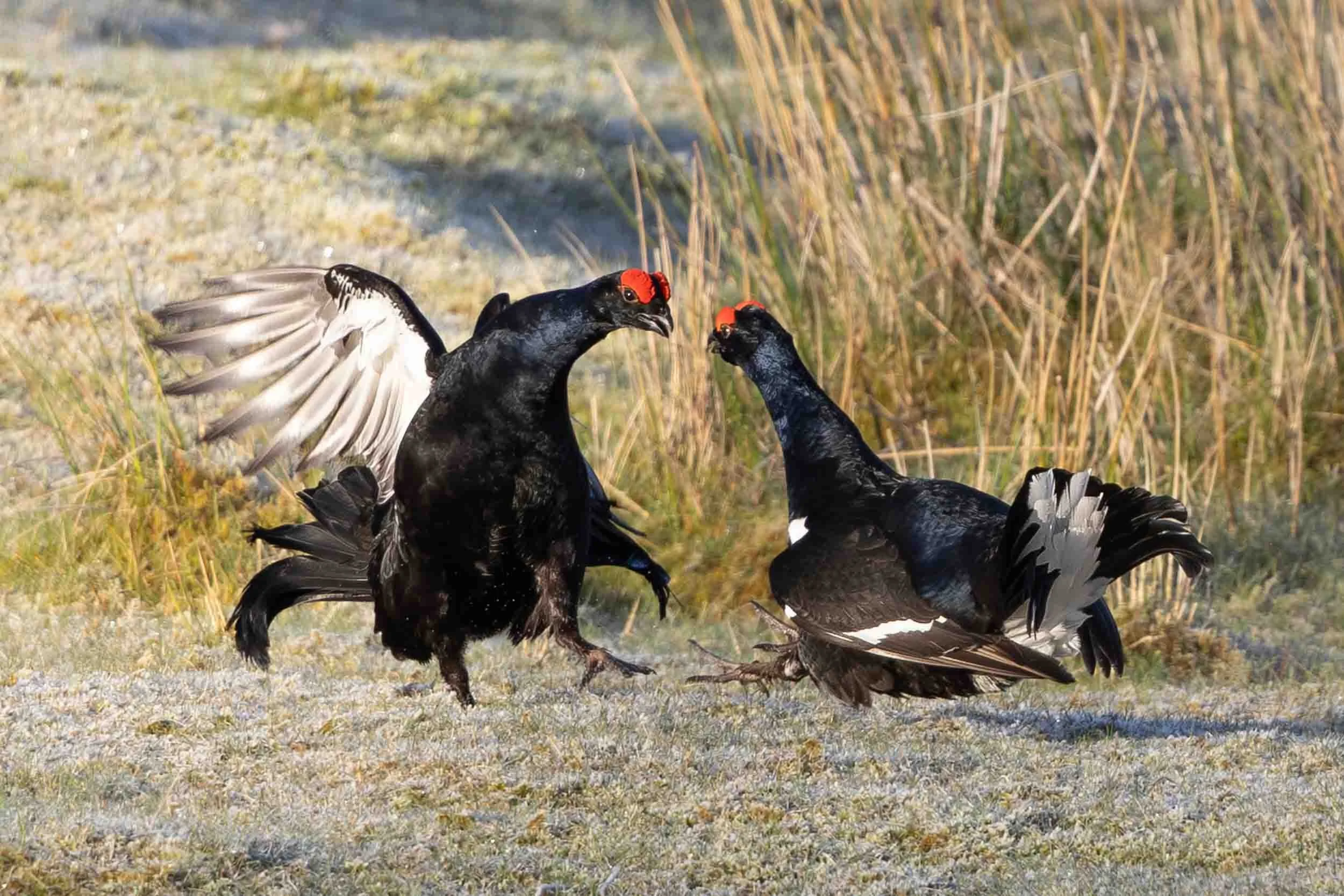
The males gather before dawn on traditional display grounds and begin posturing, bubbling, hissing, croaking, and chasing one another across the moor. Tails are fanned, white feathers flash in the early morning gloom, and small confrontations flare up and fade away in seconds. It feels part theatre, part ritual, and part chaos.
It is one of the UK’s most captivating spring wildlife displays, but also one of the easiest to get wrong if people do not show proper care.
My experience at World’s End
I have photographed the lek on two occasions at World’s End, both in mid-April, and also made a further early May visit when there were only a few birds at the site. Each visit required a very early start so that I could be in position before dawn.
My first impression was not really photographic at all. It was the sound. The display has an odd, almost surreal quality to it, unlike anything else I have heard in the UK. At the time I described it as something like a blend of Robot Wars, the can-can, and an electro-pop soundtrack, which still feels about right.
On both visits, the birds were initially quite distant, but patience was important. By continuing to scan the site, I found that small groups of males gradually moved closer. Even so, many of the images still needed cropping, despite using a 500mm lens with a 1.4x teleconverter. That also meant sacrificing some of the things I would usually want in a bird image, such as a lower angle and a softer background, but none of that took away from the magic of witnessing the spectacle for the first time.
Why distance matters
Black grouse are not a species to push. They are shy, easily disturbed, and of high conservation concern in the UK.
They are a Red-listed species, and the most responsible approach at a lek is to keep your distance and avoid causing any disturbance. At sites like World’s End, the vehicle effectively acts as a hide. The birds may tolerate a stationary car on the road, but they are far less tolerant of people on foot. That is why I stayed in my car throughout.
With black grouse, distance is part of the deal. You have to accept it.
The place I know: World’s End
World’s End, near Wrexham and Llangollen in North Wales, is the nearest place to where I live that gives me the chance to witness this remarkable display. The road runs through suitable upland habitat, and when the birds are using a lekking area reasonably close to the roadside, it becomes possible to watch and photograph them from inside the car without causing disturbance.
There are multiple lekking areas in the wider landscape, but I have only ever used one that could be viewed safely from the car, as I did not want to risk disturbing the birds. Much of the activity can begin some distance away, so patience is important. Keep scanning the site, as small groups of males may gradually move closer as the morning unfolds.
Timing is critical. Early morning is essential, and from my own visits mid-April seemed the most productive period, with activity dropping off by my early May visit. You need to be in position before dawn, stay quiet, and wait for the light and the birds to reveal themselves.
Greyhens and the change in atmosphere
The females, or greyhens, are easy to overlook at first. In contrast to the dramatic black-and-white males, they are mottled brown and beautifully camouflaged against the ground, so you have to keep your eyes open to spot them.
Sometimes the first clue is not visual at all, but a sudden increase in commotion among the males. Greyhens often visit the lek shortly before or around dawn, and their arrival can trigger a noticeable rise in display activity, with more flutter jumps, more posturing, and more fighting. Once present, they can appear almost nonchalant, walking through the gathering and seeming to ignore the theatrical efforts going on around them.
That contrast between the flamboyant males and the discreet females is part of what makes the lek so fascinating.
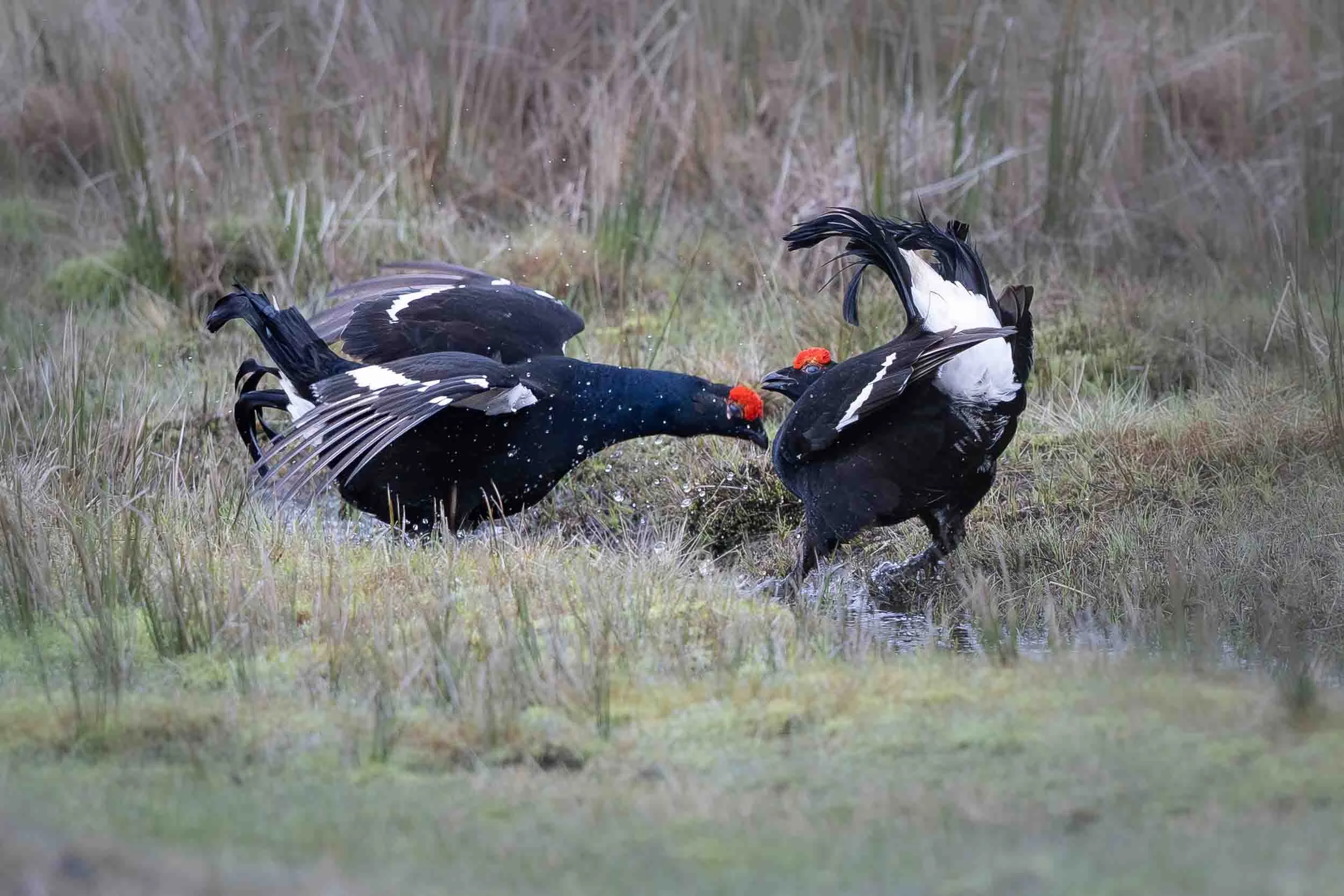
Tensions flare up during the black grouse lek
Photography challenges
Photographing black grouse responsibly usually means accepting significant limitations.
Distance is the obvious one. Even with a long lens, the birds may remain small in the frame, and composition can be dictated more by the position of the lek than by the photographer. Light is another major challenge. Because the display happens so early in the day, there is often a frustrating period when the behaviour is at its most atmospheric but the light is still too poor for strong images.
For that reason, I deliberately chose days when sunshine was forecast. With a subject like this, you need all the light you can get, especially if you want any realistic chance of freezing action in the first part of the morning.
This is also one of those subjects where the experience can outweigh the final photographs, and I think that is worth accepting from the outset.
Gear and approach
A long lens is essential. On my visits I used a 500mm lens with a 1.4x teleconverter, and even then the birds were often some distance away.
I photographed from inside the car using a beanbag through the window, keeping lens movement to a minimum and being careful not to push the lens too far outside the vehicle. The car was not just transport to the site; it was the hide, and part of the discipline was to remain settled and unobtrusive.
It also helps to arrive fully prepared. You do not want to be sorting gear, making avoidable movements, or opening and closing doors once you are in position. The quieter and more settled everything is, the better.
Ethics and responsibility
This is the most important part of the guide.
Black grouse are a species that need space, protection, and respect. The aim should never be to get as close as possible. The aim should be to witness the display without changing the birds’ behaviour in any way.
That means staying in the car, staying on the road, avoiding unnecessary movement, and never walking out onto the moor where the birds are displaying. It also means resisting the temptation to chase better photographs if the birds are too distant.
On the mornings I visited, there were other cars present, but never many. Most people behaved responsibly, although on one occasion someone got out briefly to retrieve something from their boot. Fortunately the birds did not seem affected, but it was still a useful reminder of how easily disturbance could happen.
For me, this is one of the clearest examples in UK wildlife photography where ethical behaviour matters more than the final image. A heavily cropped but responsibly taken image is far better than a frame-filling photograph obtained by causing disturbance.
When the lek ends
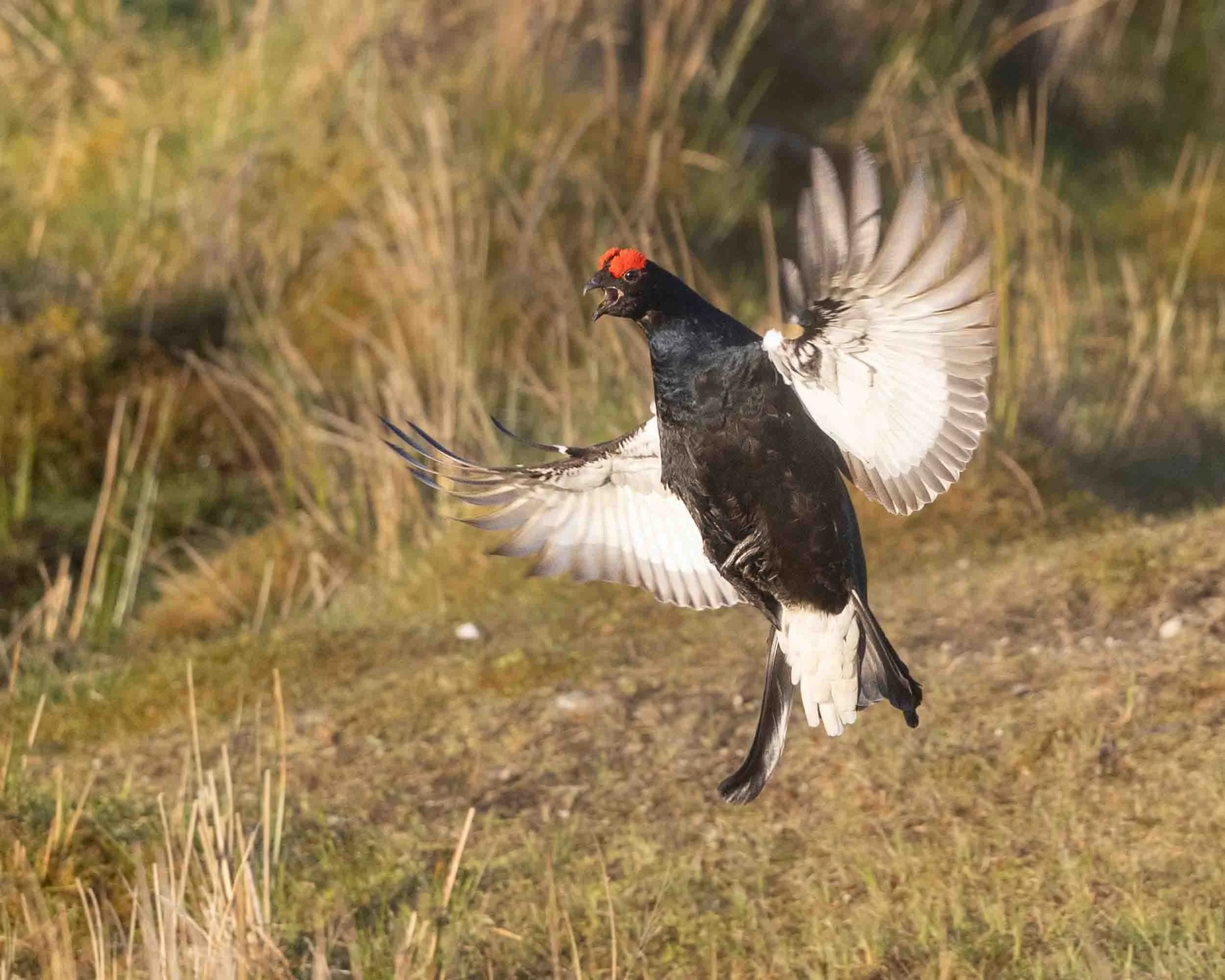
A male black grouse arrives too late for the lek
One of the strangest parts of the whole experience is how suddenly it can end.
There is no real warning. After all the noise, display, and tension, everything can simply stop and the birds fly off in different directions, as if someone has suddenly called time. It feels abrupt and slightly surreal, but it is part of the experience and another reminder that the birds are following their own rhythm, not ours.
Other places to see black grouse
Although World’s End is the location I know from personal experience, black grouse are also found in other upland parts of the UK, particularly in Scotland, northern England, and other parts of Wales.
Some organised viewing opportunities also exist through conservation bodies, and these are often the best route for people who want to witness the lek responsibly without trying to work things out alone. With a species like this, reputable guidance matters.
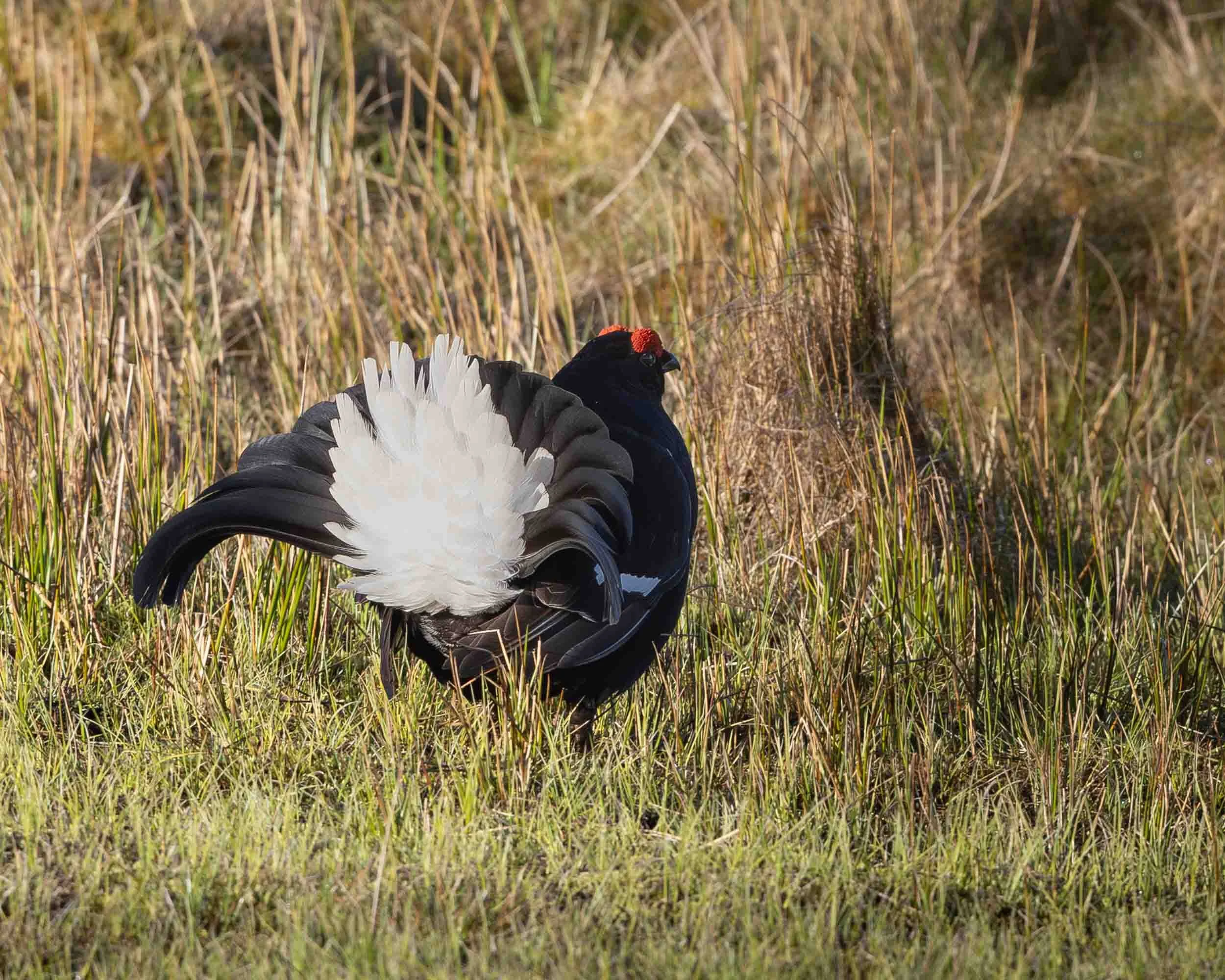
A male black grouse strutting his stuff at the annual lek
Final thoughts
Photographing the black grouse lek is not really about perfection. It is about witnessing one of the UK’s most remarkable wildlife displays in a way that puts the birds first.
The photographs may be distant, cropped, or taken in difficult light, but the memory of the spectacle stays with you. The sound, the movement, the tension, and the theatre of it all are what matter most.
For me, it remains one of the most special wildlife experiences I have had in the UK.
Whatever you photograph, have fun.
Planning your visit
If you are considering photographing black grouse, do your research first and make sure you understand both the legal and practical sensitivities. This is not a subject to improvise.
Arrive early, stay in the car, keep movement to a minimum, and be prepared for the possibility that the birds may still be more distant than you hoped. Take warm clothing, a hot drink, and realistic expectations.
Most importantly, remember that seeing the lek at all is the privilege. The photographs come second.
Useful links
This guide is part of my On Location wildlife photography series, where I share practical advice and real life experiences from photographing wildlife in the UK, Europe and Africa.